Travel Tales
Cycling in Sumbawa, Kenawa Island, and Swimming With Whale Sharks in Saleh Bay
Bali is usually the first island that comes to mind when travellers think about Indonesia. Just to the east, Lombok has also become increasingly familiar, known for its beaches, the Gili Islands, and the challenging route to the summit of Mount Rinjani.
Continue east from Lombok, however, and the journey begins to feel very different.
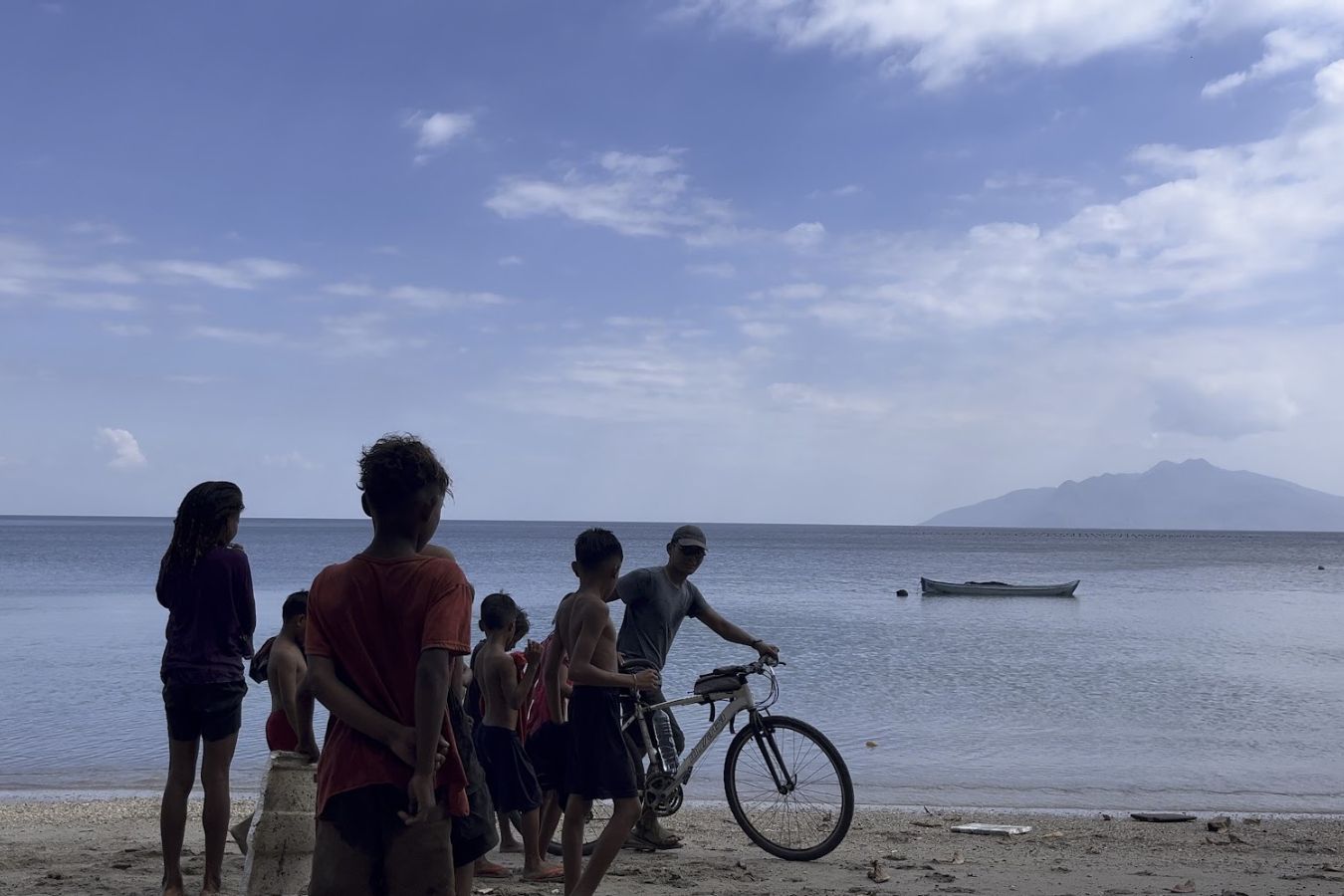
Across the Alas Strait lies Sumbawa, a much larger island that receives only a fraction of the attention given to its neighbours. Many travellers pass through on their way to Flores or Komodo, often without realizing how much there is to explore along the route. Sumbawa is surrounded by smaller islands, wide bays, fishing communities, and sea passages that make the water as important as the road.
The island is divided between West Sumbawa, Sumbawa, Dompu, and Bima regencies, with Bima City serving as an important transport hub in the east. Official island totals vary between datasets and administrative years, but the numbers give some sense of the geography: this is not simply one long island, but a wider landscape of coastlines and offshore communities.
Sumbawa is also home to two major cultural groups. The Samawa people are mainly associated with Sumbawa and West Sumbawa, while the Mbojo people are concentrated around Dompu, Bima Regency, and Bima City. Travelling from west to east therefore brings gradual changes in language, food, towns, and everyday life.
Three names are often used to introduce the island: Saleh, Moyo, and Tambora, collectively promoted as Samota. My own journey focused on Kenawa Island in the west and Saleh Bay in the centre before continuing toward Bima.
Crossing From Lombok to Poto Tano
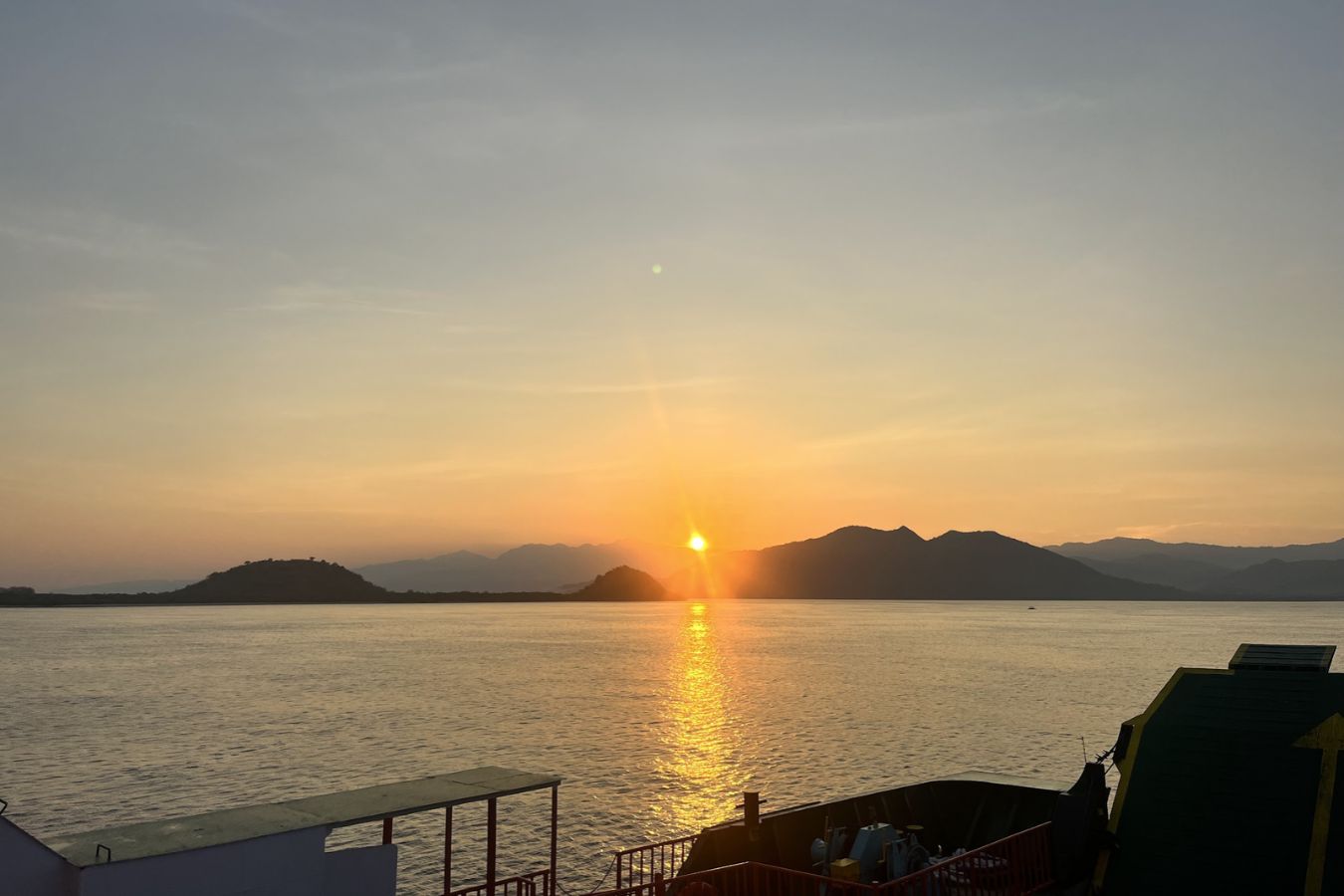
The western gateway to Sumbawa is Poto Tano. From Lombok, ferries cross between Kayangan Harbour and Poto Tano throughout the day.
If your schedule allows it, I strongly recommend arranging the crossing around sunrise. Watching the light appear behind the islands while the ferry approaches Sumbawa is one of the most memorable ways to begin the journey. The sea is usually calmer in the early morning, and the silhouettes of the surrounding hills slowly become visible as you approach the harbour.
For ferry tickets and current crossing information, check the official Ferizy platform before travelling.
Poto Tano is also the access point for Kenawa Island, so there is no reason to rush directly east after leaving the ferry. This small island deserves at least half a day, and preferably an overnight stay.
Kenawa Island: A Small Island Worth Staying For
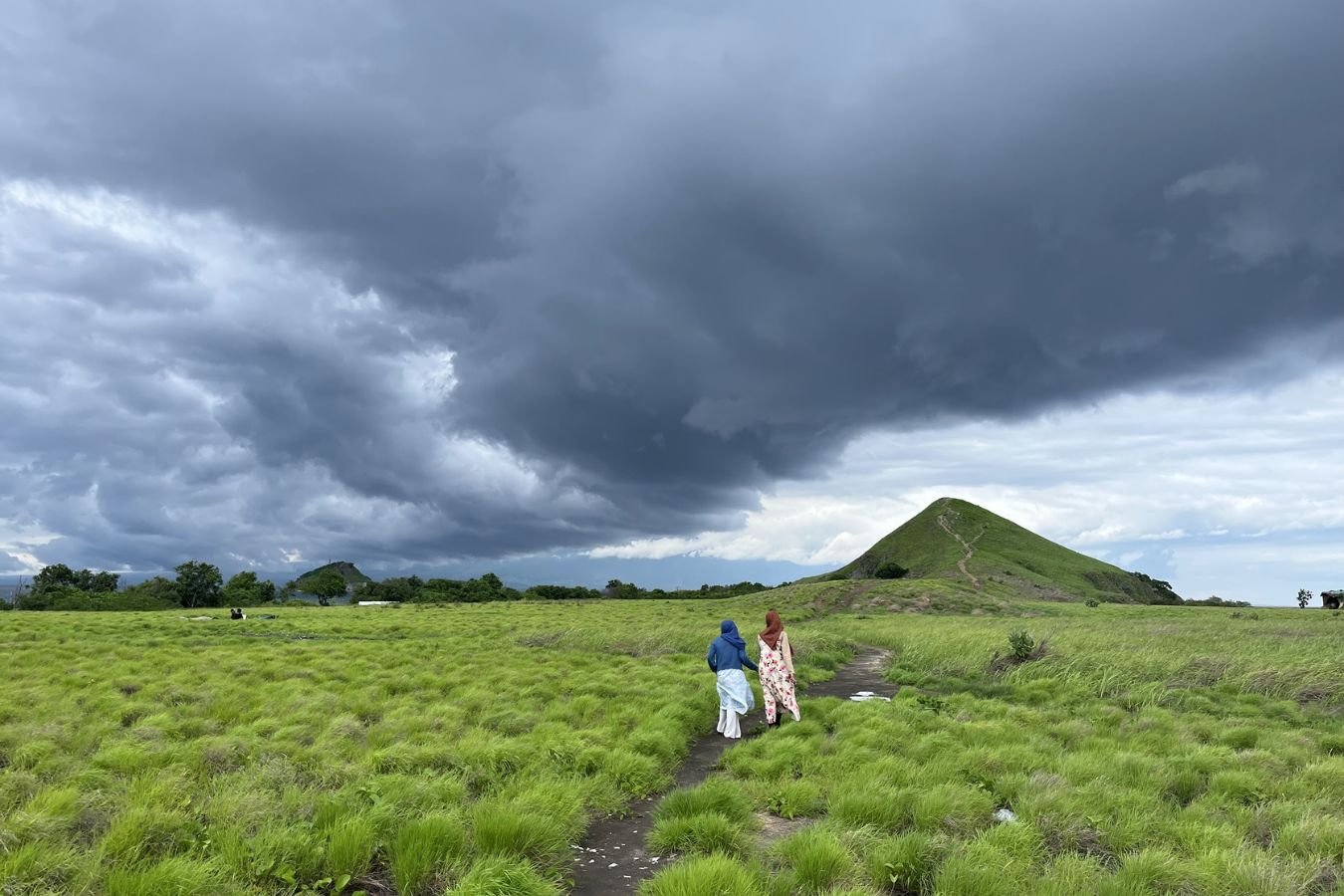
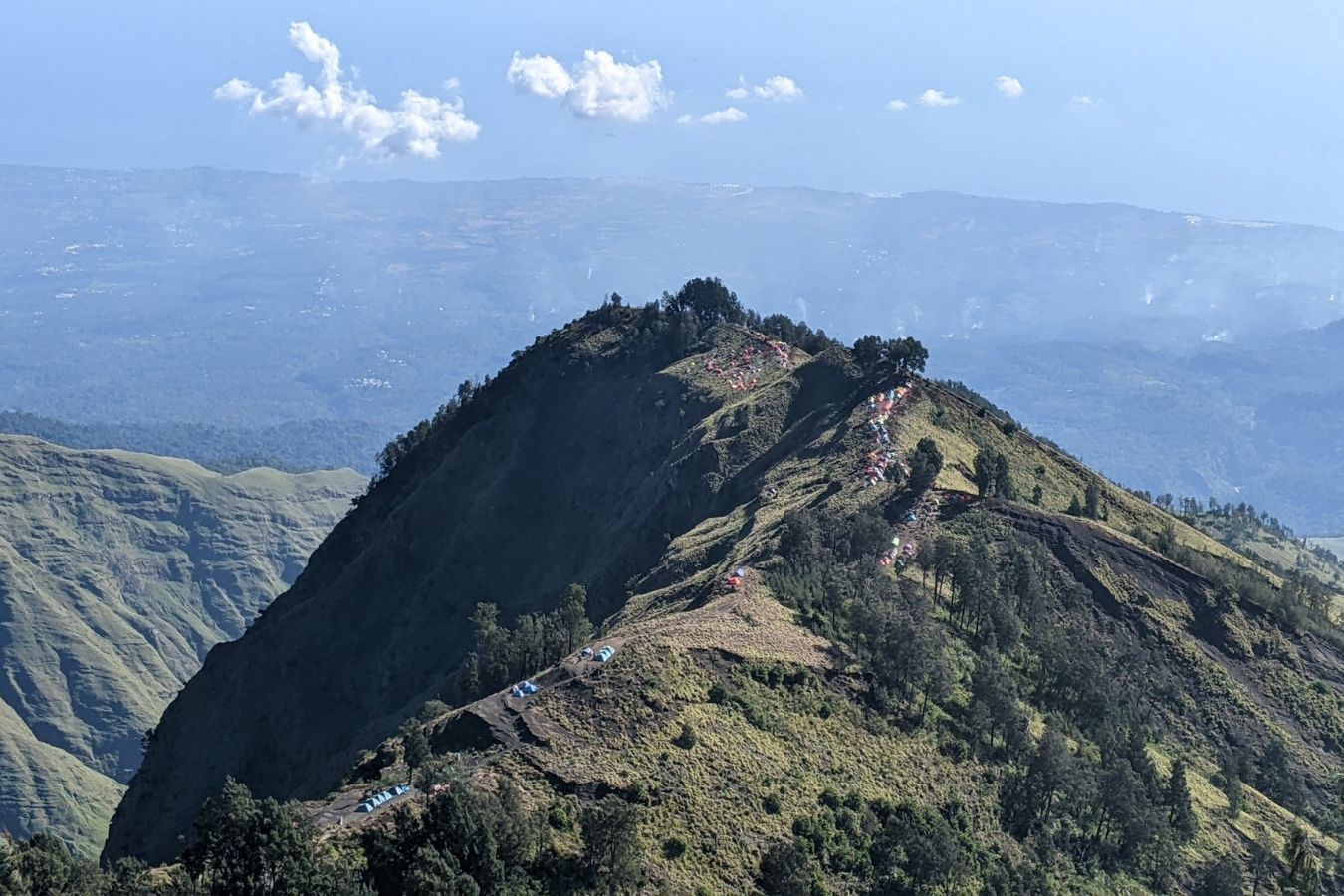
Kenawa Island is close to the mainland, but the short boat crossing is enough to make it feel separate from everything around it. The island is known for its open grassland and small hill. The hike is not long, but from the top you get a wide view across the water toward the surrounding islands and the mountains of Sumbawa.
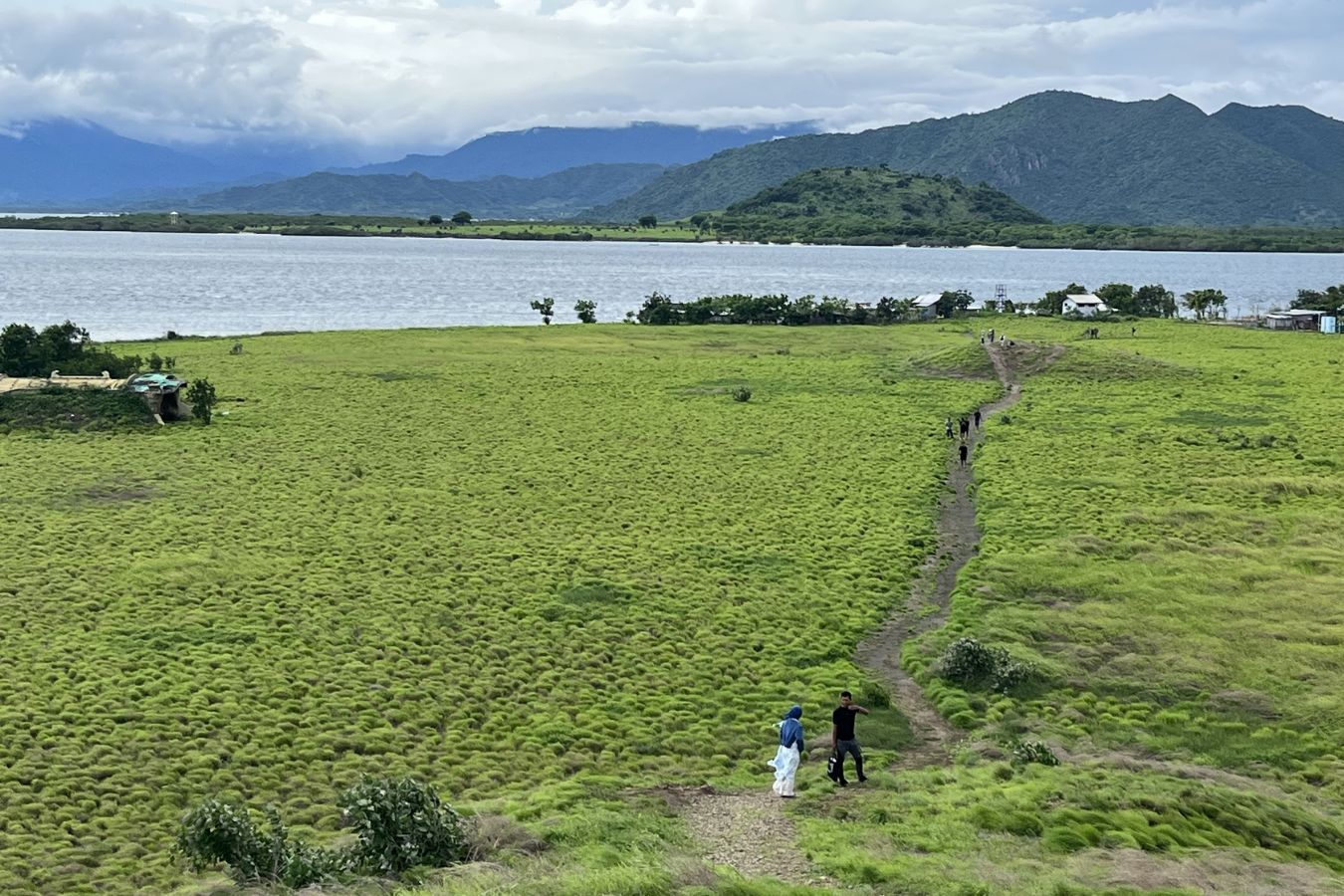
Kenawa works well as a combination of swimming, snorkelling, and hiking. You can spend time in the water, walk across the grassland, climb the hill, and wait for the colours to change toward sunset.
Staying one night gives the experience a different rhythm. Day visitors eventually leave, the island becomes quieter, and you can enjoy both sunset and sunrise without worrying about the return boat.
Accommodation around Poto Tano is limited and can feel expensive compared with other parts of Sumbawa. Rumah Kenawa can help arrange accommodation and a boat trip. It is better to contact them before arriving rather than assume that a boat or room will be available immediately.
Crossing Sumbawa by Road
After Kenawa, my journey continued east along the main road toward Sumbawa Besar, Labuhan Jambu, and eventually Bima. There are several ways to travel across the island:
- Renting a car with a driver is the easiest and most flexible option.
- A motorcycle is ideal for travellers who want to explore smaller roads and the southern coastline.
- Public buses, travel minibuses, and ferry boats connect Lombok with Sumbawa and all the way to Bima.
- Cycling offers the greatest sense of the landscape, but it requires careful preparation for the heat.
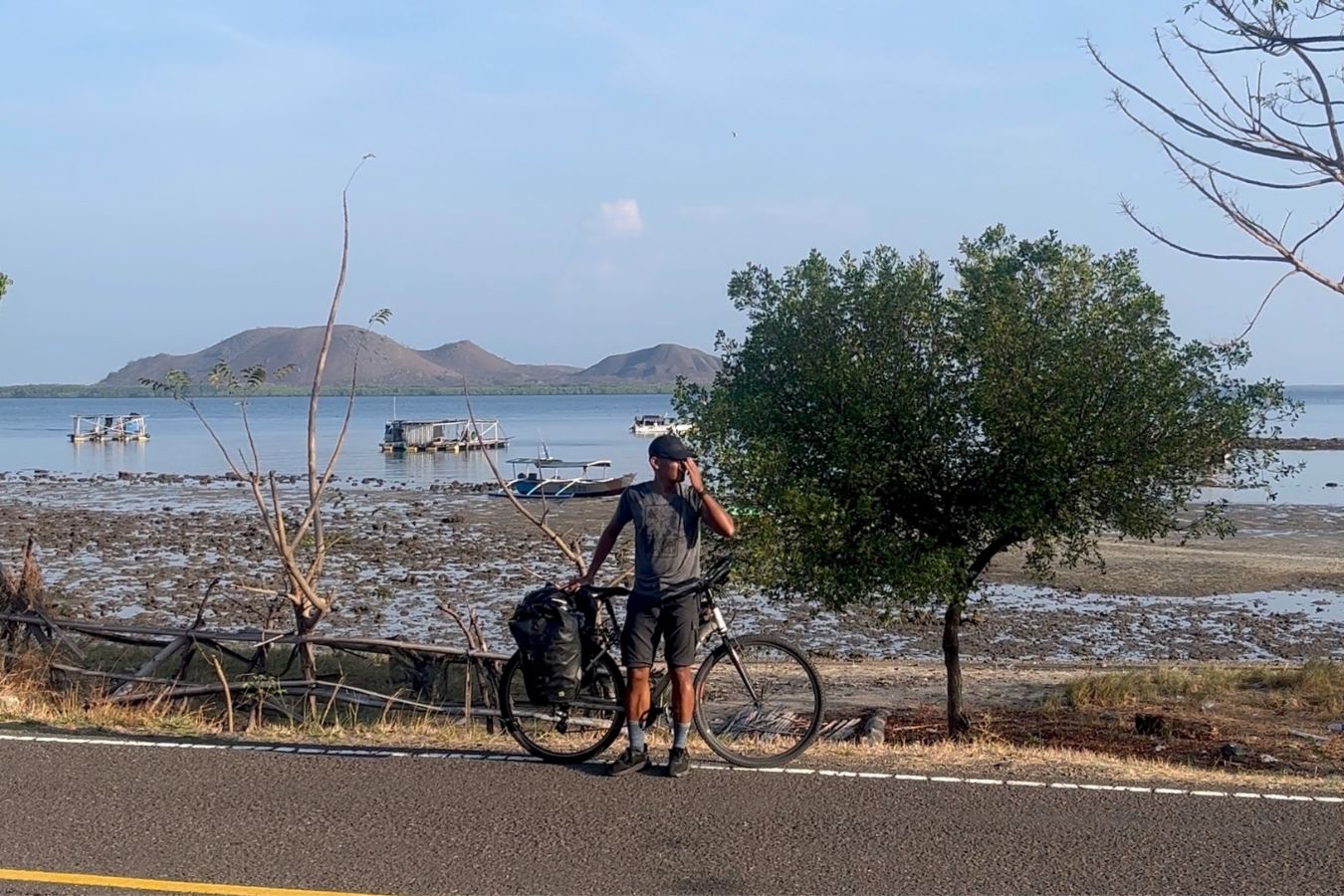
I met many travellers crossing Sumbawa by motorcycle. Most followed the northern route, similar to the public buses, before either returning to Lombok along the less-explored southern coast or continuing east toward Flores.
For public transport, Pancasari Tour and Titian Mas are useful operators to check. Travel buses heading toward Bima can normally make flexible stops when arranged with the driver.
If you are coming from Mataram, tell the operator in advance that you want to stop at Poto Tano for Kenawa Island. You can then arrange another vehicle east after completing the island trip. For Saleh Bay, ask to be dropped at Labuhan Jambu. I used the same bus company again the following day and arranged for the driver to pick me up there on the way to Bima.
A Serious Note About the Heat
Sumbawa is extremely hot.
I have cycled in many parts of Indonesia, but this was the first time I felt nauseous during a cycling trip because of the heat. The central part of the island, particularly through Sumbawa Regency, felt the most punishing. The road can be exposed for long stretches, with little shade and considerable distance between convenient stopping points. Anyone cycling or travelling by motorcycle should carry more water than they think they need.
Starting early makes a significant difference. I would avoid cycling through the middle of the day whenever possible. Electrolytes, sun protection, and regular breaks are not optional here.
Do not underestimate the distance between shops either. In smaller villages, you may not find the type of minimarket coverage common in Java or Bali. Carry snacks and drinks whenever you leave a larger town.
Should You Stop in Sumbawa Besar?
Sumbawa Besar is the principal city in Sumbawa Regency and an important place for supplies, transport, and accommodation. However, if your time is limited and you are not planning to visit Moyo Island, I would not make it the main focus of the trip. For this route, Sumbawa Besar works better as a practical stop than as the final destination.
Moyo Island is the major reason to spend additional time here. If Moyo is not part of your plan, continuing toward Labuhan Jambu and Saleh Bay creates a more direct journey.
Labuhan Jambu: The Gateway to Saleh Bay
Labuhan Jambu is a small coastal community and the departure point for many whale-shark trips into Saleh Bay.
A large part of the village’s population comes from Bugis families whose parents or grandparents migrated to the area. This connection is visible in the fishing culture and the boats operating around the bay.
The village is quiet, and facilities are limited. There was only one larger minimarket within several kilometres during my visit. Walking long distances during the day is uncomfortable because of the heat, and services of ride sharing apps such as Gojek and Grab should not be expected outside larger places like Sumbawa Besar or Bima.
Prepare snacks, water, and any personal supplies before arriving.
For accommodation, GG Homestay Labuhan Jambu is affordable and within walking distance of the departure pier. Ghaniya Homestay is another affordable and very quiet option. It is approximately four kilometres from the pier, so it makes more sense for travellers riding their own rented motorcycle.
The Journey Into Saleh Bay
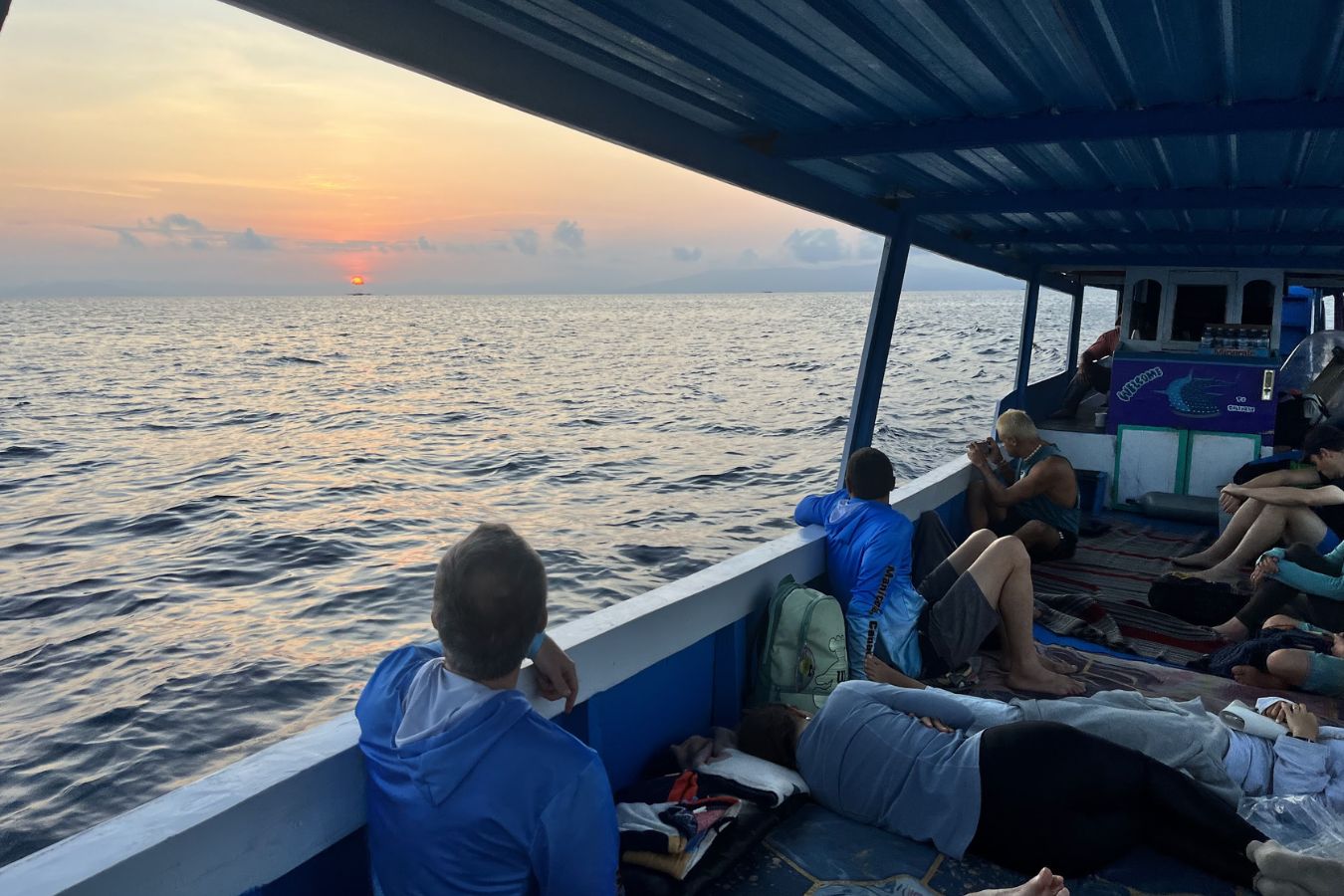
The whale-shark trip starts early—very early.
We boarded the boat around 4 a.m. and travelled into Saleh Bay while it was still dark. Gradually, the horizon began to change colour. Sitting on the boat and watching the sunrise over the water became one of the highlights even before we encountered the whale sharks.
The boats head toward the bagan, traditional fishing platforms operating in the bay.
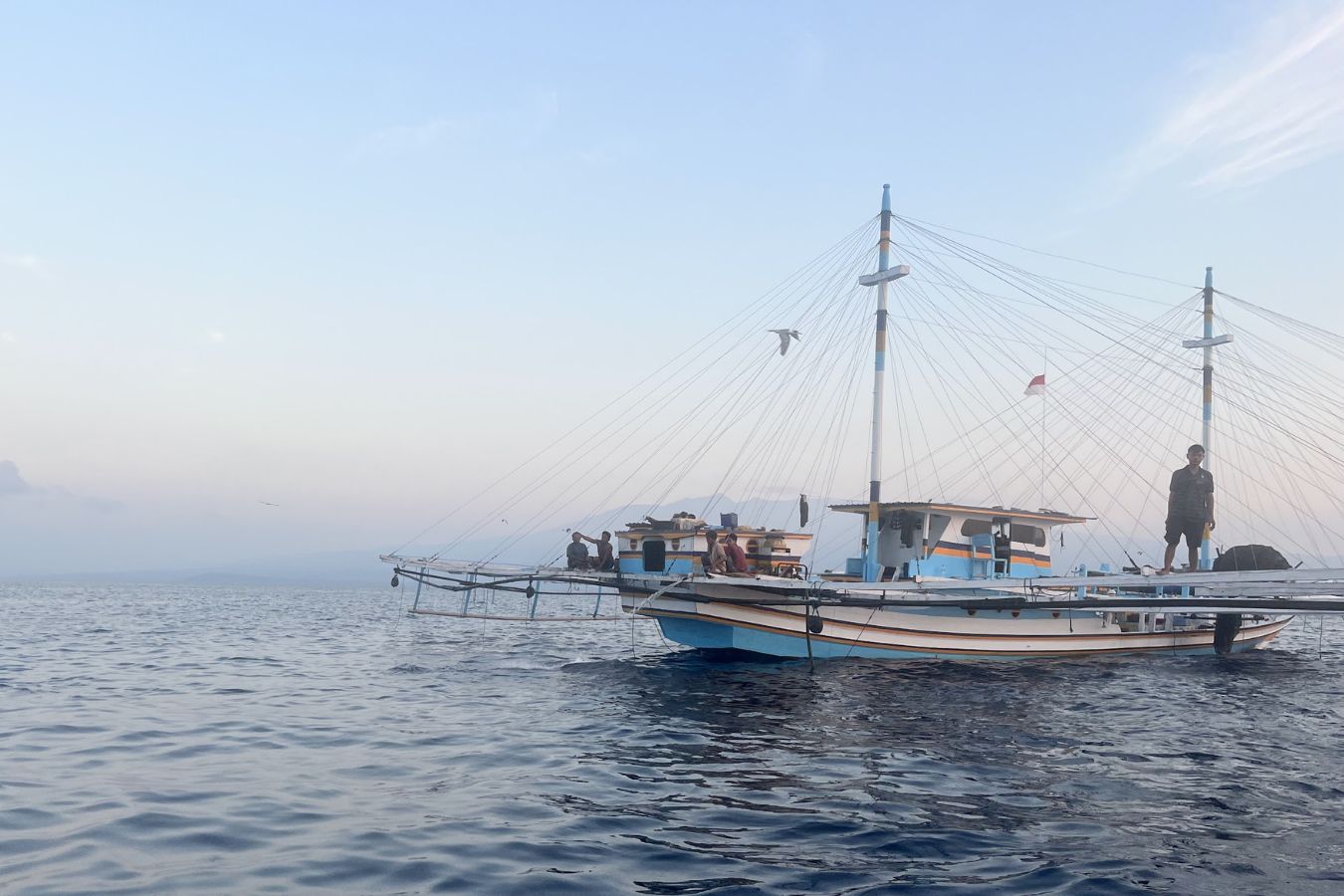
The whale sharks are attracted to the area around these fishing platforms. Seeing the boats emerge in the early light, surrounded by open water and distant mountains, gives the journey a sense of scale that photographs cannot fully capture.
Weather and wildlife never follow a fixed timetable, so sightings cannot be treated like an attraction with guaranteed opening hours. Going with an experienced local operator matters.
Swimming With Whale Sharks
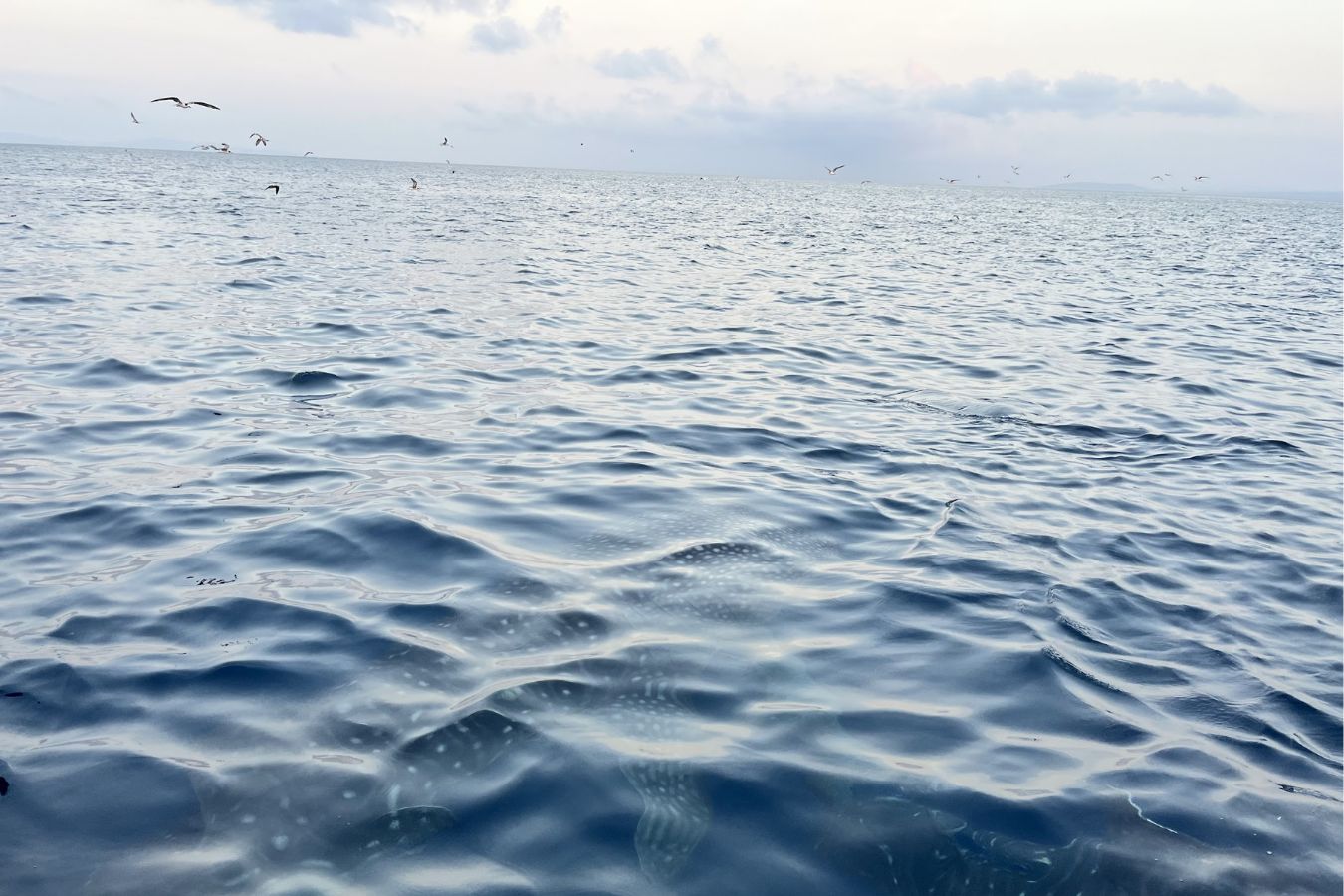
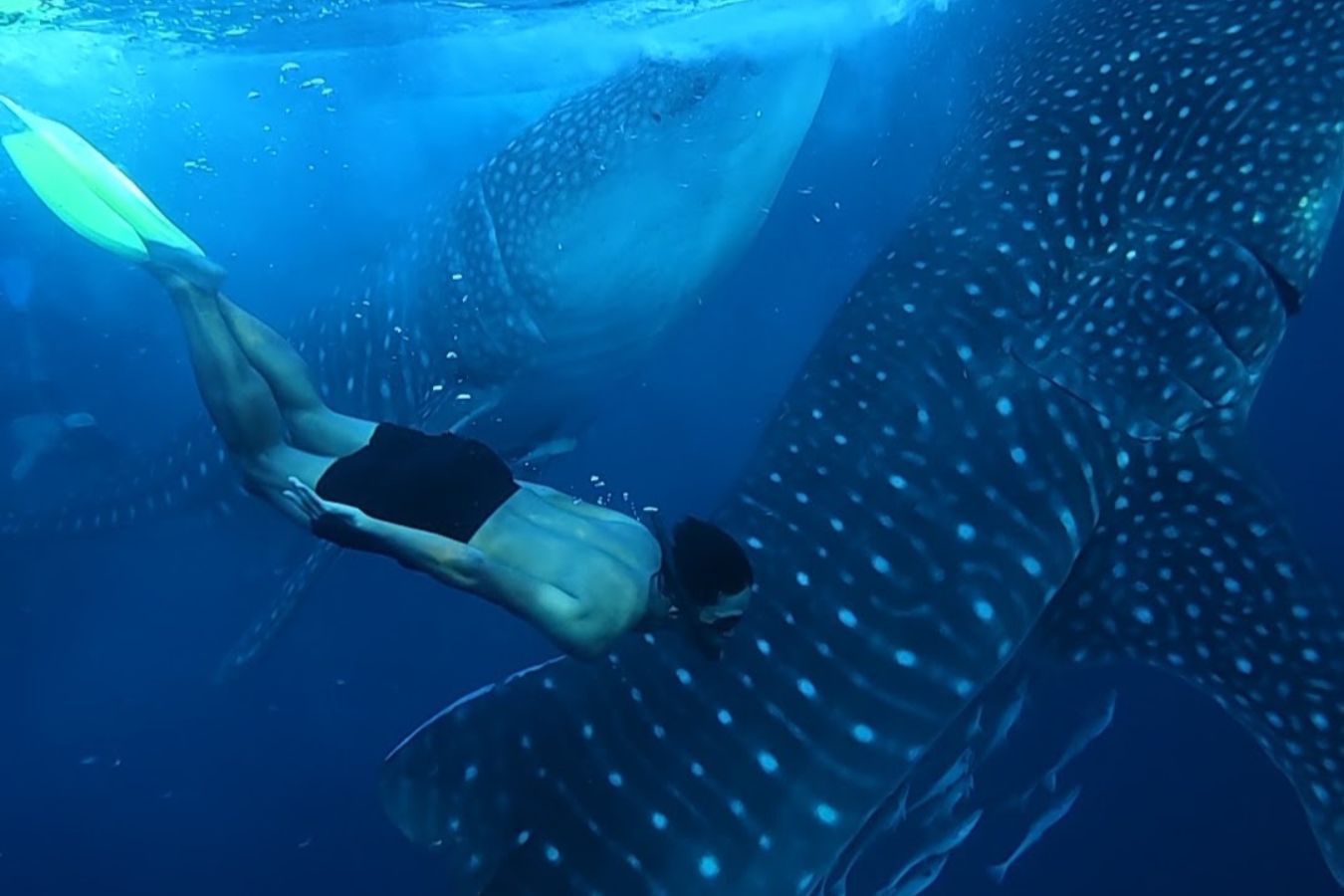
Swimming with whale sharks was magical.
Even when you know how large they are, seeing one underwater for the first time is difficult to process. They move slowly and calmly, but their size changes your entire sense of the space around you. From the surface, you first see the spotted pattern moving beneath the water. Then the full shape becomes visible. When several appeared around us, the experience became almost unreal.
You do not need to be an advanced swimmer, but being comfortable in open water makes the experience far better. Basic freediving skills also help if you want to descend briefly for photographs or videos—although respecting the animals and maintaining an appropriate distance must always be more important than getting the perfect image.
For visitors who prefer not to swim freely, some operators provide a transparent canoe or other ways to observe the animals from the surface.
I arranged the trip with Chen, also known as Zainuddin, the owner of Saleh Bay Whale Sharks. He was extremely helpful and can also assist with wider travel arrangements around Sumbawa.
The standard trip generally includes the boat journey, snorkelling equipment, a guide, refreshments, and access to the whale-shark area. Prices and conditions can change, so contact Chen directly for the latest details.
Most importantly, treat this as a wildlife encounter. Follow the guide’s instructions, avoid touching or chasing the whale sharks, and give them space to move.
Stay Two Nights, Not One
My strongest practical recommendation is to stay in Labuhan Jambu for two nights.
The first night allows you to rest before the 4 a.m. departure. After returning from the trip later in the morning, a second night gives you time to recover rather than immediately continuing across Sumbawa.
Trying to combine the whale-shark trip with a long onward journey on the same day is possible, but it makes the experience unnecessarily tiring. The better rhythm is simple:
- Arrive in Labuhan Jambu and stay overnight.
- Depart for Saleh Bay around 4 a.m.
- Return, rest, and spend a second night.
- Continue toward Bima the following morning.
Travelling With the Osprey Nebula 32
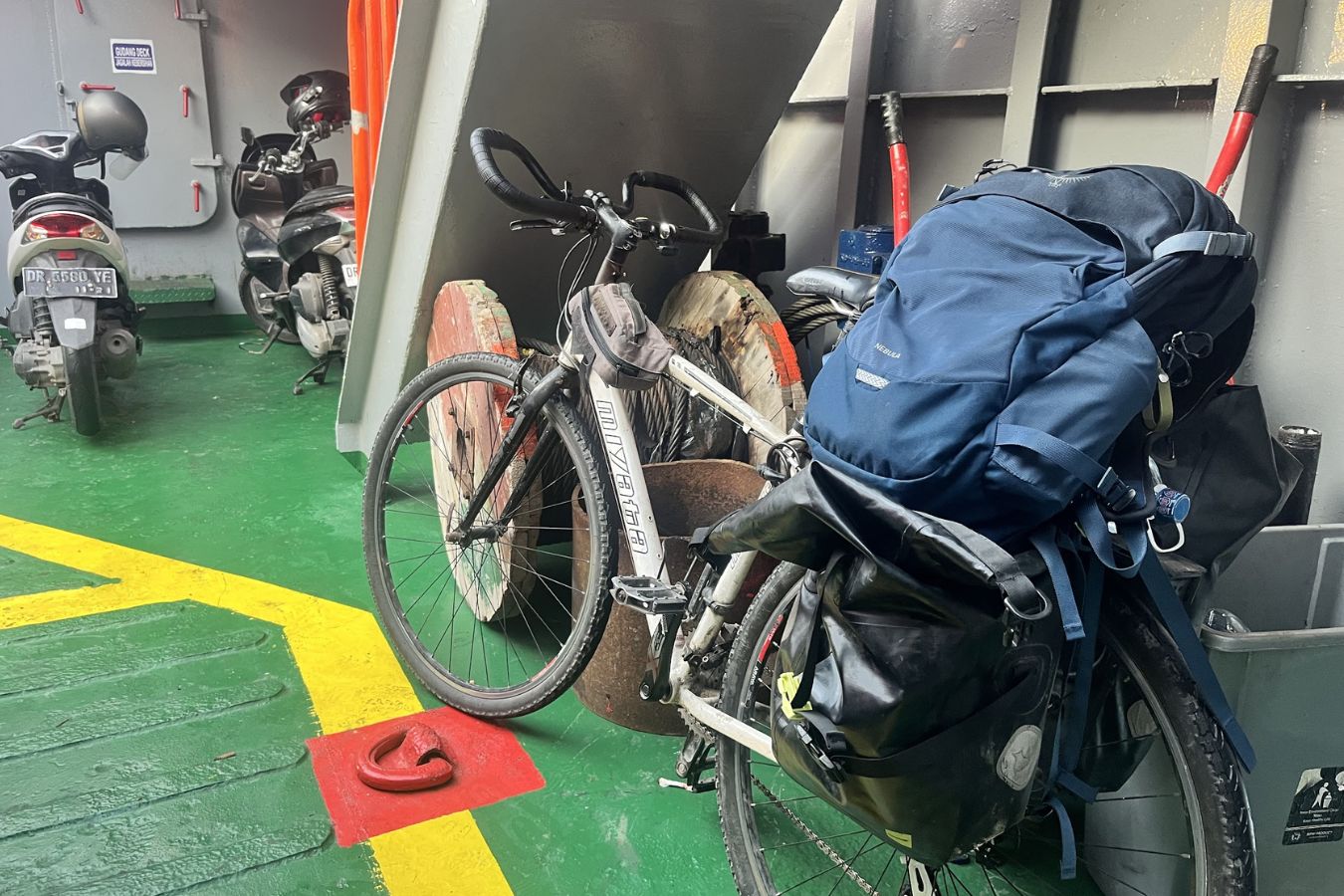
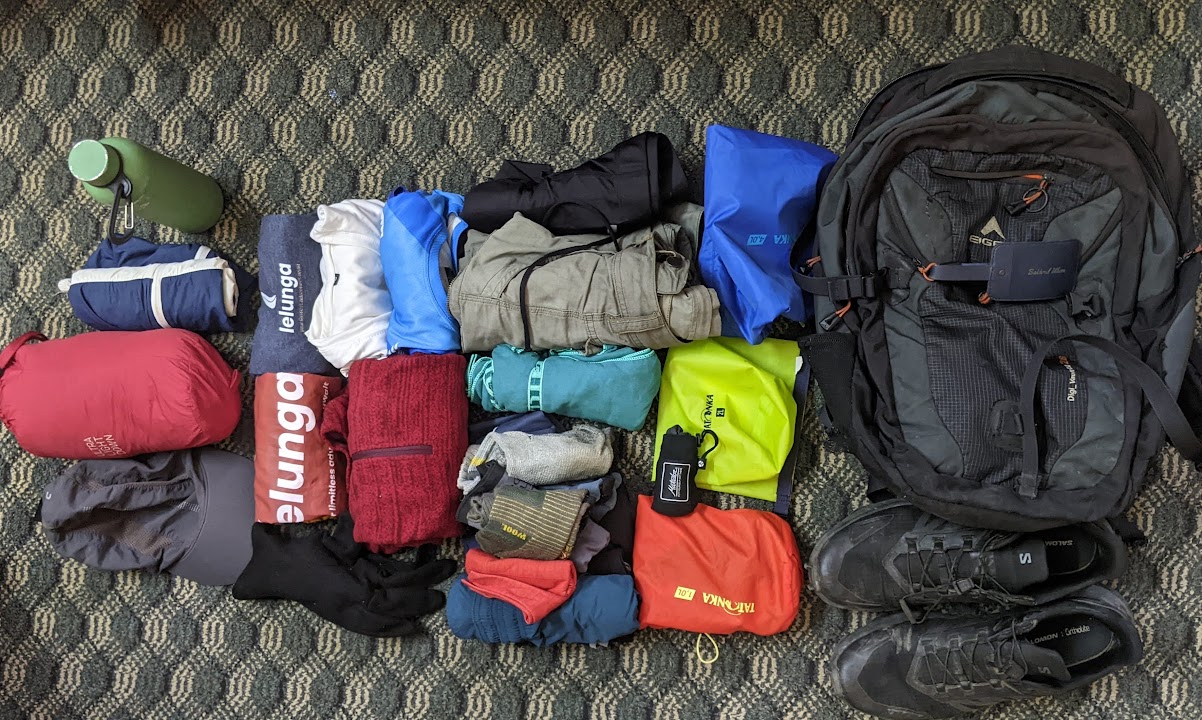
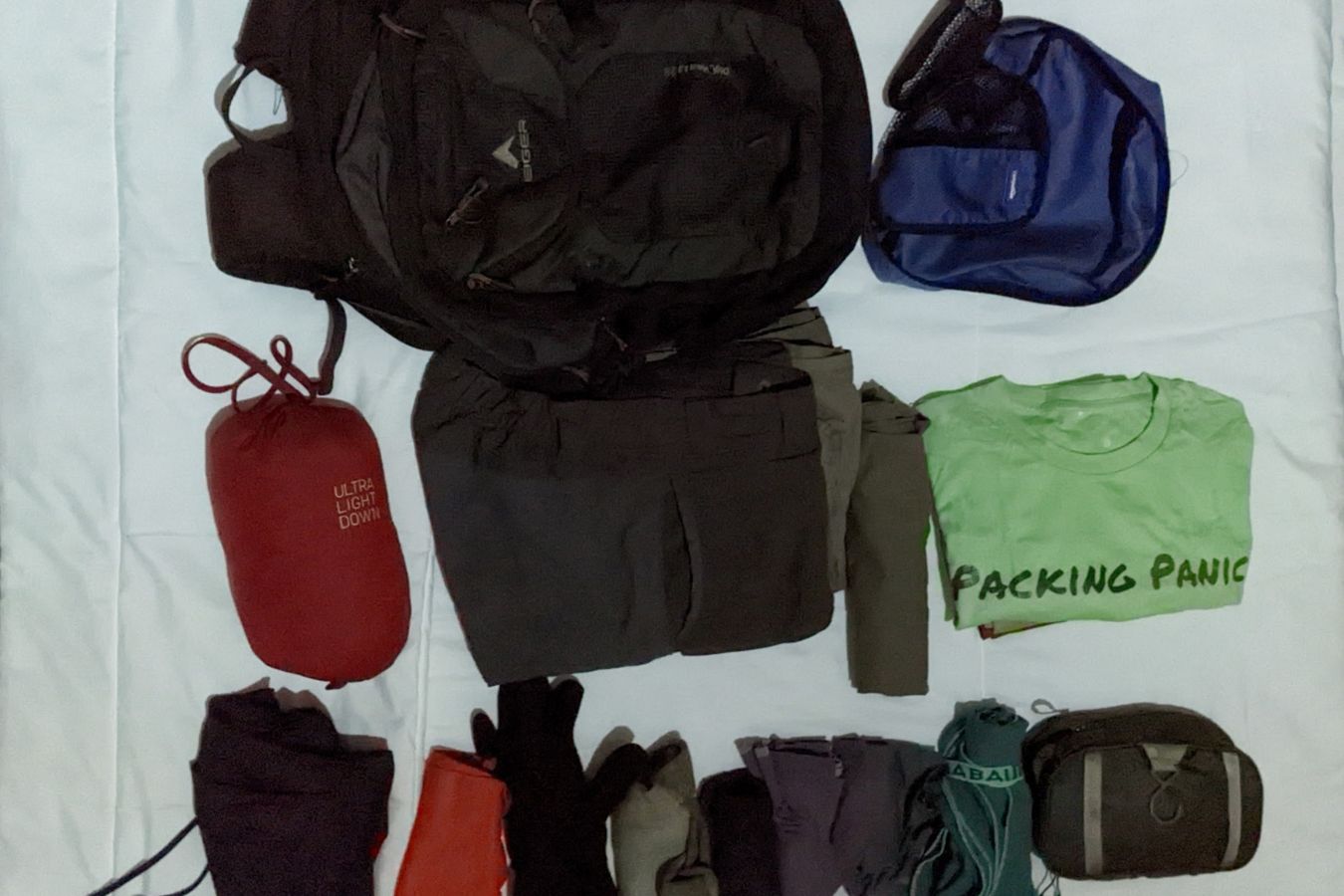
For this journey, I used the Osprey Nebula 32.
Travelling across Sumbawa involved ferries, cycling, buses, homestays, and early-morning boat trips. The Nebula worked well because it was large enough for my daily essentials and electronics without becoming another oversized piece of luggage.
Its organization was especially useful when moving repeatedly between different forms of transport. I could keep the things needed on the ferry or bus accessible while the rest of my cycling equipment remained packed separately. It was not the focus of the journey, which is exactly what I want from a backpack. It simply adapted to every part of the trip without causing another problem to solve.
Continuing From Bima to Labuan Bajo
Bima is the most practical eastern endpoint for this route.
I flew from Bima to Denpasar because the ticket was cheaper than flying from Sumbawa Besar. The flight itself became an unexpected final highlight.
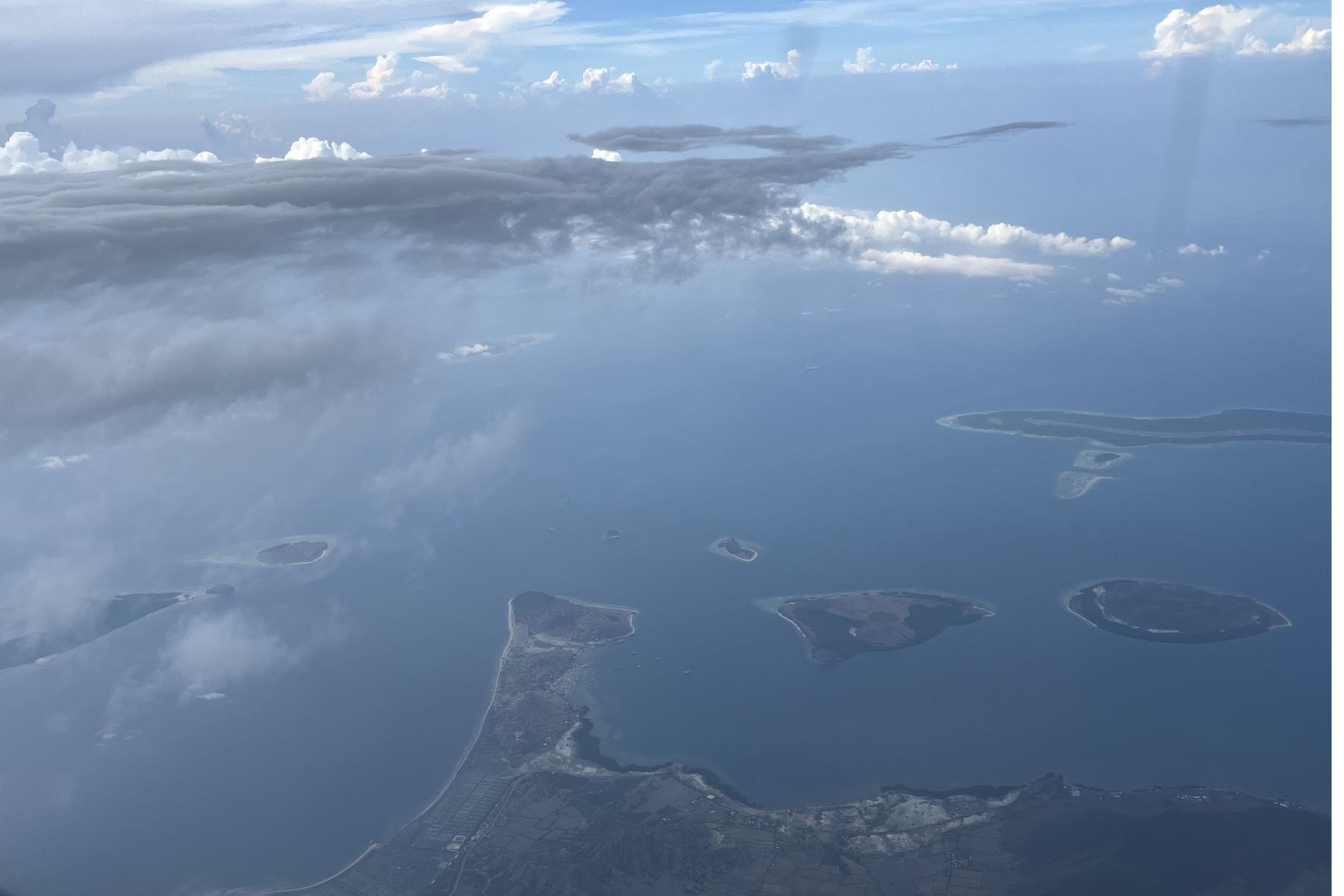
We flew on an ATR 72, and the landscape felt much closer than it usually does from a larger jet. From the window, I could look back across Sumbawa and recognize parts of the same coastline and road I had travelled by bicycle. Seeing that long route from above—compressed into a single view after experiencing it slowly from the ground—was a magnificent feeling and a fitting way to end the journey.
Travellers who want to continue east can travel from Bima toward Labuan Bajo and Flores by sea.
There are two main options:
- PELNI from Bima Harbour: Passenger ships operate less frequently, so schedules must be checked carefully.
- ASDP ferry from Sape: Ferries from Sape are more frequent and can carry vehicles. Sape is approximately 45 kilometres from Bima City.
If you are travelling with a motorcycle, car, or bicycle and want to continue overland through Flores, Sape is generally the more practical route. Leave enough time for the transfer from Bima and confirm the sailing schedule locally.
My Recommended Sumbawa Route
For travellers who want to visit Kenawa Island and Saleh Bay without adding Moyo Island, I would recommend:
- Travel from Mataram toward Bima with Pancasari or Titian Mas.
- Stop after the Kayangan–Poto Tano ferry crossing.
- Take a boat to Kenawa Island and stay one night if possible.
- Rejoin an eastbound travel bus.
- Continue through Sumbawa Besar without a long stop.
- Ask the driver to drop you in Labuhan Jambu.
- Stay two nights for the Saleh Bay whale-shark trip.
- Arrange an eastbound pickup with the same bus operator.
- Finish in Bima.
- Fly onward or continue to Sape for the ferry to Labuan Bajo.
A private car and driver will make this route easier, particularly for a group. Public transport is possible, but communication with the driver is essential because Labuhan Jambu is a requested stop rather than a major terminal.
Final Reflections
-
Sumbawa demands more patience than Lombok.
-
The distances are longer, the heat can become exhausting, and transport requires more coordination. Yet those same qualities are part of what makes the island rewarding. It has not been organised into one convenient tourism circuit.
-
The journey moves between ferry decks, dry roads, fishing villages, green islands, and wide bays. Kenawa offers the pleasure of slowing down almost immediately after arriving. Saleh Bay provides something much rarer: the chance to enter the water beside one of the largest animals on Earth.
-
For me, the two sunrises framed the entire experience. The first appeared during the ferry crossing into Poto Tano. The second came from a small boat moving into Saleh Bay before meeting the whale sharks.
-
Between them was the difficult part: the road, the heat, the waiting, and the uncertainty of moving across Sumbawa.
That contrast is what made the journey stay with me.
Useful Contacts
- Saleh Bay Whale Sharks — Chen/Zainuddin, for whale-shark and wider Sumbawa arrangements
- Pancasari Tour
- Titian Mas
- Ferizy — ASDP ferry information
- Rumah Kenawa
- GG Homestay Labuhan Jambu
- Ghaniya Homestay
Related