Travel Tales
Cycling Flores to Rote Island: Ships, Ash, and the Slow Route Across East Nusa Tenggara
East Nusa Tenggara had been on my mind for a long time. After my first visit to Labuan Bajo in 2022 for a boat trip, I knew I wanted to return—but differently. This time, I was drawn to a slower kind of journey, shaped by port cities, ship decks, conversations with strangers, and long stretches of road where nothing much seems to happen—until suddenly everything does.
Part of that pull comes from how Nusa Tenggara Timur (NTT) is built. The province stretches across more than 560 islands, divided into 22 regencies, with major landmasses like Flores, Timor, Sumba, Alor, and Rote forming a loose chain across the eastern edge of Indonesia. It is not a place you move through quickly. Travel here depends heavily on ferries, shifting schedules, and a willingness to let the sea become part of your route.
Cycling trips are nothing new to me. But with the rhythm of daily professional work, I could only dedicate long riding days to weekends. That constraint became part of the design.
After some planning, I set my sights on doing this following my birthday trip to South Celebes. I had already sent my bicycle ahead to a friend’s place in Makassar—quietly committing to the idea before fully knowing how it would unfold.
On paper, the plan was simple: leave Makassar on a PELNI ship, arrive in Maumere, and cycle east along the northern coast of Flores to Larantuka. From there, continue by sea to Kupang, cross over to Rote Island for a few quiet days, return to Kupang, and finish the journey with a flight to Java (my hometown), sending the bicycle home separately.
In practice, like most good overland trips in Indonesia, the route kept shifting. Mount Lewotobi erupted. Ash covered sections of the road. Scheduling crossings between islands became tricky, and decisions had to be made one port at a time.
And that was exactly why this journey stayed with me.
Leaving Makassar by Sea
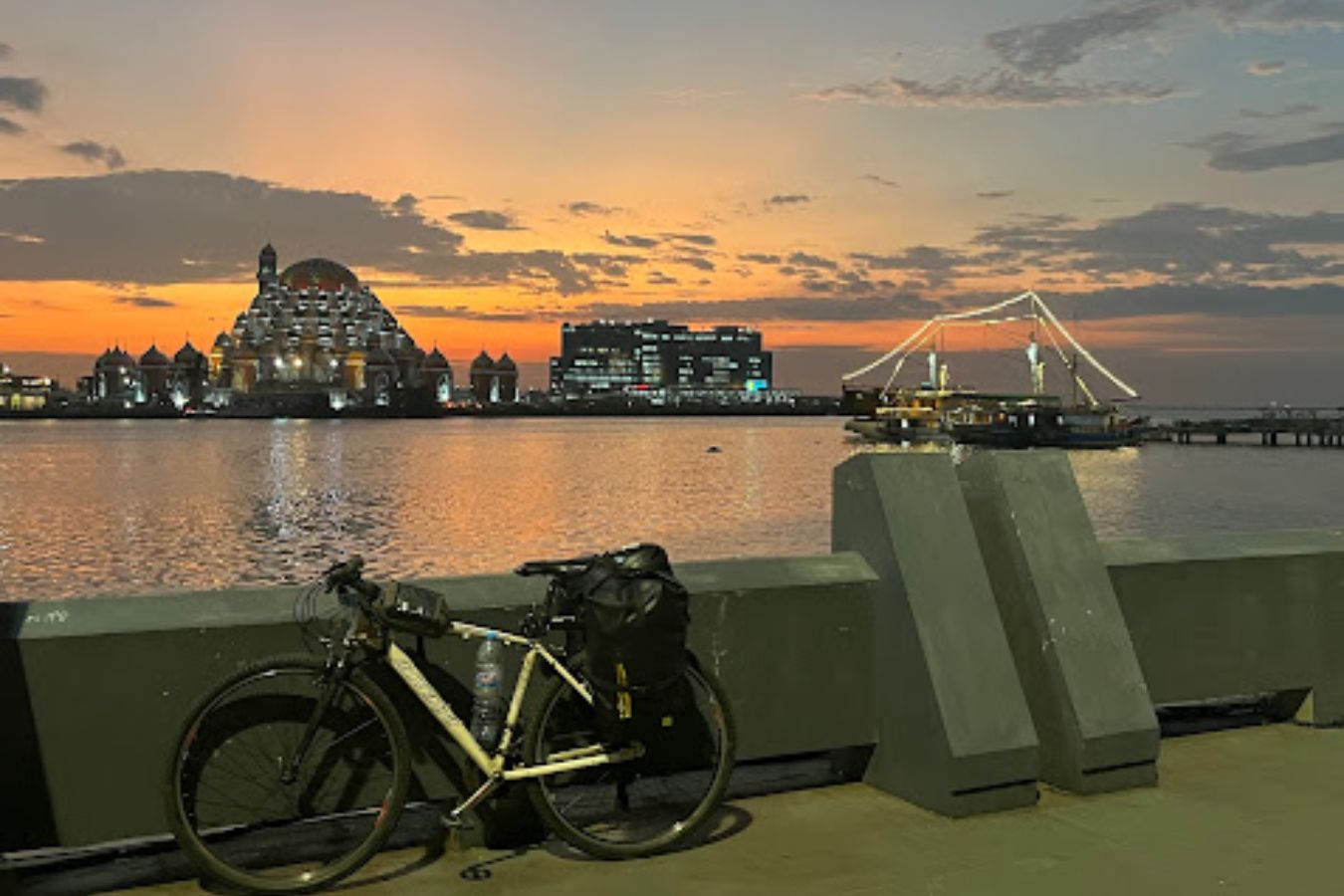
On 1 August 2025, I boarded KM Siguntang in Makassar for the long crossing to Maumere.
I have always liked Indonesian passenger ships for the same reason some travellers dislike them: they are not private, not polished, and not optimised for speed. My first experience with this type of ship was in 2023 during my cycling trip from Bangkok to Cirebon, crossing from Batam to Jakarta.
You become part of a moving public space. Families unwrap meals, people nap wherever they can, children run between bunks, and conversations start easily.
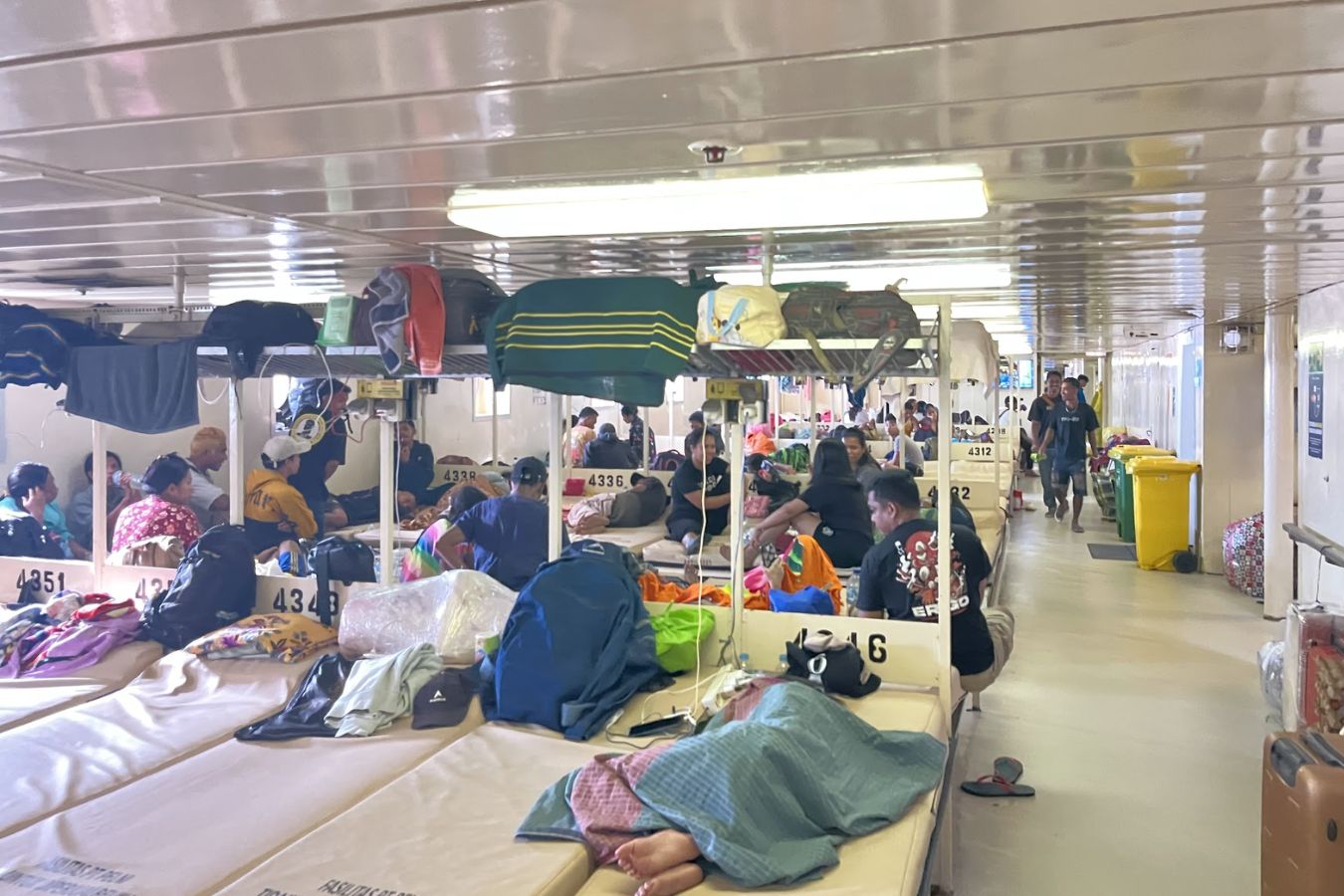
That is what makes PELNI different—it connects people as much as places.
On this trip, I met many workers from East Nusa Tenggara returning from palm oil plantations in Kalimantan. Some had been away for months or years. You could feel their excitement—laughing, sharing stories, calling family.
A quick note on classes
- Kelas 1 / 2 → Cabin-based, quieter, more comfortable
- Kelas Bisnis → Assigned beds, mid-level comfort
- Kelas Ekonomi → Large shared space, most social
I took Kelas 2, which made a big difference for rest on a long crossing.
Working from the ship
There is usually WiFi available in the cafeteria area at an affordable price. It is not perfect, but good enough for light work.
As a remote worker, this meant I could still stay connected—turning what would normally be dead time into something usable.
The crossing itself became part of the journey. I spent hours on the deck, watching the sea and checking on the bicycle more often than necessary.
Crossing to Maumere with PELNI Ship
For this trip, Maumere made the most sense as an entry point.
Flores rewards a slow approach. You can come for volcanoes, diving, catholic heritage, fishing villages, or simply for the pleasure of moving through a landscape that rarely stays flat. Most people know the western part of Flores far better than the east. Labuan Bajo gets the headlines. East Flores feels quieter and less packaged.
A few months earlier, I had visited the Java Man museum, which sparked a growing interest in archaeology and human evolution. Flores, known for Homo floresiensis, added another layer of curiosity to the journey.
Arriving by ship gave me time to settle into the journey before it properly began.
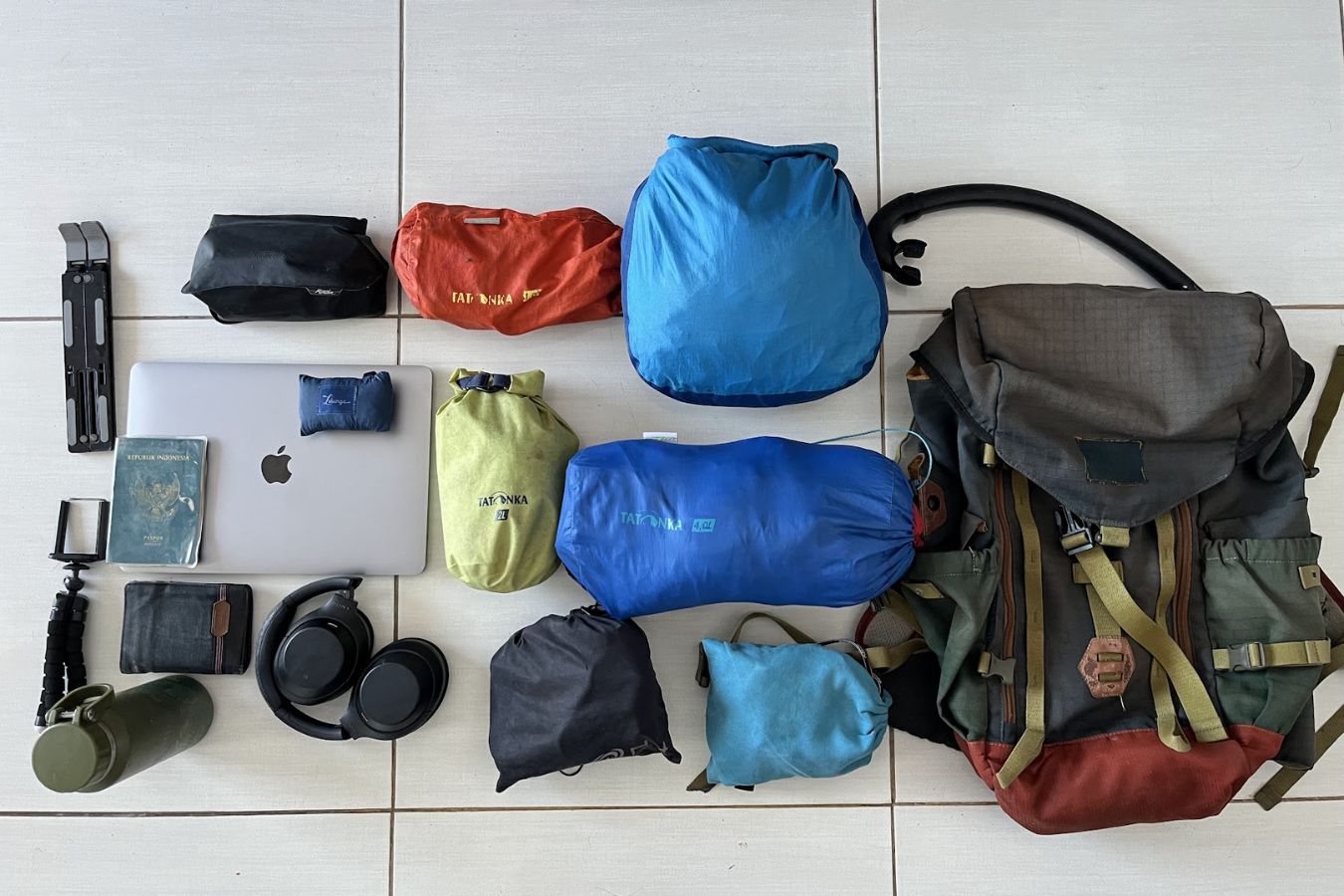
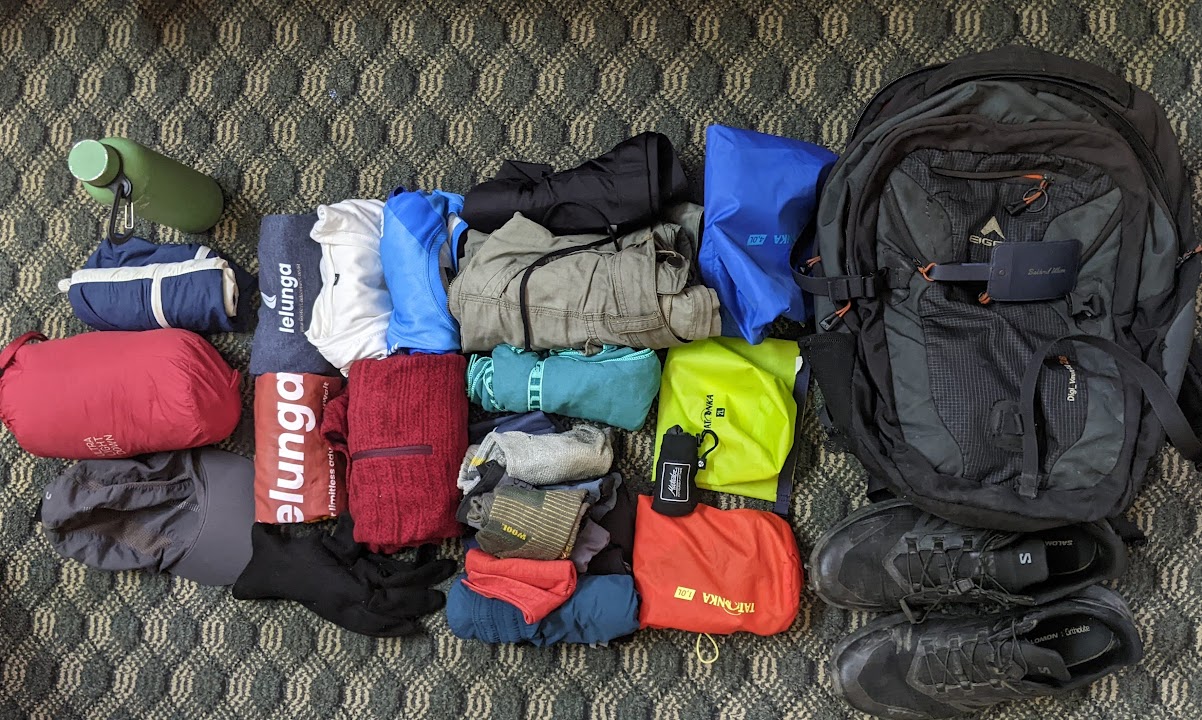
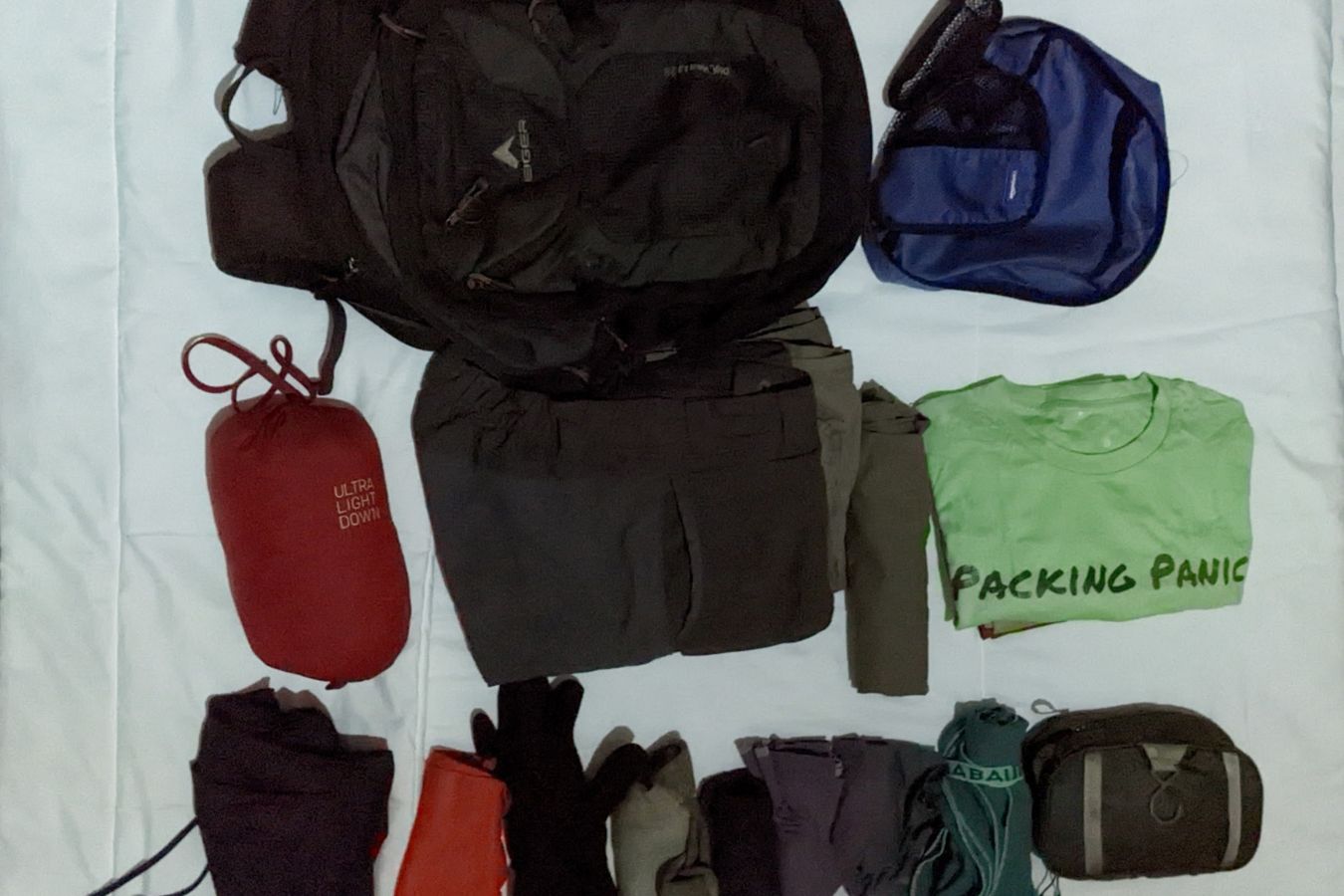
I packed lightly, but not carelessly. The challenge is not just weight—it is accessibility. Rain gear has to be easy to reach. Electronics need to stay dry. For remote work days, I also needed to keep things organized, so packing sacks have become essential for me.
I stayed for two nights after arriving. That pause mattered. After a ship crossing, I prefer not to start cycling immediately. Ports are tiring, and disembarkation takes time.
During that rest day, I cycled around the city and stopped at La Maffa Coffee and Roastery.
If you have more time, Taman Doa Maria Bunda Segala Bangsa offers a peaceful setting with a wide view over the surrounding landscape.
This was also where the trip began to loosen. East Nusa Tenggara does not always follow your plan—you follow it.
Expect the Unexpected: Mount Lewotobi Changes the Mood
Just before I continued east, the situation around Mount Lewotobi was shifting again. There had been another eruption, and as always with volcanic activity in Indonesia, the real impact was not limited to one dramatic headline. It changed road conditions, air quality, local routines, and the level of uncertainty travellers had to work around. I followed local reports, including updates like this one from Detik, and waited to see whether it still made sense to continue.
In the end, I did what many trips in Indonesia quietly teach you to do: I waited, listened, and then moved on carefully.
The ride east began on 3 August.
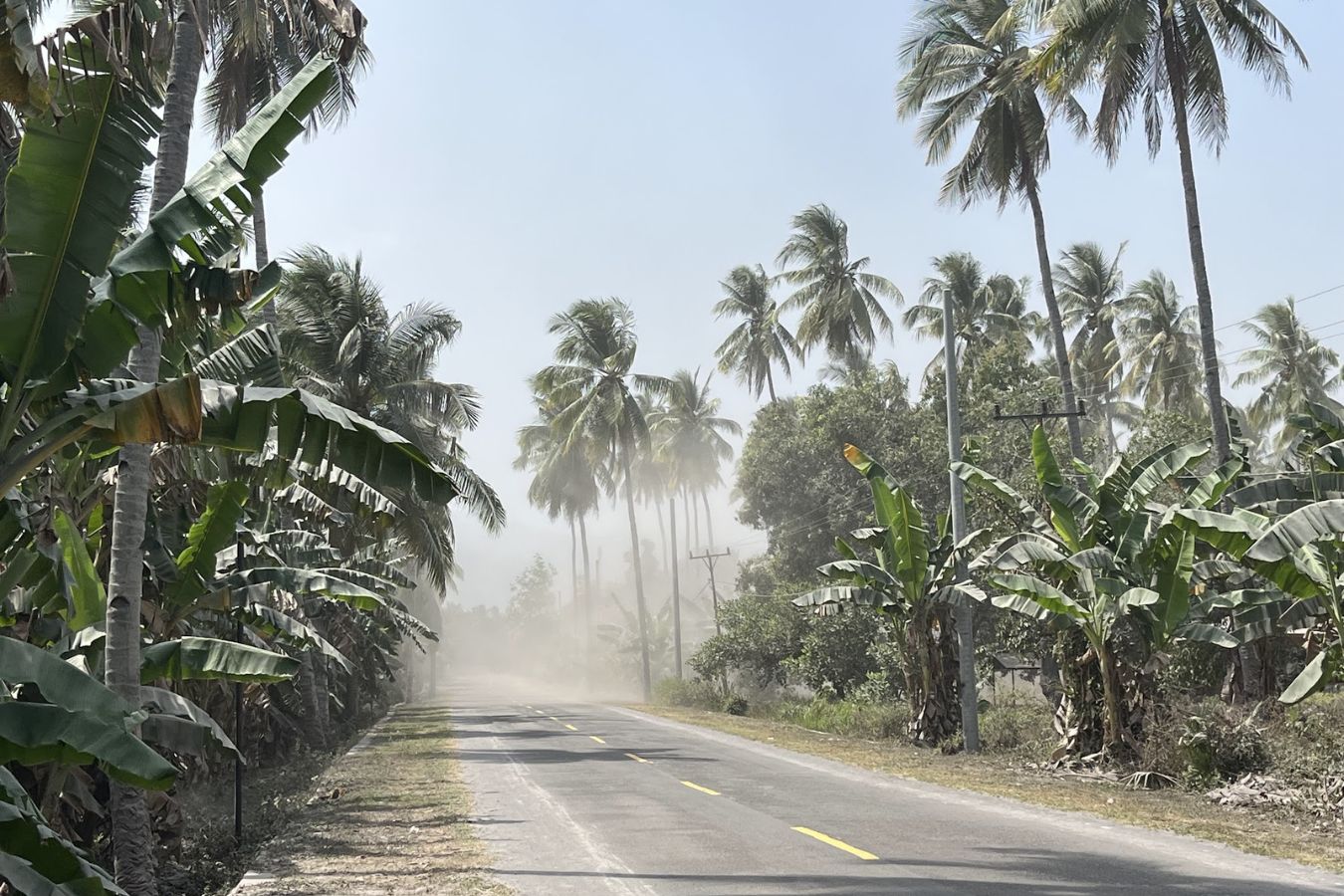
There is something unsettling about riding through a tropical landscape that should feel lush and soft, only to find it coated in ash and dust. The palms were still there. The sea was still blue. But the road carried a dryness that changed the atmosphere completely. It felt like the landscape had inhaled and not yet exhaled.
The eruption did not cancel the journey, but it changed how I experienced it. The road demanded more attention. Villages felt more alert. Beauty and disruption sat side by side, as they often do in Indonesia.
Cycling the North Coast of Flores
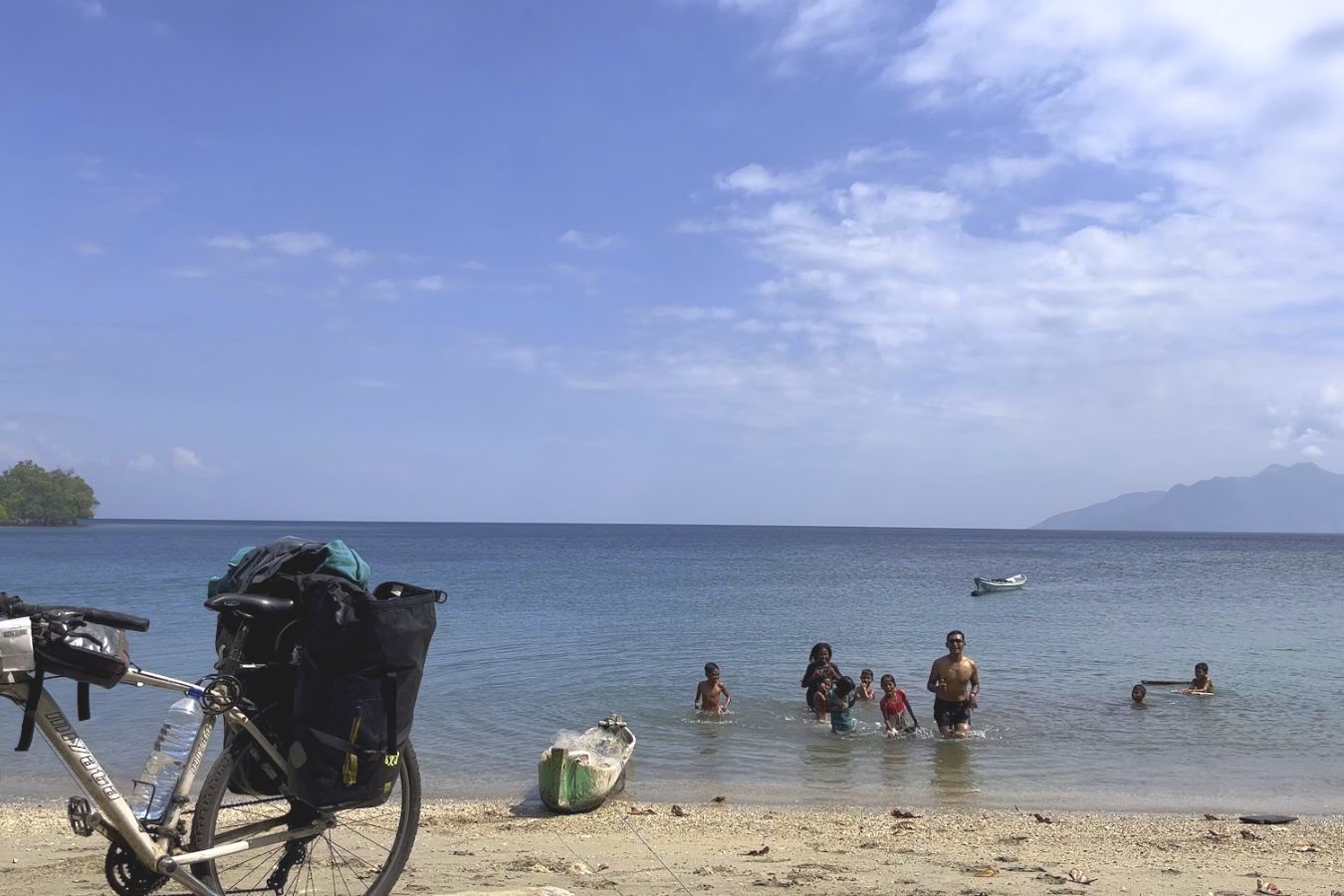
This stretch, from Maumere toward Larantuka, was the heart of the trip.
The north coast of Flores has the kind of road that keeps pulling your eyes away from your handlebars. Blue water on one side, hills and villages on the other, then long open sections where the coastline curves away and the whole day seems to open up in front of you. It is not the most famous cycling route in Indonesia, but it should be mentioned more often.
What makes this coastline even more special is how relatively untouched it still feels. There are long stretches of quiet beaches with barely anyone around—no resorts, no crowds, just small fishing communities and open shoreline. It feels less explored compared to the western part of Flores, and that adds to the experience.
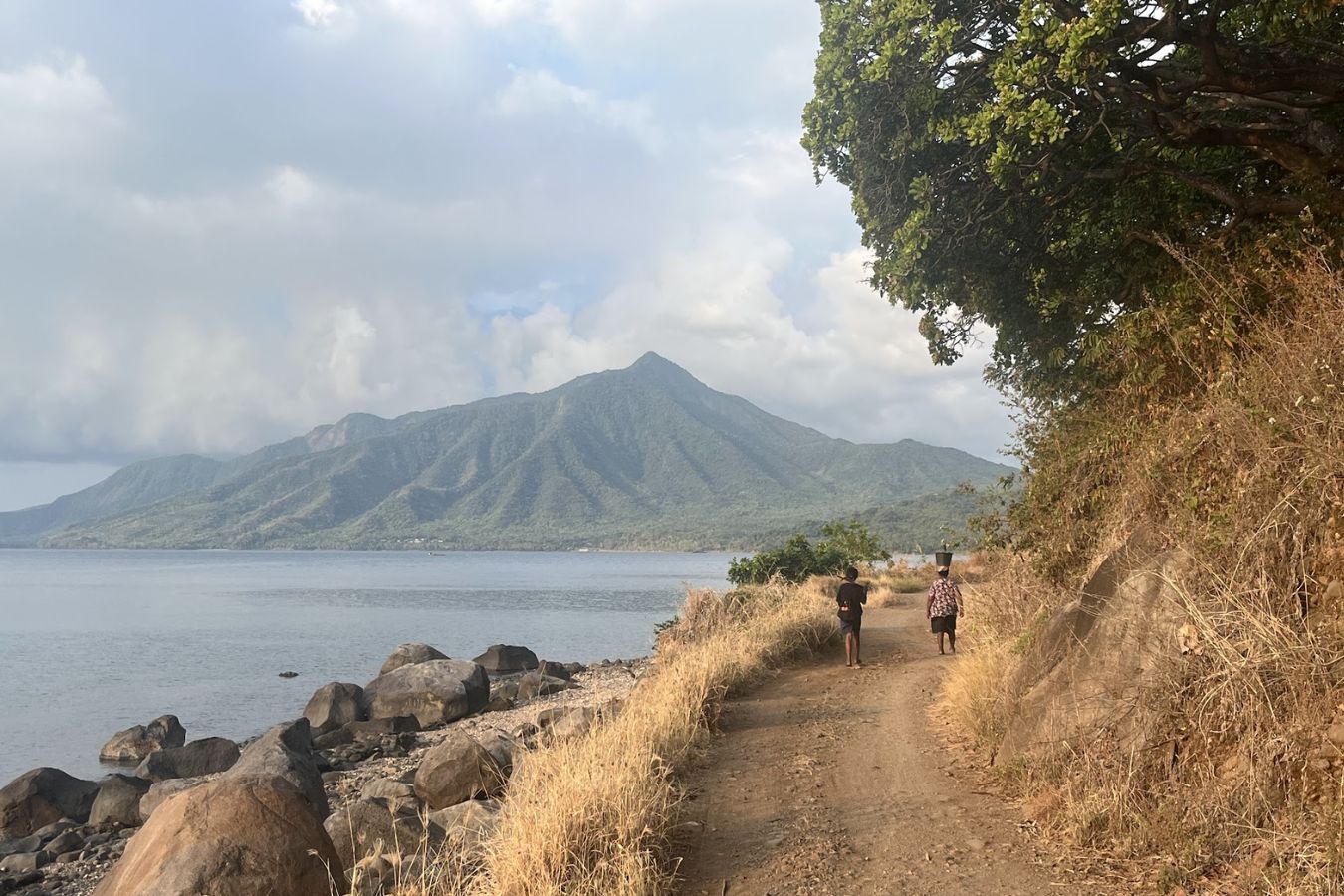
What I loved most was the way the ride kept moving between effort and invitation. One moment I was focused on the road surface, the heat, and the next incline. The next moment someone would wave, ask where I was going, or laugh at the absurdity of seeing a loaded bicycle out there under the East Flores sun.
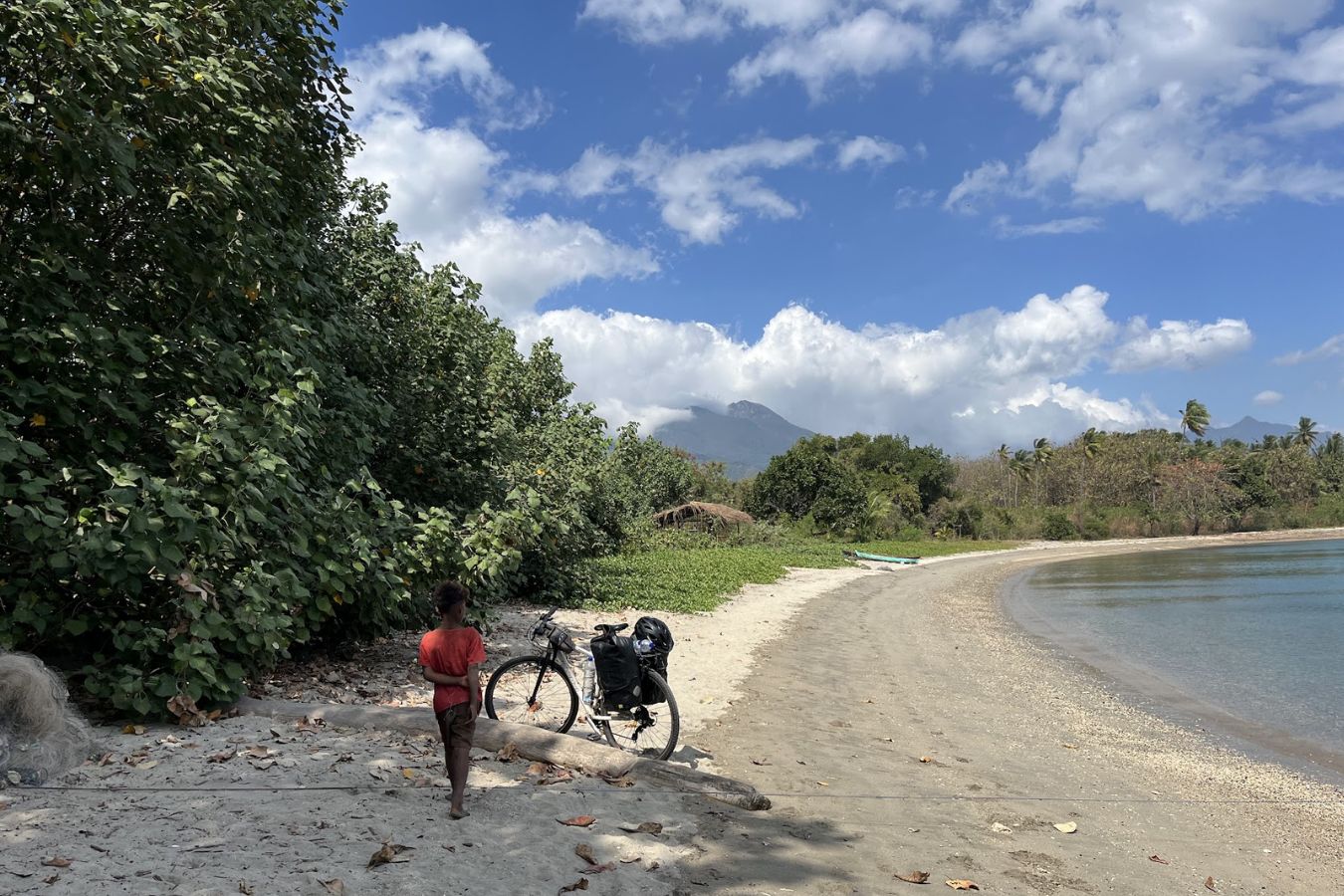
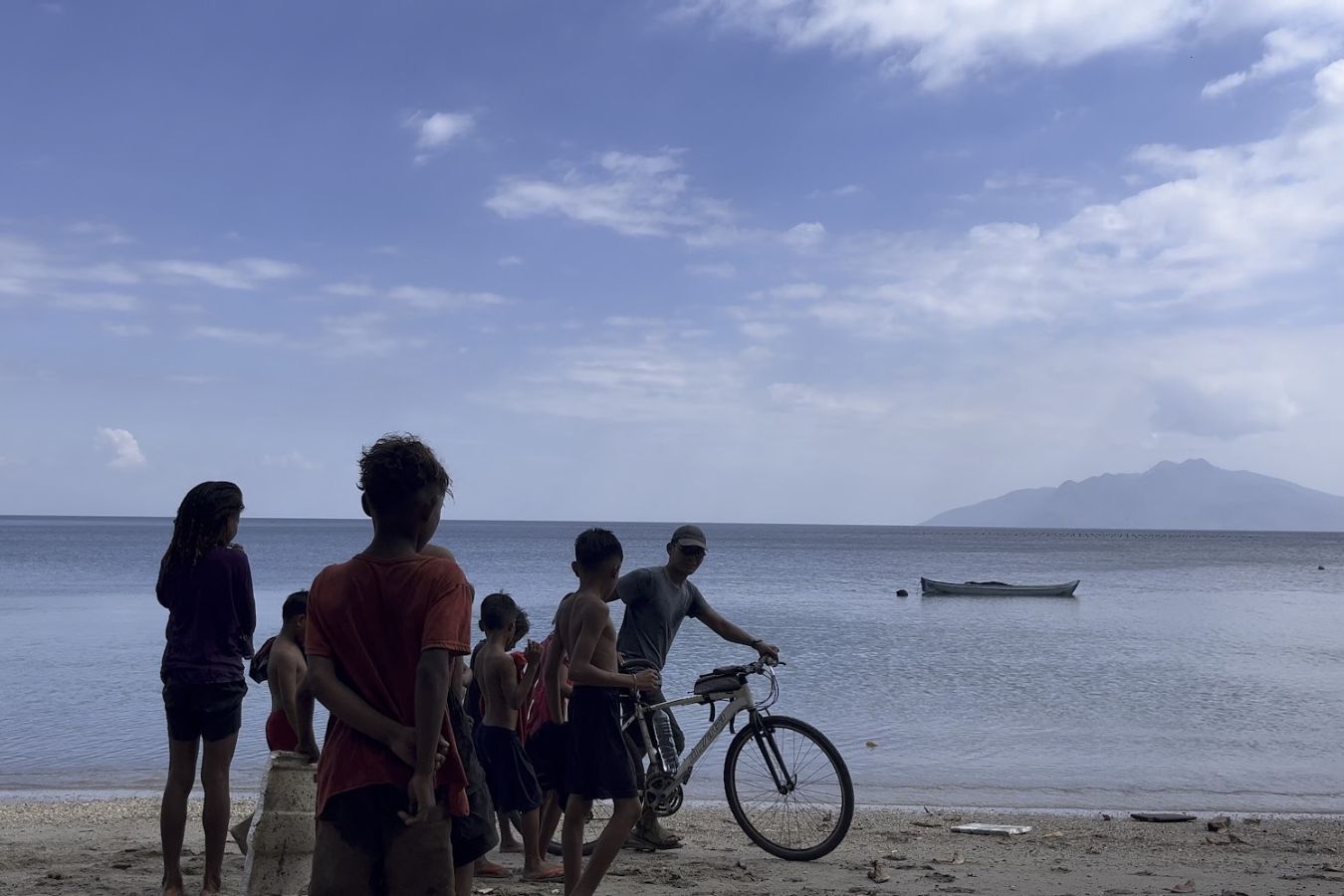
Children were often the first to approach. Not cautiously, just honestly curious. On a bicycle, you are open in a way that cars never allow. People can see your pace, your gear, your fatigue, your willingness to stop. That changes interactions. You stop being a visitor passing through and become someone readable.
One of my favourite moments came on the coast, when a few kids who had been watching me from the shoreline eventually dragged me into the water instead of letting me continue too seriously with my schedule.
It was a small thing, but trips are often remembered that way. Not by the kilometres, but by the interruptions. A swim. A question. A wave from a roadside stall. A child who cannot understand why anyone would carry so much luggage on a bicycle and decides that you must be interesting.
I made many stops along the way, often just to swim.
Some of them were unplanned, others I noted down:
- Pantai Patiahu
- A series of unnamed beaches around this fishing village
That fishing village caught my attention. The community there has roots in the Bugis seafaring tradition—historically known as some of the most skilled maritime explorers in Indonesia, originating from South Sulawesi. You can still feel that connection to the sea in the way the village is laid out and how life revolves around it.
Interestingly, I also noticed a small Muslim prayer room in the area, which stood out since most of Flores is predominantly Catholic. It was a small detail, but a reminder of how layered and interconnected these islands are.
Larantuka: Calm, Sea, and the Feeling of Wanting to Stay Longer
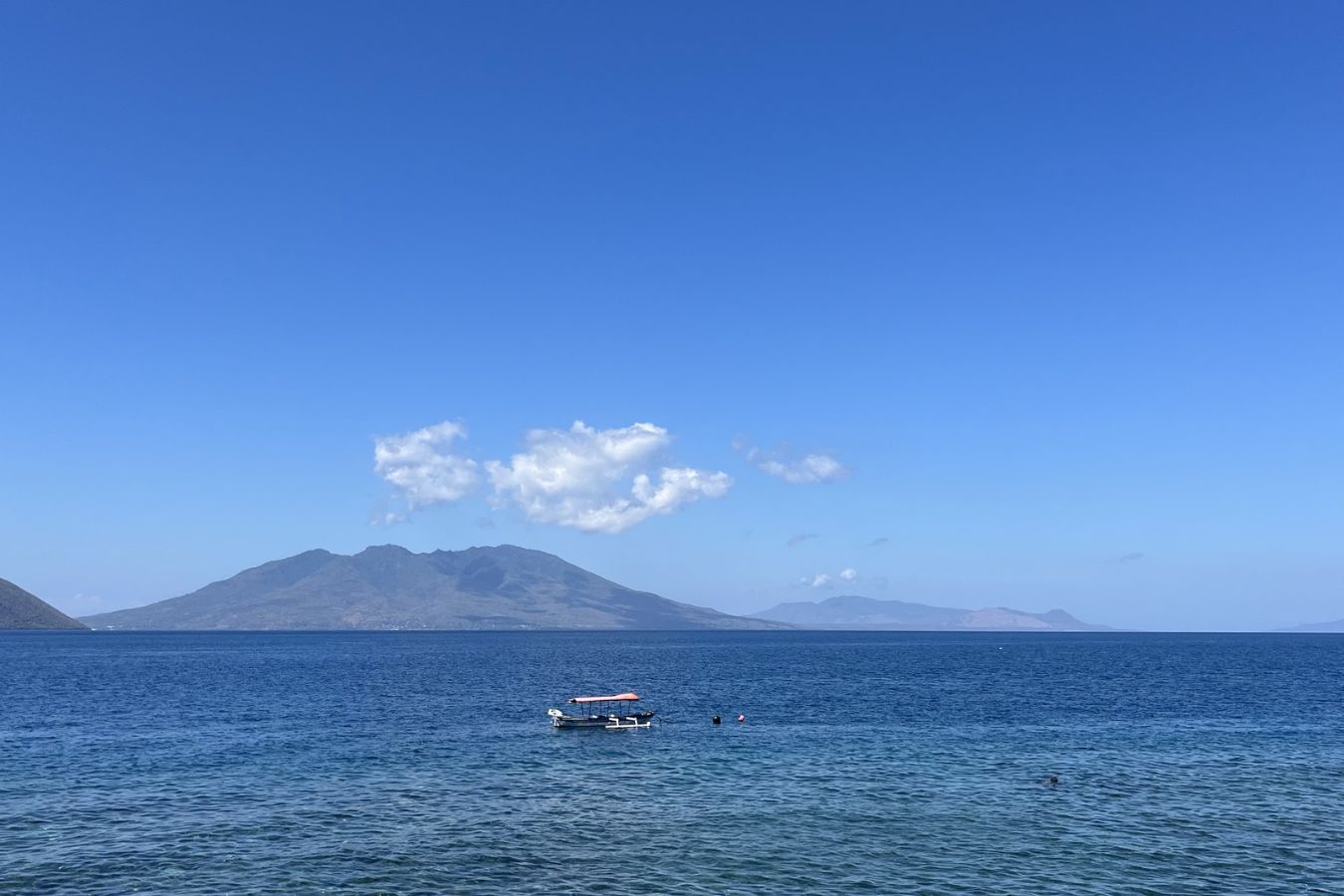
After the ride east, I stayed two nights in Larantuka.
Larantuka has a very different energy from Maumere. It feels narrower, more inward, more closely tied to the sea. It is a place I have always associated with crossings and departures, but staying there for a moment reminded me that it also deserves to be experienced on its own terms. The water is beautiful, the atmosphere calmer than many Indonesian port towns, and there is enough nearby to keep you there longer than planned if you let yourself slow down.
There are surrounding islands, more snorkeling spots than I had time for, and the sort of daily coastal life that reveals itself best when you stop treating a place as a transfer point. Larantuka is often used as a gateway. It deserves more patience than that.
The Sea Routes Matter as Much as the Cycling
Before getting into specific routes, it helps to understand one thing clearly: in East Nusa Tenggara, ships are not just transport—they are the lifeline of travel.
With hundreds of islands spread across the province, movement depends heavily on the sea. Roads can take you far, but eventually, you will need a boat. Whether you are travelling independently or with a bicycle, understanding this system changes how you plan everything.
Broadly, there are two main types of sea transport:
-
PELNI (long-haul passenger ships)
These connect major islands across Indonesia. They are slower, more social, and often the backbone of longer inter-island routes. -
ASDP ferries and fast boats (shorter routes)
These operate between nearby islands. Ferries are more flexible and vehicle-friendly, while fast boats prioritise speed but have more limitations.
Operators like Express Bahari are commonly used for faster passenger routes.
The challenge is that this system is not always predictable. Schedules can change, delays are common, and information is not always consistent across sources. Travelling here requires a different mindset—plans matter less than your ability to adjust them. In my experience, this system becomes the route, information on websites is not always reliable. For ASDP Ferries specifically, better to watch the updates on their Instagram Page. They are quite responsive for questions sent to their Direct Message.
1. Makassar to Maumere with PELNI
For long inter-island travel in Indonesia, PELNI remains one of the most useful options. My route from Makassar to Maumere was with KM Siguntang, booked through the official PELNI reservation portal: pelni.co.id/reservasi-tiket.
If you are doing a road trip with a bicycle, a few things matter:
- Book the passenger ticket first and keep monitoring the schedule because ship times can change.
- Arrive at the port earlier than you think you need to.
- Ask clearly where the bicycle should be checked or stored.
- Bring straps or at least be ready to secure loose items on the bike.
- Keep valuables and electronics with you, not in the bike bags if they are separated from you.
PELNI is not luxury travel, but it is often the most interesting way to cover long distances across the archipelago. It also makes routes possible that would be very expensive or awkward if you relied only on flights plus ground transport.
2. Flores to Kupang by PELNI
On 5 August 2025, I continued onward to Kupang with KM Tidar.
This leg was important because it linked Flores to Timor without forcing me to backtrack or fly. For overland-minded travellers, these are the moves that make eastern Indonesia feel connected rather than fragmented. The exact departure point and schedule can vary by ship and season, which is why I prefer to think in systems rather than fixed departure times. The system is simple: check PELNI, confirm close to departure, and keep enough flexibility in your accommodation plans to absorb changes.
If you are carrying a bicycle, this is usually manageable, but you need to remain patient. Procedures are not always explained the same way by everyone at the port. Sometimes the answer is straightforward. Sometimes it depends on who you ask. In practice, calm persistence works better than over-planning.
3. Kupang to Rote: Slow Ferry or Fast Boat
From Kupang, I crossed to Rote on the weekend of 9 August 2025 using the slow ferry. I came back on 11 August by speed boat.
This combination worked very well.
The slow ferry gives you the classic island-crossing feeling. It is slower, more utilitarian, and less elegant, but it is forgiving if you are carrying larger gear and want a cheaper, more grounded experience. For that route, the official ASDP booking platform is ferizy.com.
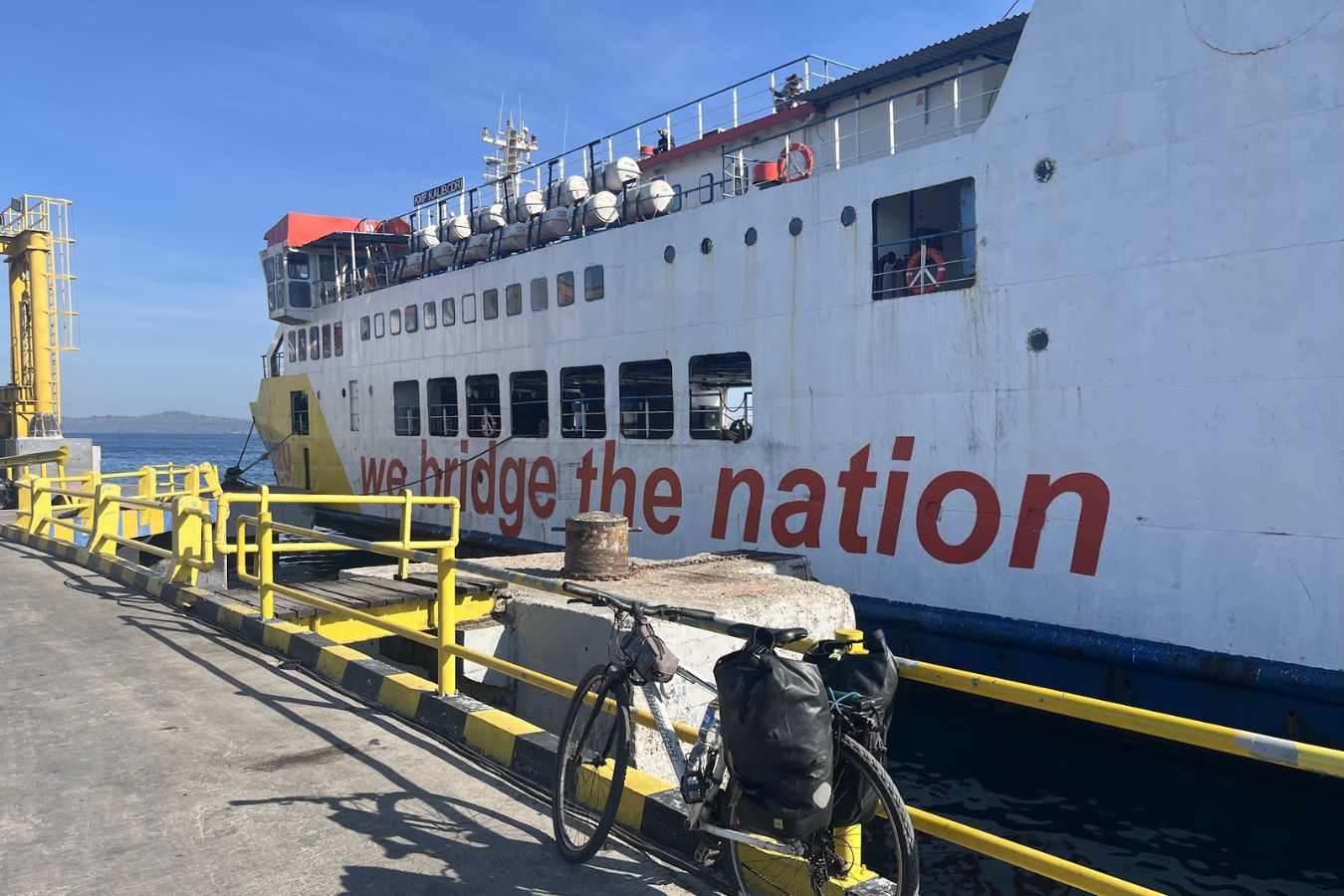
The speed boat is the opposite. Faster, cleaner, more direct, and useful when you want to save time on the return. For the fast boat route, the operator to check is Express Bahari.
For cyclists or travellers on longer multi-modal trips, I think this mix makes sense: go slowly when you are not in a rush and want to stay flexible, return quickly when you need to reconnect with work or an onward flight.
What These Crossings Taught Me
Travelling with a bicycle across Indonesian islands is less about finding one perfect booking flow and more about understanding a few patterns:
- Official booking sites matter, but local confirmation still matters too.
- Port days take energy, so do not pretend they are rest days.
- Sea travel can save a route that would otherwise become expensive or logistically annoying.
- Bicycle touring in Indonesia works best when you combine pedalling with ships, not when you try to avoid them.
Kupang: Work, Pause, and a Different Kind of Travel Day
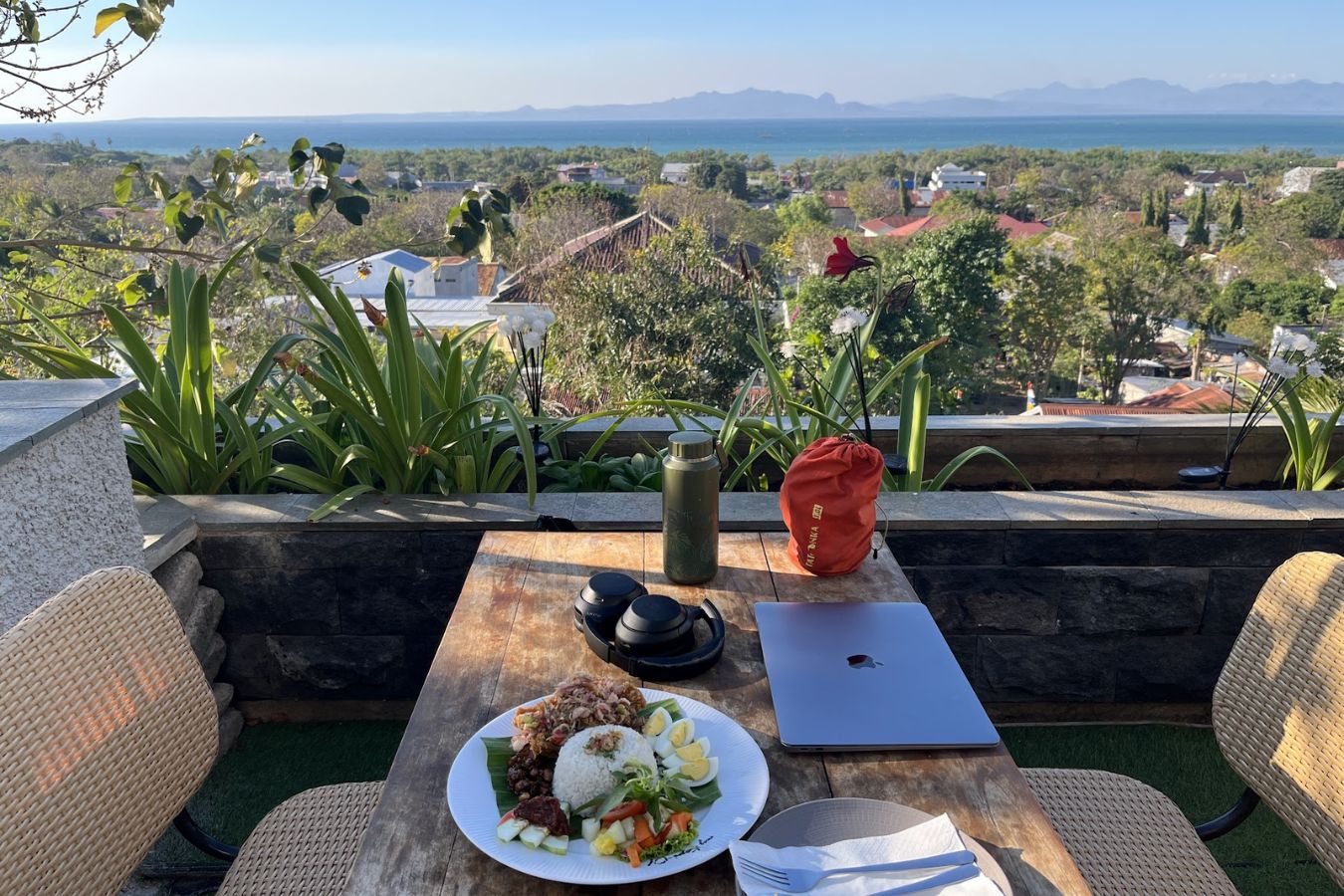
After arriving in Kupang, I stayed three nights and used part of that time for work.
I always find it interesting when a trip shifts temporarily from movement into routine. You wake up in a new city, open your laptop, answer messages, take calls, then step outside and remember you are still in East Nusa Tenggara. In Kupang, that contrast felt especially sharp. It is a busy city, a functional hub, and for many travellers it is mainly a transit point. But that is exactly why it can be useful. It allows you to regroup.
One of my favorite places to work from was My Kopi-O Kupang. The setting is relaxed, good for a few hours of focused work, and if you stay until late afternoon, the light toward sunset makes it even better.
Outside of work, Kupang has its own rhythm if you give it time. In the evenings, Pantai Pasir Panjang comes alive. It is a local favorite, where people gather to exercise, play volleyball, run along the beach, or simply sit and watch the sunset. It is not curated or polished—it is just a public space being used fully, and that is what makes it enjoyable.
For food, I kept returning to Kampung Solor, known for its fresh grilled fish. Simple setup, straightforward cooking, and exactly what you want after a long day—good seafood without overthinking it.
Getting Around Kupang (Ports Matter)
If you are continuing your journey by sea, it helps to know that Kupang has more than one port:
-
Pelabuhan Kupang
Main port for PELNI ships and also used by operators like Express Bahari (fast boats) -
Pelabuhan Bolok
Used for ASDP ferries (slower, vehicle-friendly routes like Kupang → Rote)
Knowing which port you need in advance can save time, especially if you are moving with a bicycle.
Kupang might not be the highlight people talk about, but for me, it was an important pause. A place to reset, work, and prepare—before continuing toward Rote and eventually closing the journey.
Rote Island: The Soft Landing at the End of the Route
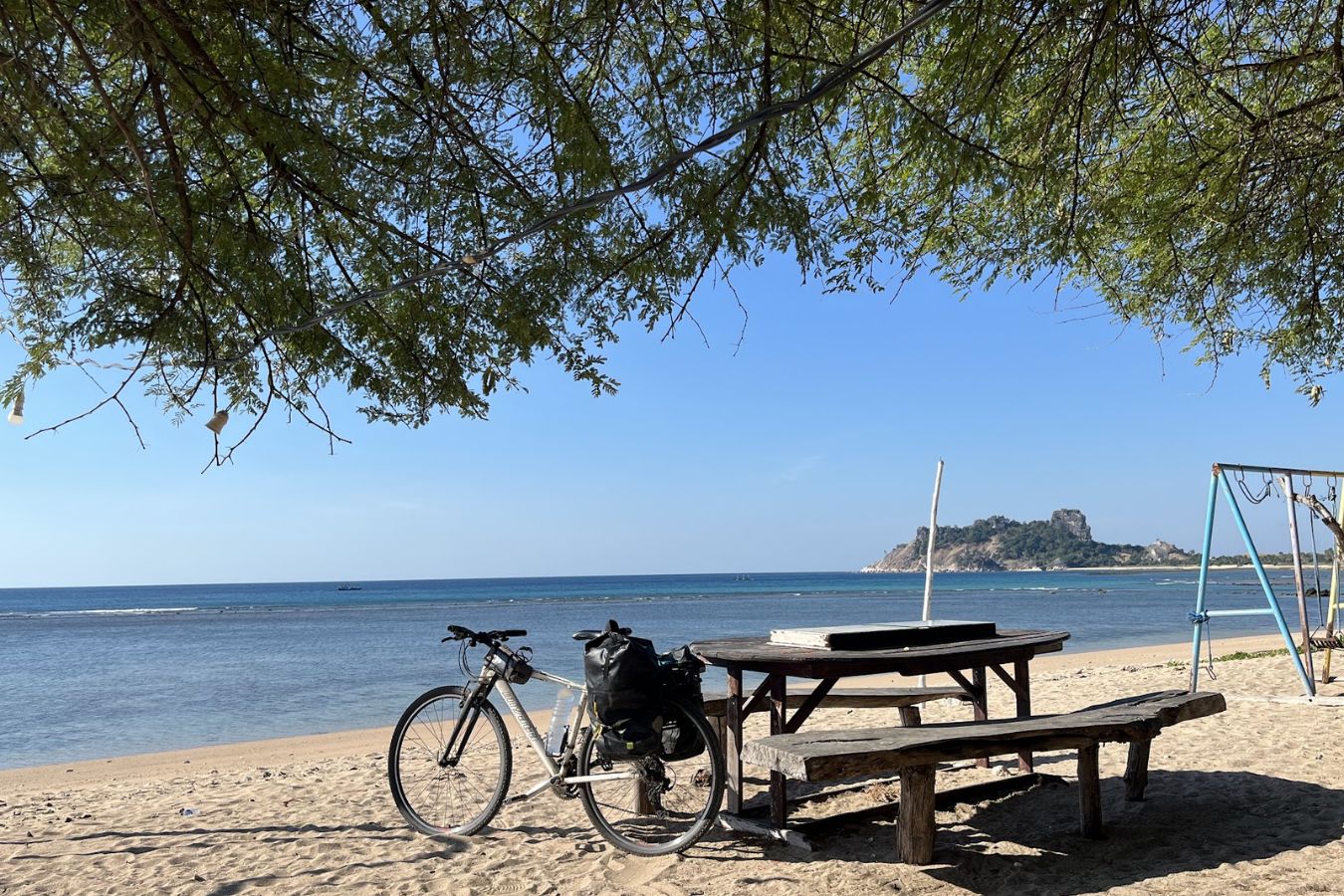
Rote felt like an exhale.
After the ports, the ship schedules, the uncertainty around Flores, and the rhythm of moving eastward, arriving in Rote shifted the whole trip into a calmer register. I stayed two nights, which again was not enough, but enough to understand why people disappear there for longer than planned.
Rote has that kind of beauty that does not need dramatic framing. Dry hills, clear water, quiet roads, simple beaches, and enough space to feel your body slowing down. It is not just scenic. It is relieving.
On my first day, I took the slow ferry and arrived at Pelabuhan Pantai Baru. From there, it is roughly a 40 km ride to Ba’a, the main town in Rote Ndao Regency. Most travellers arriving by speed boat usually land closer to Ba’a, which makes it a more common travel hub on the island.
The ride from Pantai Baru gave me a quiet introduction to Rote—less traffic, more open landscape, and a gradual transition into the island’s rhythm.
I stayed at DJ Kost, a simple but comfortable place. The owner was very helpful and helped me arrange a motorcycle rental for the next day. They also offer longer-stay options, which makes it a good base if you plan to slow down and spend more time on the island.
Since I only had two nights, I adjusted my approach. On the second day, I rented a motorcycle to explore more of the island. Rote is not small, and covering longer distances by bicycle would have required more time than I had.
That day, I visited several spots:
- Nembrala Beach
- Boa Beach
- Telaga Nirwana
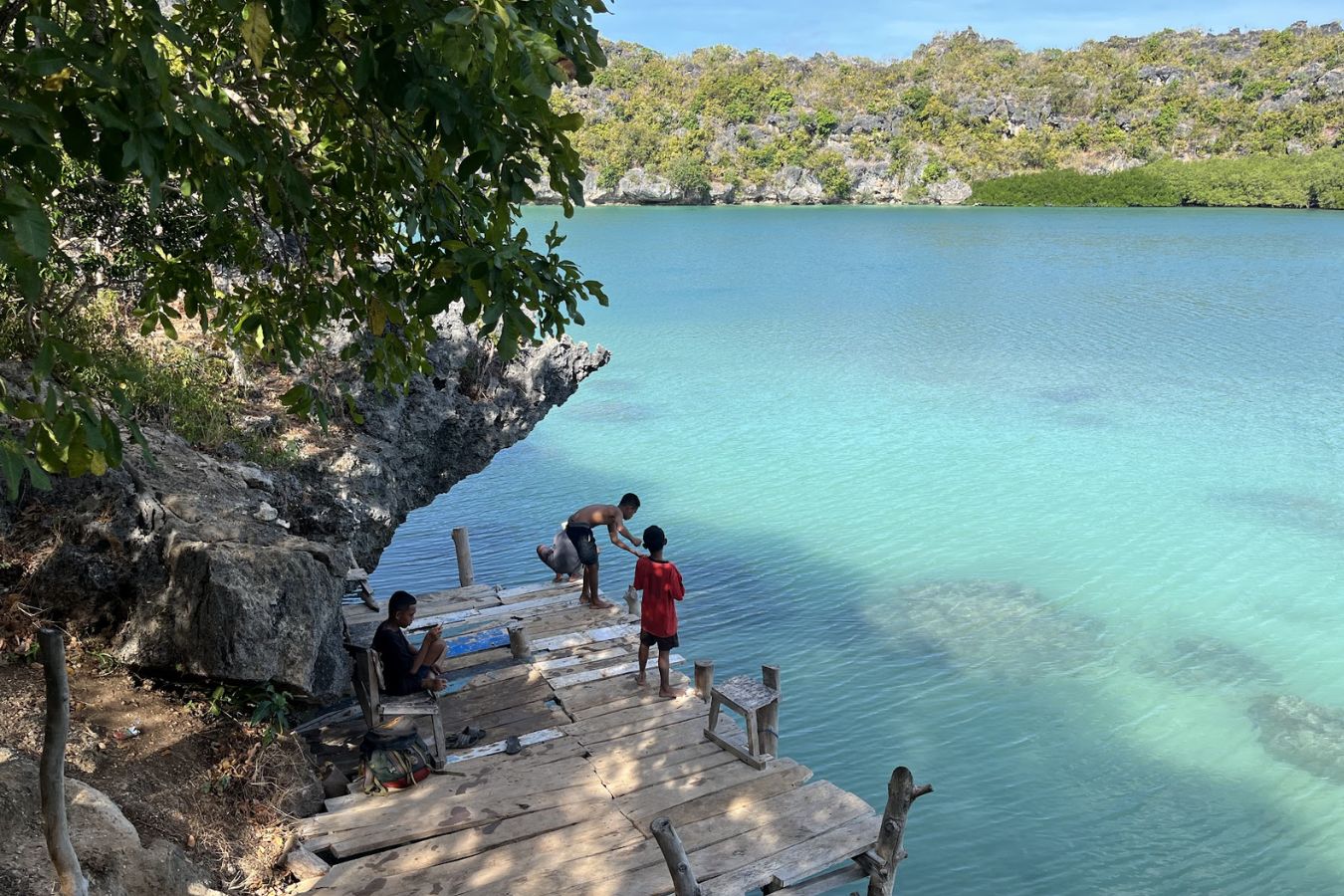
Rote is also known as one of Indonesia’s surf destinations, especially around Nembrala. Even if you are not surfing, you can feel that identity—slow days, open horizons, and a rhythm shaped by wind and waves.
One of the best parts of Rote was that the island still leaves room for chance encounters. The trip had started with ships and road dust. It ended around calm water, small wooden platforms, children jumping in, and the familiar feeling that some of the best places are still the ones where not every moment has been polished for tourism.
I liked the beaches, of course. But more than that, I liked the atmosphere of the island. The route no longer felt like a mission. It felt complete.
If You Want to Continue to Timor-Leste
One reason this whole route is so appealing is that it can be extended.
If you are already in Kupang, Timor-Leste becomes a realistic next step for independent travellers who want to keep moving east. Depending on current border procedures and transport options, you could continue overland via West Timor toward the land border and then onward into Timor-Leste.
While I was in Kupang, I even stumbled upon a DAMRI bus office (location here) that offers routes all the way to Dili. That option intrigued me more than I expected. The idea of crossing the island slowly by bus over a few days—watching the landscape change, passing through small towns, and eventually crossing an international border by land—felt like a natural continuation of this kind of journey.
In the end, I decided to save it for another time.
I did not continue on this trip, but it stayed in my mind as the obvious next chapter.
For anyone building a longer Indonesia overland route, this is worth considering. Flores, Timor, Rote, and Timor-Leste can all be stitched together into something much bigger if you have enough time and tolerance for uncertainty.
Practical Tips to Travel with Bicycles in Indonesia
At the end of the trip, I flew to Surabaya and sent the bicycle home to my hometown. I have done several bicycle trips in Indonesia, and I have always liked the service from Indah Logistik. They are affordable, familiar with awkward cargo, and reliable enough that I keep coming back to them.
One useful extra service they offer is bicycle wrapping for added protection. For around IDR 50,000, they will properly wrap the bike before shipping, which gives some peace of mind, especially for longer inter-island deliveries.
The main drawback is the delivery time. Estimated arrival can be a bit uncertain, especially when shipping across islands. It usually arrives within a reasonable timeframe, but you need to be comfortable with some flexibility and not rely on an exact delivery date. For example, from Kupang to Cirebon, it took less than two weeks—still very reasonable for the price offered.
Over time, I have tried a few different ways to move a bicycle across Indonesia. Each option has its place depending on your route, budget, and tolerance for hassle.
✈️ Flying with a Bicycle
Flying with a bicycle is the most direct option, but it comes with trade-offs:
- Requires packing or boxing the bike
- Can involve additional baggage fees
- Handling at airports can be inconsistent
- Adds friction at the end of a long trip
It works well when you need speed, but it is not always the most comfortable option.
📦 Shipping with Indah Logistik
If I plan ahead and have time before reaching a destination, this is usually my preferred option.
I have used it across multiple trips—sending a bicycle ahead to Makassar for this trip, and previously to Lombok. It is:
- affordable
- reliable across islands
- familiar with bulky items like bicycles
The trade-off is time. You need to send it early and accept some uncertainty in arrival.
🚌 Taking a Bus with a Bicycle
Buses can be a surprisingly practical option for shorter or mid-range routes.
I once took a bus from Java to Denpasar (Bali), and some operators allow bicycles:
- extra charge: around IDR 150,000
- bicycle stored in luggage compartment
- arrives at the same time as you
Not all buses allow this—especially premium or sleeper buses—so it is important to confirm beforehand.
🚆 Train Logistics (KAI Logistik)
For routes within Java, KAI Logistik is a strong option.
Compared to standard logistics:
- faster delivery than typical cargo services
- more predictable timing
- limited to train-connected destinations
I used this when traveling to Yogyakarta, and it worked very smoothly.
Bringing a Bicycle on Ships
For inter-island travel, ships are often the most flexible option.
🚢 PELNI (Long-Distance Passenger Ships)
For longer routes like Makassar → Maumere or Flores → Kupang:
- bicycles are generally allowed
- may be treated as extra baggage or handled separately
- best to arrive early and ask clearly at the port
This is one of the easiest ways to move both yourself and your bicycle across long distances.
⛴️ ASDP Ferries (Short Crossings)
For shorter crossings like Kupang → Rote:
- very bicycle-friendly
- also used for motorcycles and cars
- book via ASDP / Ferizy
This is the most straightforward option if you are doing a continuous road trip.
🚤 Fast Boats (e.g. Express Bahari)
For faster passenger routes like Rote → Kupang:
- shorter travel time
- more limited space
- some allow bicycles, but you need to confirm in advance
Operators like Express Bahari are more focused on passengers, so flexibility depends on the route and crew.
I prefer separating the final flight from the bike whenever possible.
Flying without a boxed bicycle is simpler, cheaper in many cases, and much less tiring when you are already at the end of a long trip. Shipping the bike home also means you can finish the journey without one last layer of airport stress.
For this trip, that decision felt absolutely right.
Final Reflections
What stayed with me most was not one single place.
It was the sequence.
Makassar at dusk. The PELNI deck. Maumere as a beginning instead of a destination. Dust on the roads from Lewotobi. Children by the coast in Flores. The calm of Larantuka. Working from Kupang. The ferry to Rote. The softer ending on an island that felt far away from urgency.
This trip reminded me that eastern Indonesia is best understood slowly and in pieces. Not by trying to optimise it too hard, but by letting ships, roads, weather, and local conditions shape the experience. A bicycle helped me stay open to that. It gave the journey texture. It made each crossing feel earned.
If you are planning a similar route, my biggest advice is simple: do not split the journey too aggressively into separate destinations. Think of it as one continuous movement across water and land. Let the ports be part of the story. Let the waiting count. And if conditions change, do not panic. Adjust and continue.
That is often how the best travel in Indonesia works.
Related