Travel Tales
Project Hollow Tree – Reviving Rural Life
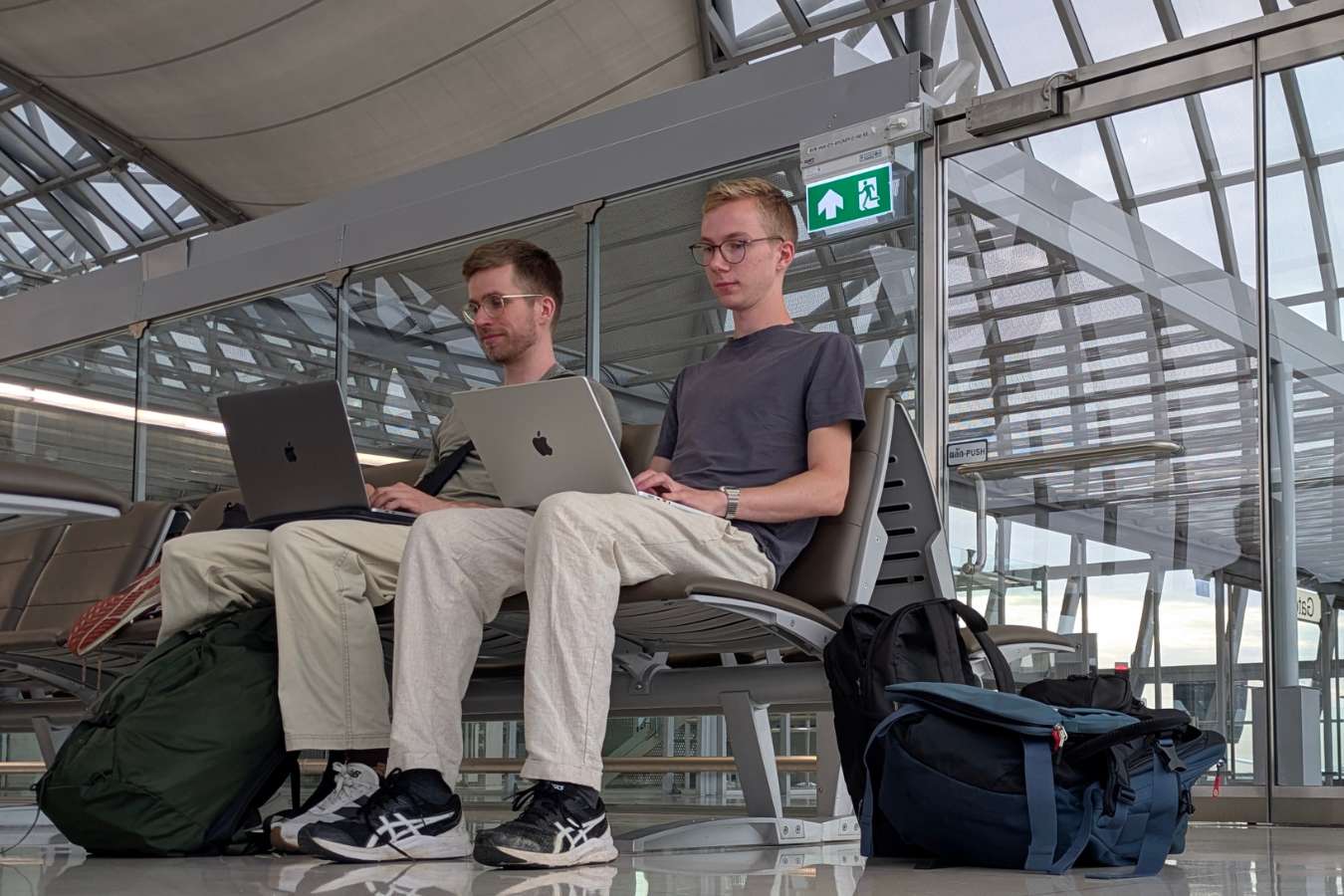
Pictures by Jan Gruber & Max de Bever
Preparing for the Journey
Life is full of opportunities, some more obvious than others, and often it’s up to us to take them. This one started with curiosity for abandoned places. Places that once flourished and thrived, but now stand silent with only stories left to tell. We always found ourselves wondering: who was here before? What used to be here? And why is it now left behind?
When the Universität für Musik und Darstellende Kunst “Mozarteum” Salzburg announced a competition to travel to the World Expo in Osaka, Japan, we, Max and Jan, saw an opportunity to combine our curiosity with a travel opportunity. The Mozarteum, together with all universities in Salzburg, was looking for creative projects that could bring back exciting discoveries from the Expo to Salzburg. We decided to focus on an issue that often leads to abandoned places: rural decline.
We quickly wrote a proposal: visit the World Expo and explore rural Japan to understand this issue first-hand. Two weeks later, we got the news, we have been selected!
The Planning Marathon
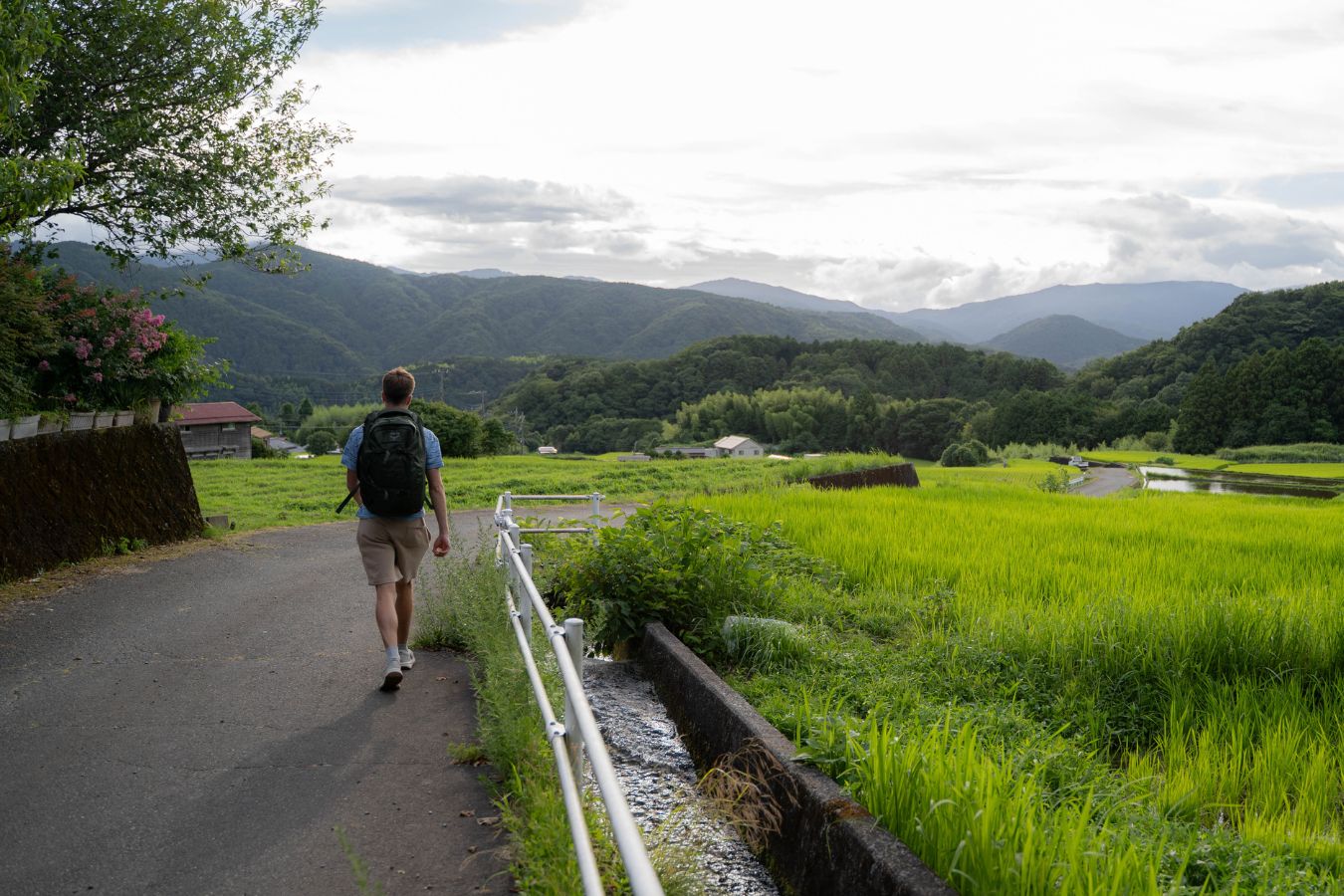
With the green light, we knew the real work only just started. Over the next weeks, we slowly mapped out what we wanted to see and learn; from Expo pavilions to remote towns. We reached out to many people, from universities to local governments. Anyone who could help us visit rural areas. We also researched the topic extensively. We wanted to talk directly to locals, hear their stories, and experience their communities in person. Because learning information online was one thing, but visiting and experiencing the issue would gift us a whole other view upon the issue. Eventually, after countless emails, we connected with Mr. Nakamura, who told us he would reach out to the government office of Hayakawa Town in Yamanashi Prefecture, and see what he could do. Just three weeks before departure, we received an unexpected email: a packed three-day itinerary, including a personal guide, accommodation, and activities. Hayakawa was exactly the kind of place we wanted to study; 96% forested, only two hours from Tokyo, yet almost untouched by tourism, with its population having dropped from 10,000 to barely 1,000 over recent decades.
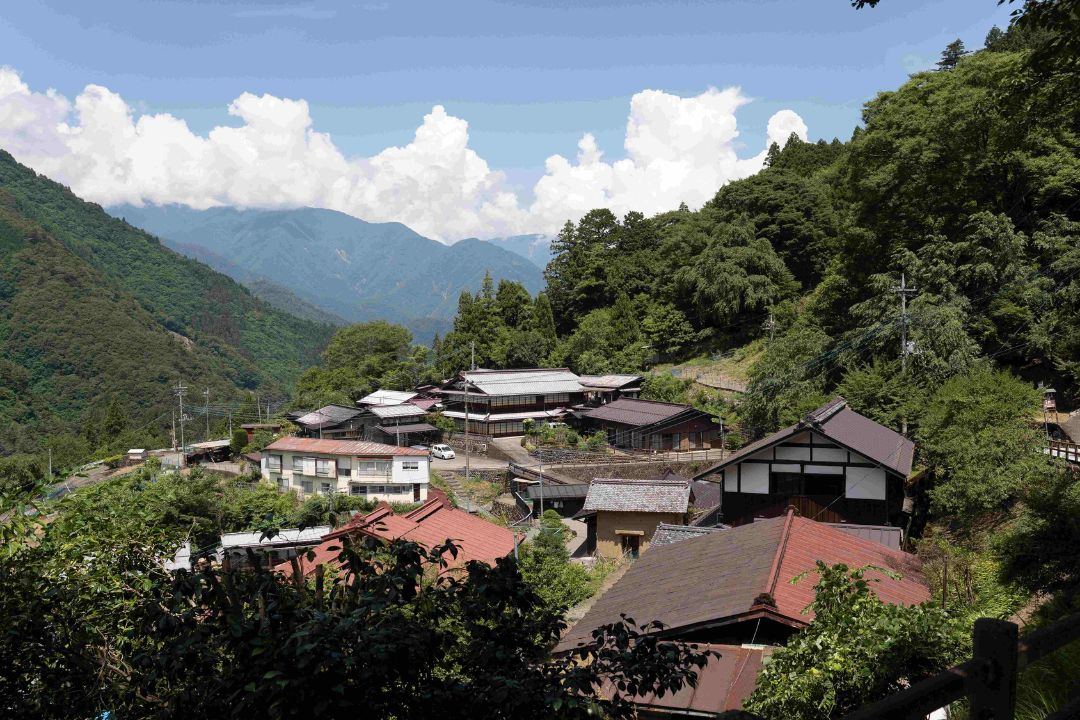 Settlement of Hawakaya town
Choosing the Right Gear
With our flights booked and itinerary confirmed, there was just one crucial element left: packing. We knew we’d be moving through multiple cities, climbing stairs, boarding trains, and navigating rural roads. We needed something compact, durable, and versatile. We settled on the Osprey Farpoint 40L backpack as our main luggage, big enough for everything we needed yet small enough to carry on flights. It allowed us to avoid checking luggage on shorter flights, saving time and money. We paired it with a small day pack for daily outings. Eventually we also decided to check in one shared small suitcase for extra gear and potential purchases. This setup gave us flexibility without sacrificing mobility.
Partnering with Packing Panic
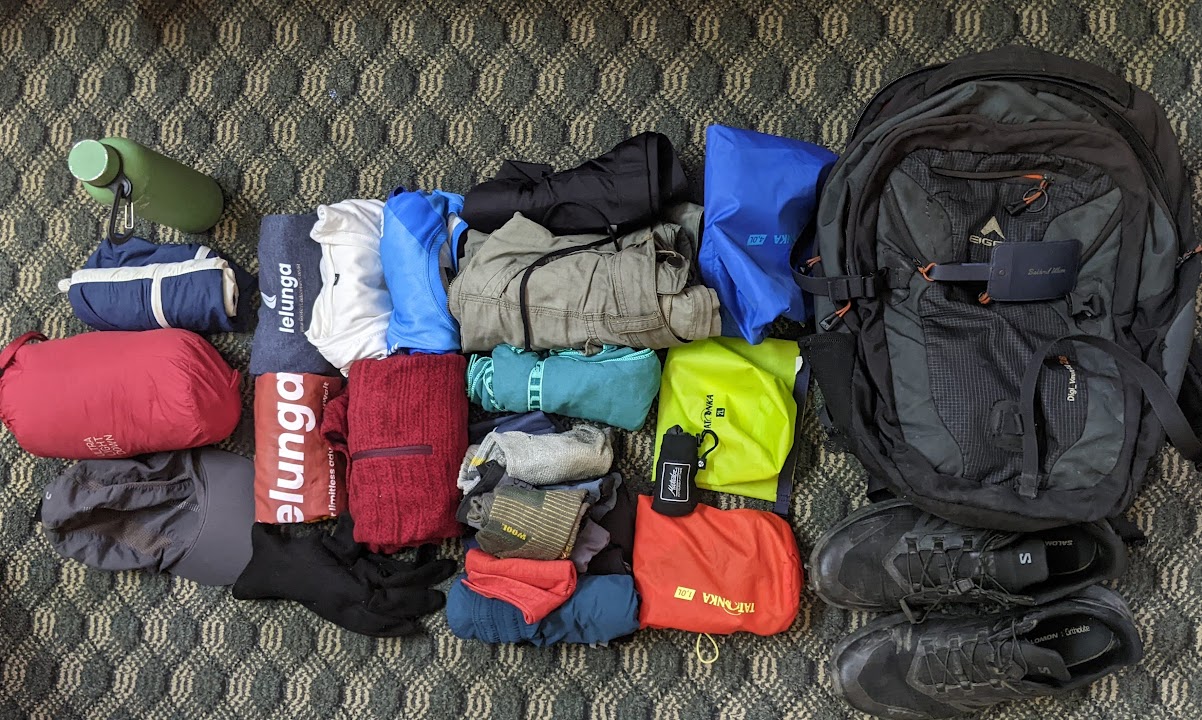
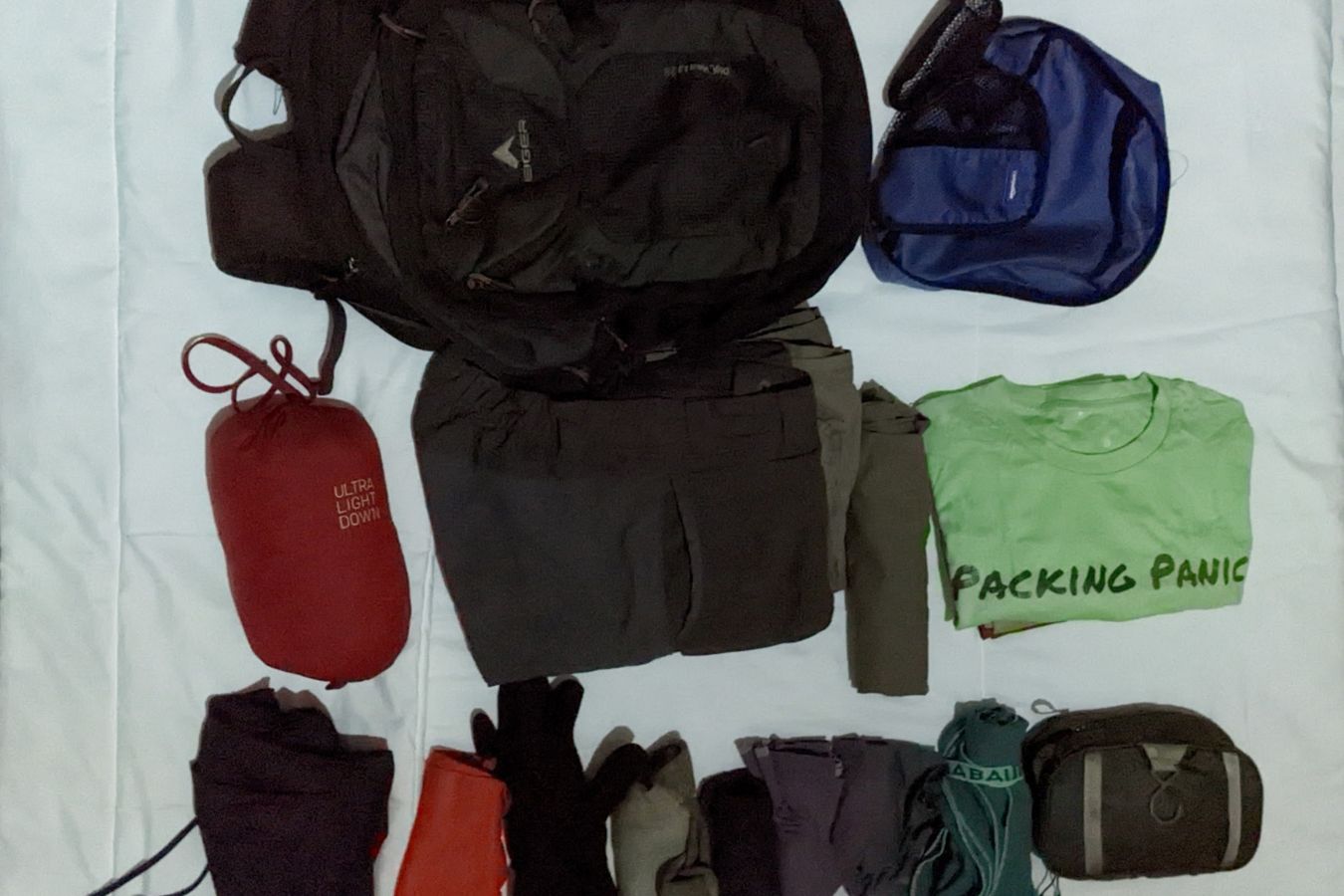
Once we started looking to purchase the backpacks we discovered Packing Panic, a brand that focuses on light and smart packing, exactly what we were looking for. Their focus on travel efficiency matched our project’s needs, so we decided to reach out, and they joined us as a packing partner. They provided not only the backpacks, but also packing cubes and gear bags. These cubes became essential, they kept our clothing and equipment organized, separated clean from dirty laundry, and protected fragile items. Only advice from our partners at Packing Panic, we got the following bags:
Additional note: The packing cubes also became unexpectedly useful as “mobile shelves”, we could pull them straight from our backpacks into hotel drawers or surfaces without unpacking everything.
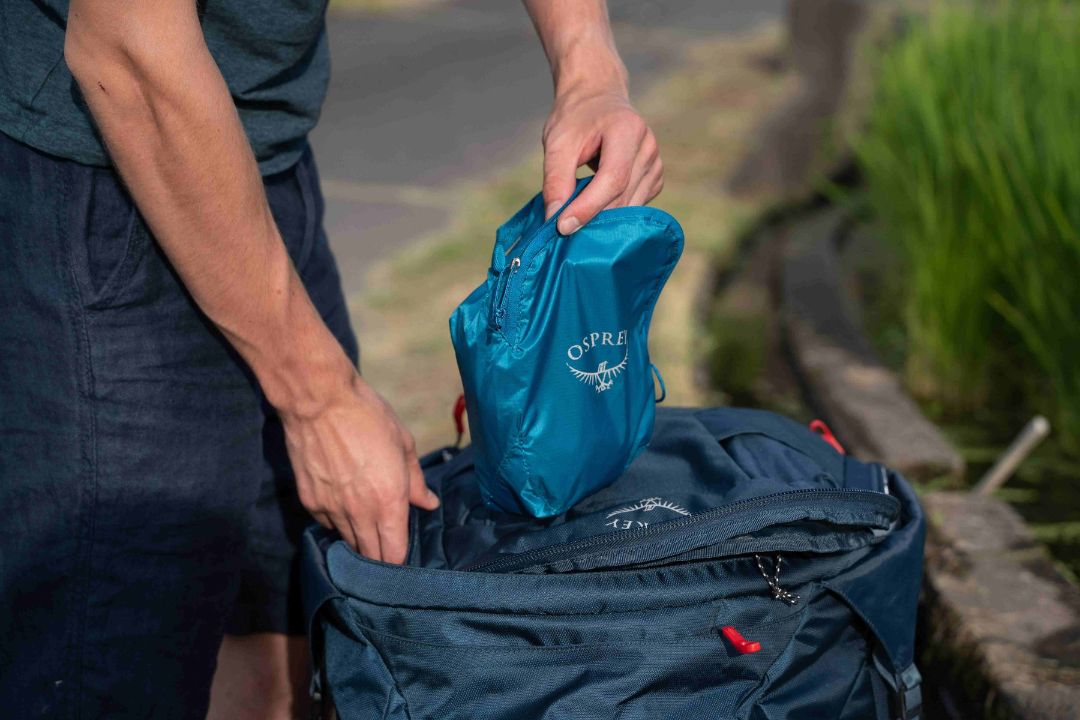
The Packing Checklist
Before leaving, we carefully assembled our kit:
- Main luggage: Osprey Farpoint 40L backpacks
- Day packs: lightweight, foldable, for daily trips
- Shared suitcase: checked in with larger filming equipment and things that we brought back from Asia.
- Packing cubes: for clothing organization and quick access
- Tech gear: cameras, laptops, drone, chargers, adapters, spare SD cards
- Essentials: rain jackets, swimwear, toiletries, comfortable walking shoes
- Interview kit: voice recorder, notebooks, pens, small tripod
Extra addition: Some of the tech gear we had packed we sadly did not end up using because of malfunctioning or just not being necessary. But this was expected as it was our first time doing interviews abroad.
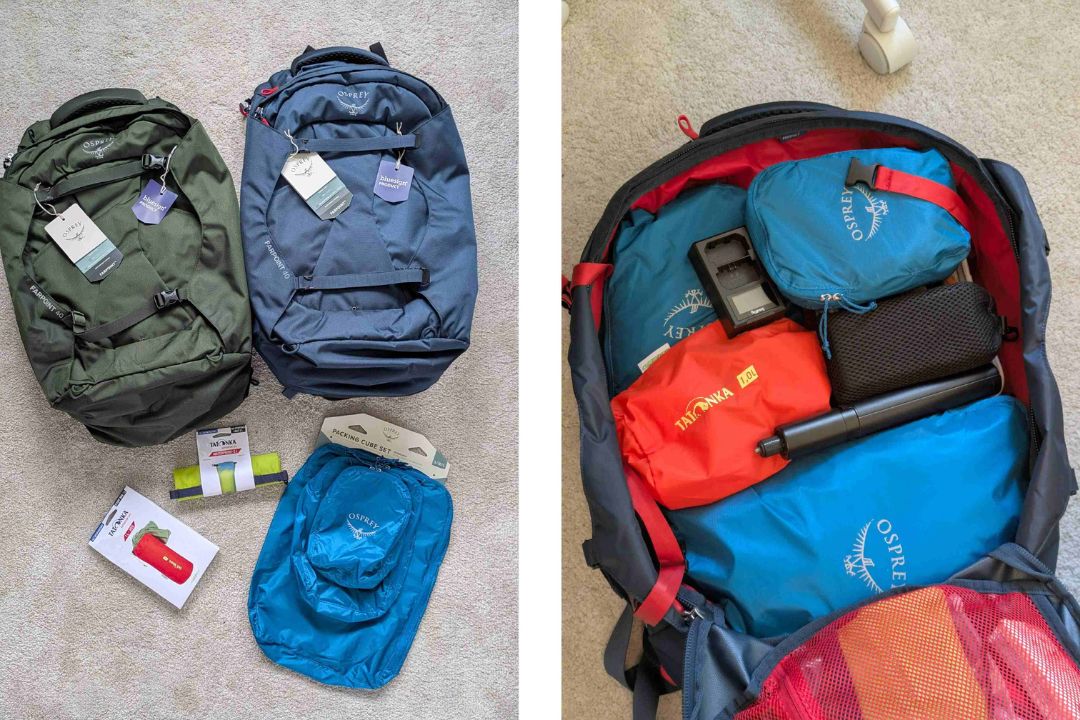
Ready for Departure
By the time July 3rd arrived, everything was packed and ready. Our gear was neatly sorted, our documents in order, and our travel plan set in stone. The feeling of having the right setup: lightweight, adaptable, and organized, gave us confidence for the journey ahead.
All that was left was to grab our bags, head to Munich Airport, and take the first step toward an adventure that would lead us from the skyscrapers of Hong Kong to the forests of rural Japan.
Related