Gear Reviews
Osprey Nebula 32 Review: A Digital Nomad's Backpack Across Java, Bali, and Nusa Penida
Introduction
Most backpacks are designed for a specific version of you. The version that’s hiking. The version that’s flying carry-on only. The version that’s commuting to an office five days a week. The Osprey Nebula 32 seems to have been designed for the version of you that hasn’t quite decided yet — and that turns out to be a surprisingly useful thing.
I’ve been using the Nebula for two months across Java, Bali, and Nusa Penida: on bicycles, on ferries, in cafés for hours of working and forgot I was technically travelling. This is what I found.
Why Not a Dedicated Travel Backpack?
Before the Nebula, I used two Eiger bags: a 32L and a 28L. The 32L had a hip belt; the 28L didn’t. That difference alone taught me how much a hip belt matters on longer days. With the 28L, anything over a couple of hours on my back started to wear on my shoulders. The 32L was more comfortable — I’d been using it since 2017 — but it wasn’t quite right for my current needs either.
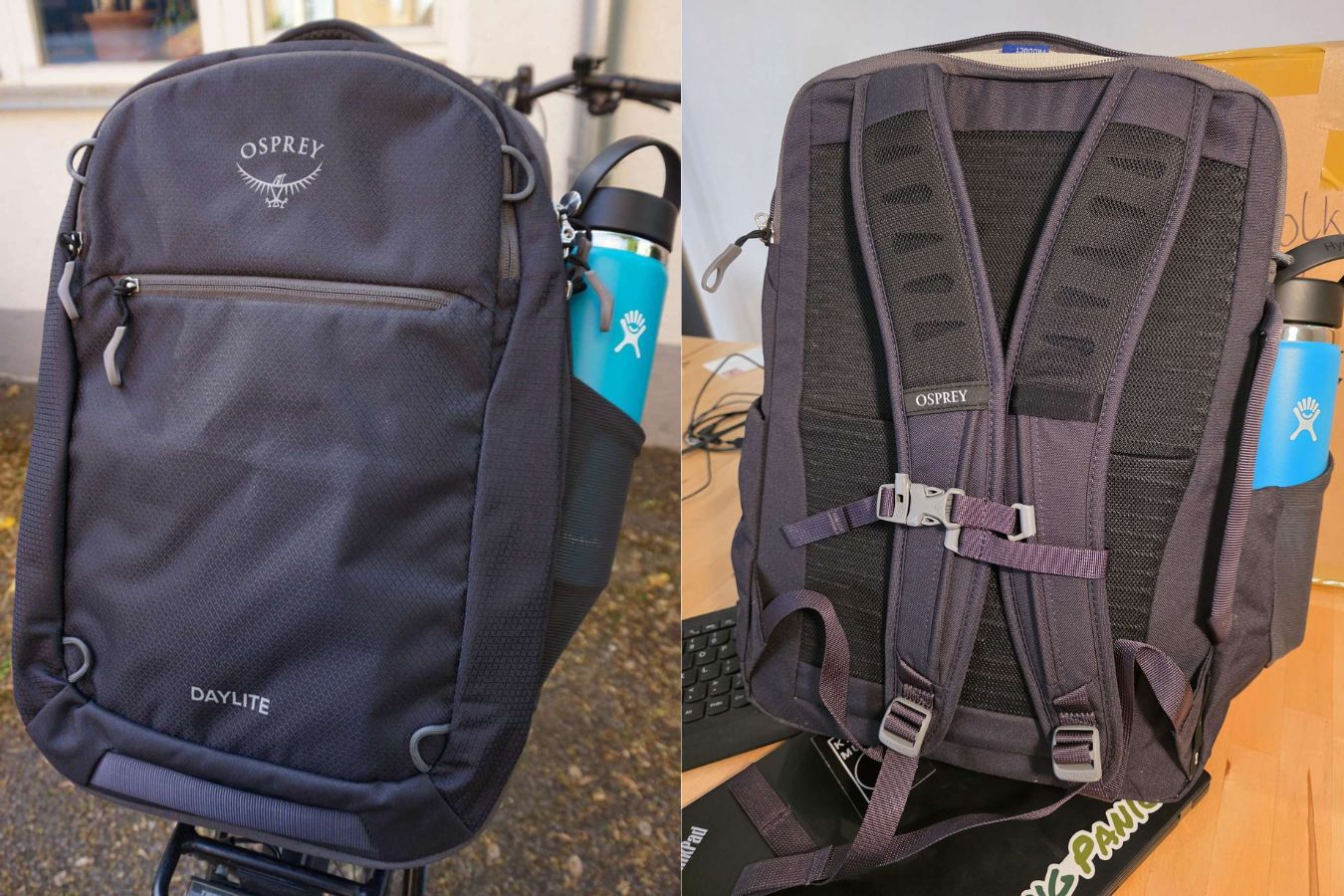
When I started looking for something new, the Osprey Daylite 26+6 and the Farpoint/Fairview 40 kept coming up. The short version: the Daylite is optimized for travel efficiency, the Farpoint for long-term backpacking. Neither felt like the right fit for days that mix remote work, short travel hops, and occasional exploring.
The Nebula 32 sat in between. Not the lightest, not the biggest, but consistently described as the bag for people whose days don’t fit a single category. That was enough to make me try it.
Living With It
My standard carry is a MacBook Air, iPad, Kindle, headphones, chargers, a water bottle, a light layer, and a rain cover. The Nebula handles this load without drama. The laptop compartment is well-padded and genuinely protective — not just a sleeve sewn into the main body — and the organization makes sense without being fussy.
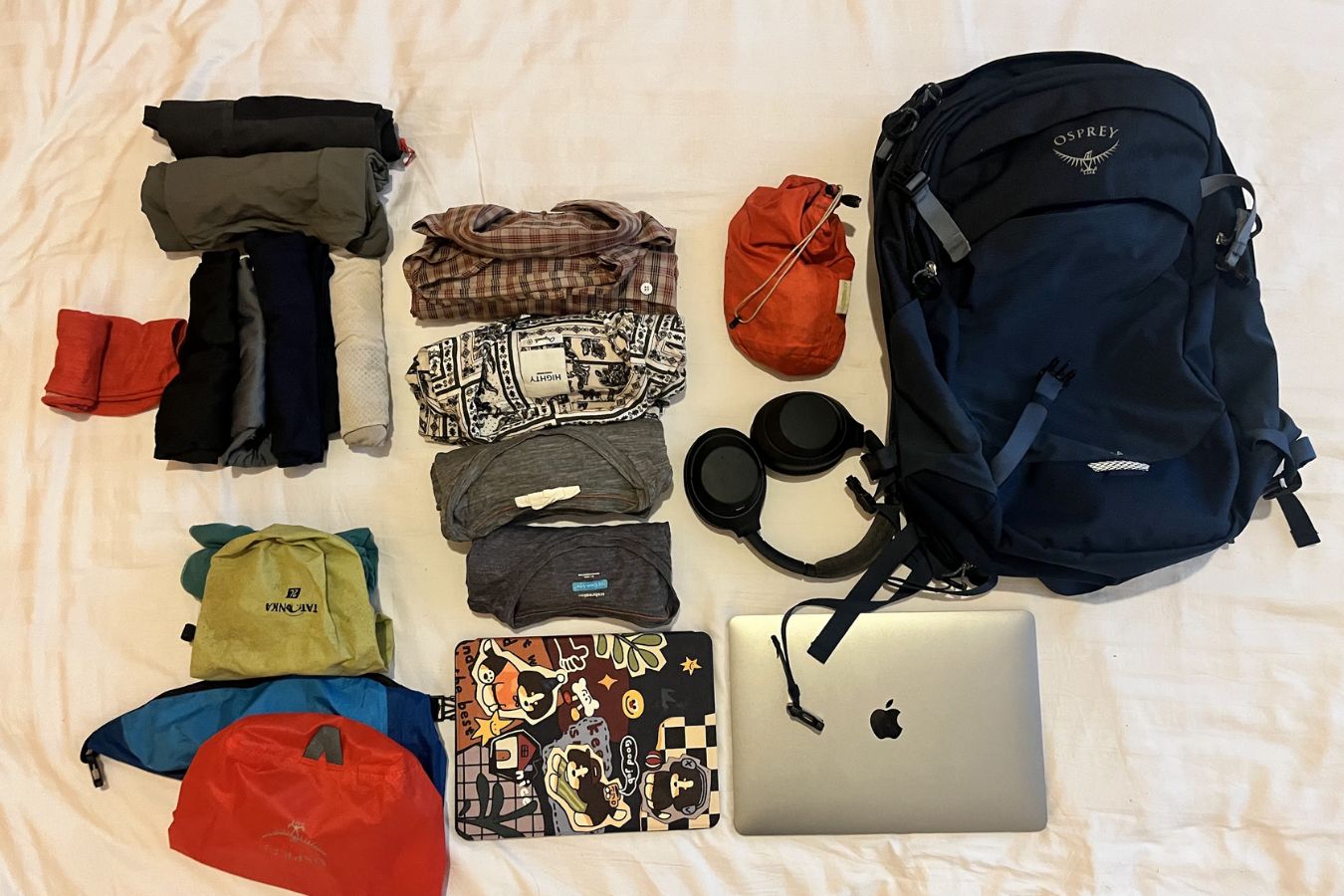 Everything I packed for the Java–Bali trip. It all fit, with room to spare.
Features I Actually Use
The front shove-it pocket
This is the one I didn’t expect to care about. It’s an unstructured, soft-lined pocket across the front of the bag with no zipper, just a wide opening you can shove things into without breaking stride. I use it constantly.
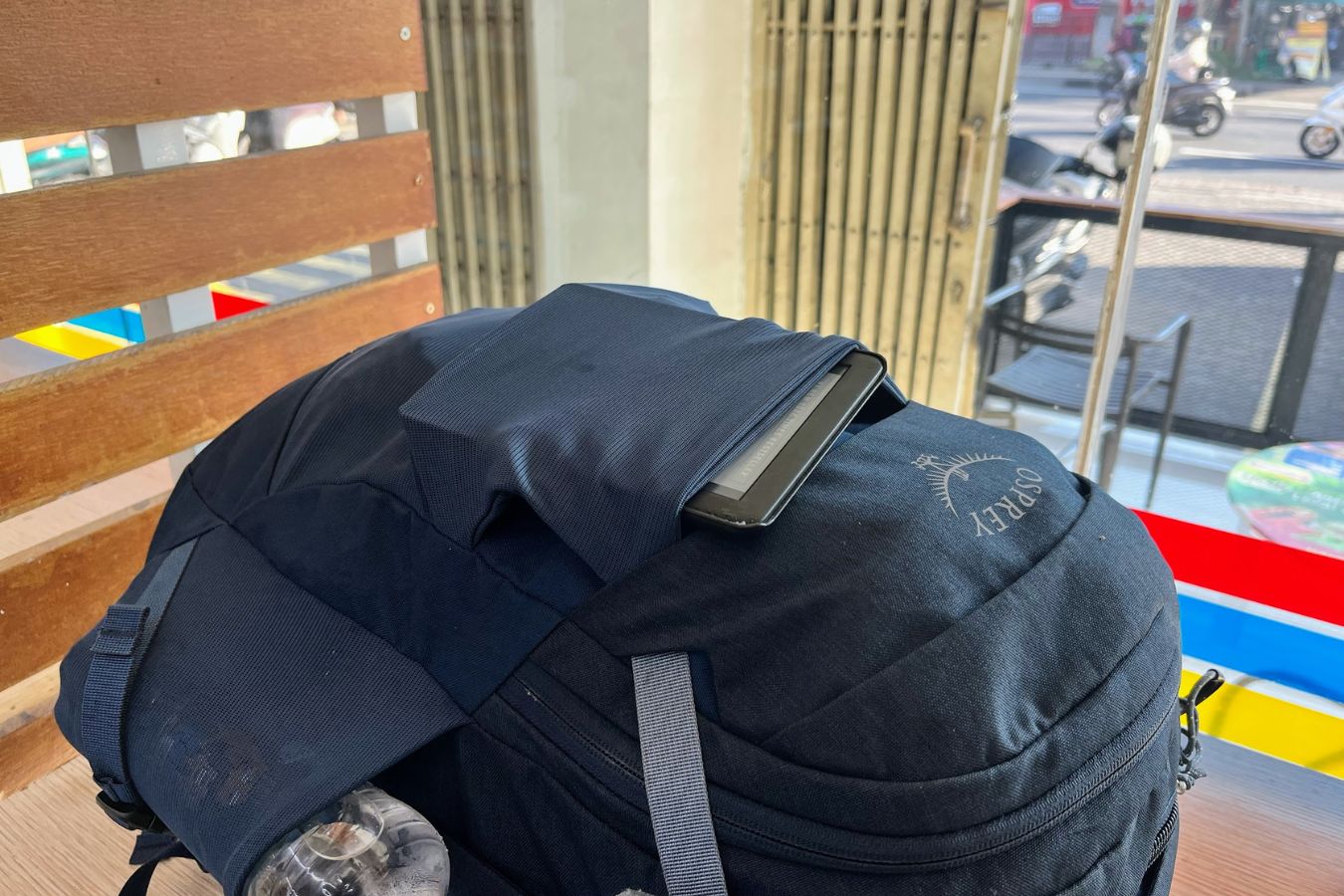 The Kindle slides in and out in seconds. No digging, no unzipping the main compartment.
On long bus rides across Java, being able to pull my Kindle out without unpacking everything else was a small thing that improved my mood considerably. When it started raining unexpectedly, the rain cover was out in two seconds. It sounds like a minor detail. After two months, it’s the feature I’d miss most.
One thing worth noting: the Nebula doesn’t come with a built-in rain cover. I use a separate Osprey rain cover I already owned and keep it in this pocket. It’s a common complaint in reviews — people expect it included at this price point — and it’s a fair one. But it hasn’t bothered me in practice. The pocket makes the workaround so easy that I’ve stopped thinking of it as a workaround.
The hydration sleeve
The Nebula has a discreet internal sleeve designed for a hydration bladder, with a small port at the top for routing the drinking tube. I don’t use a bladder and carry a water bottle in the side pocket instead, but the sleeve doubles as extra internal structure and keeps the back panel feeling clean and organized.
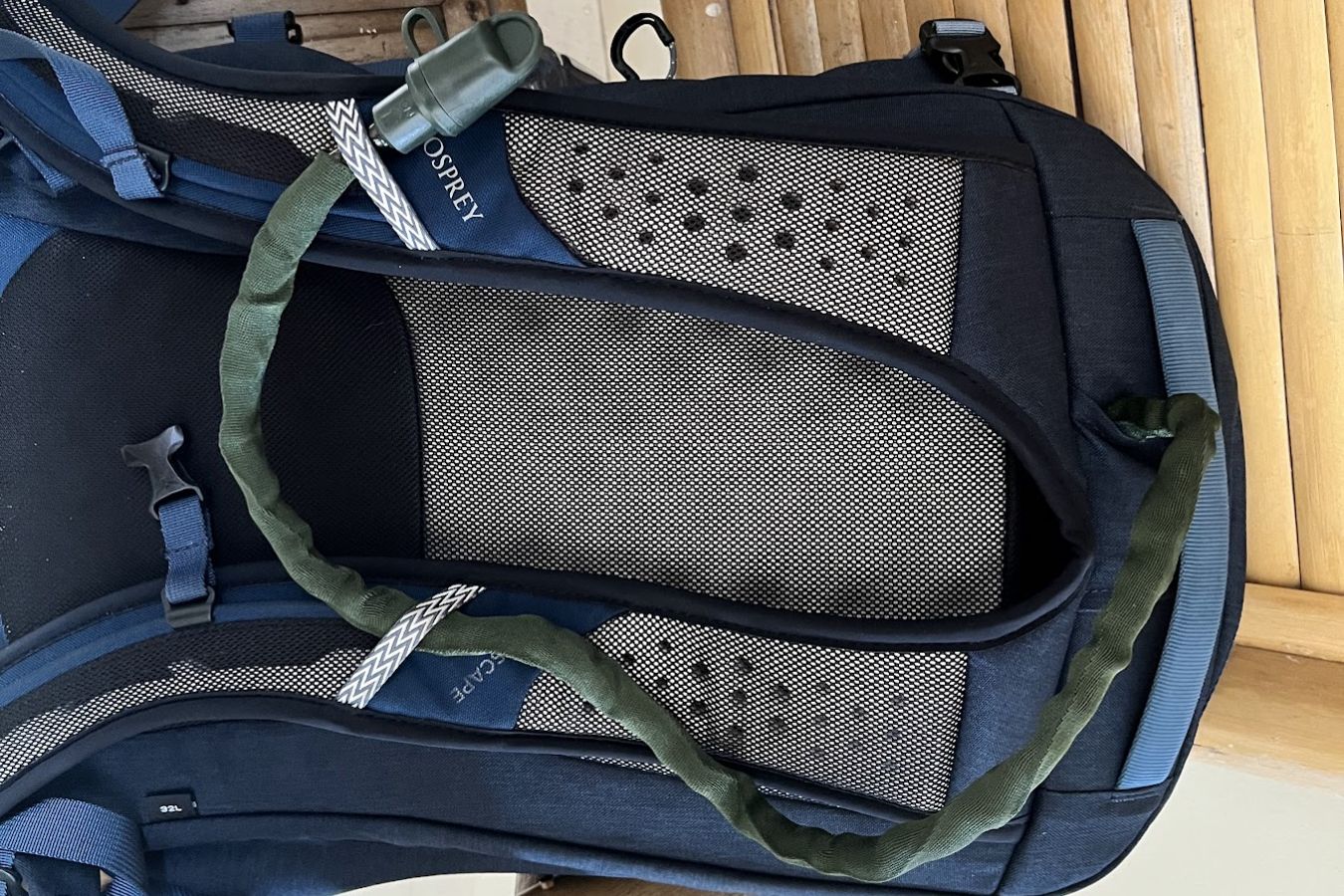 The mesh back panel and hydration sleeve opening. Practical even if you skip the bladder.
The hip belt
Most everyday backpacks don’t include one. The Nebula does, and it’s one of the reasons I chose it over alternatives. It’s not a load-bearing hiking harness — lighter and simpler than that — but it does exactly what I need. On heavier days or longer walks, it shifts weight off my shoulders and onto my hips. After a full day of moving around Nusa Penida, that matters.
The laptop compartment
Well-padded, properly sized for a 13-inch MacBook Air, and separated from the main compartment so there’s no risk of something hard pressing against the back of the laptop. It feels genuinely protective, not like an afterthought.
The Bicycle Commuting Discovery
One thing no review I read before buying mentioned: the Nebula fits inside a standard rear bicycle pannier. I cycle between cafés and accommodations most days, and being able to load the bag into the pannier rather than wearing it for the whole ride made commuting noticeably more comfortable.
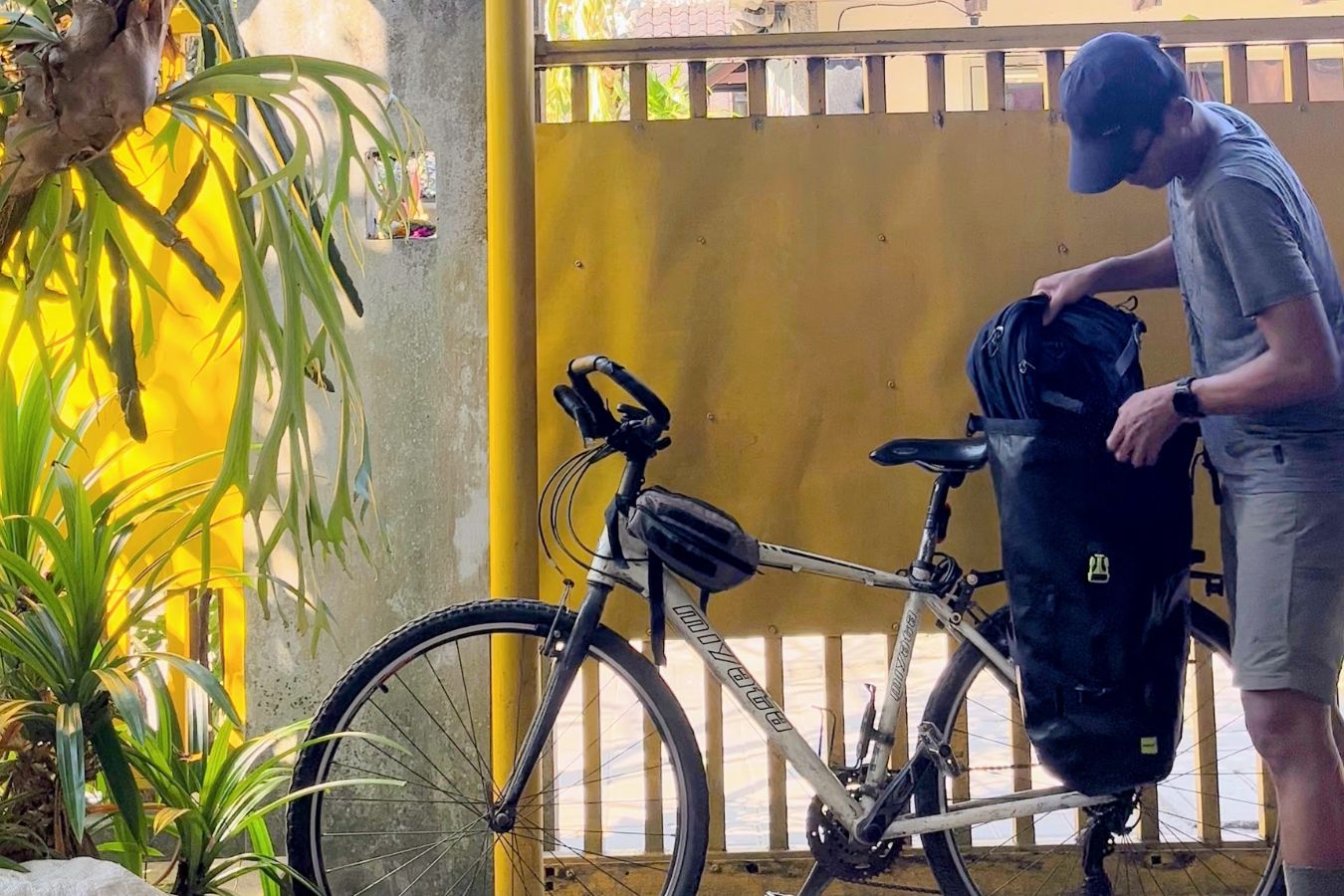 Fits cleanly into the rear pannier. The bag rides on the bike, not on my back.
It’s a small detail, but after two months it has saved my back a lot of unnecessary strain.
Travel Test: Java to Bali
The Java–Bali crossing involves a long bus ride, a ferry, waiting areas, and repeated loading and unloading. This is where a backpack either works or it doesn’t. The Nebula was compact enough to move through crowded terminals without bumping into people, large enough to carry everything I needed for a week, and comfortable enough to wear for extended stretches without needing to put it down. I never once wished I had a different bag.
Travel Test: Nusa Penida Day Trip
Nusa Penida is not a gentle island. The roads are rough, the viewpoints require climbing, and the heat is unforgiving. For this trip I treated it as a test: my friend stashed some of his things in my bag, so I was carrying more than a typical day trip load.
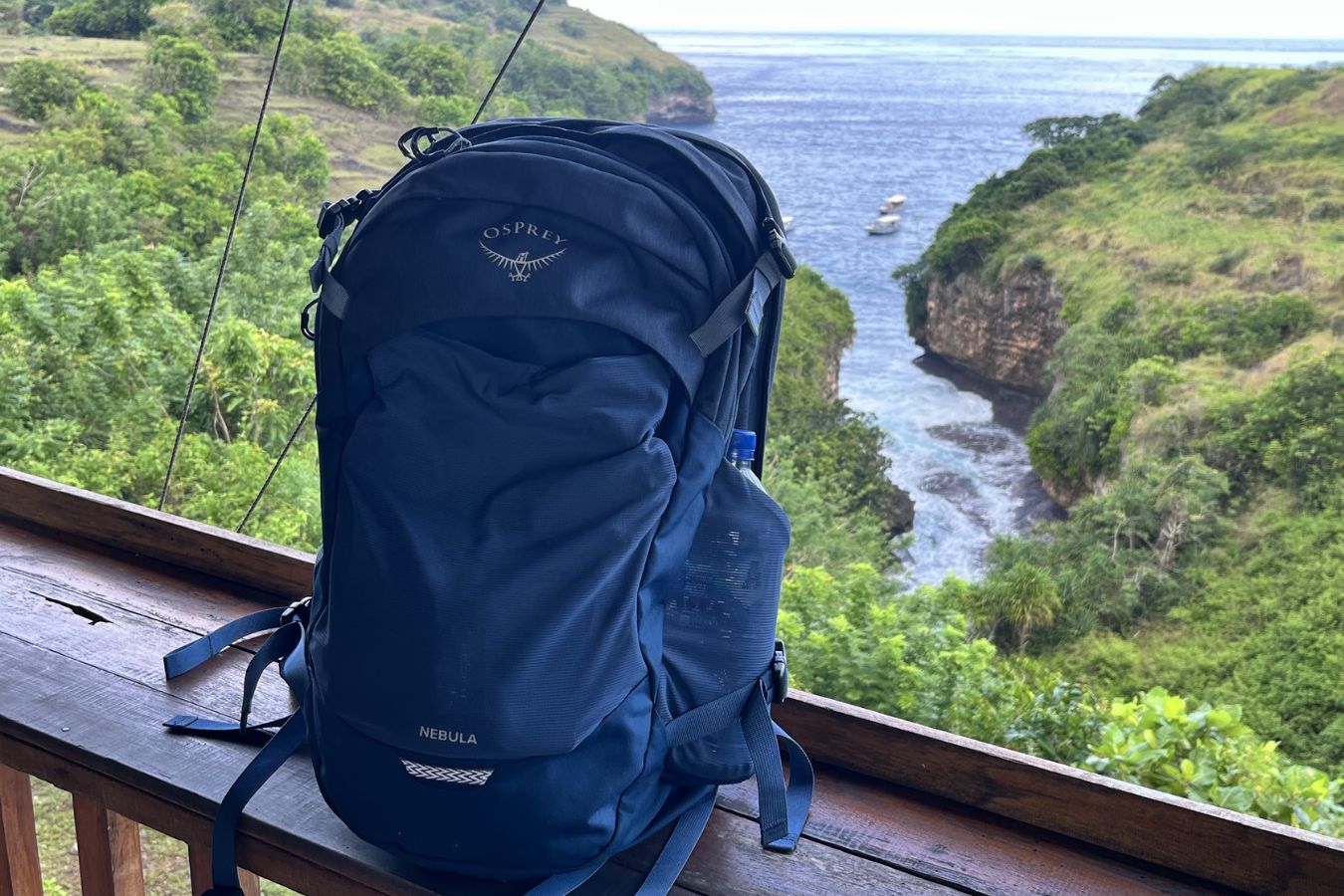
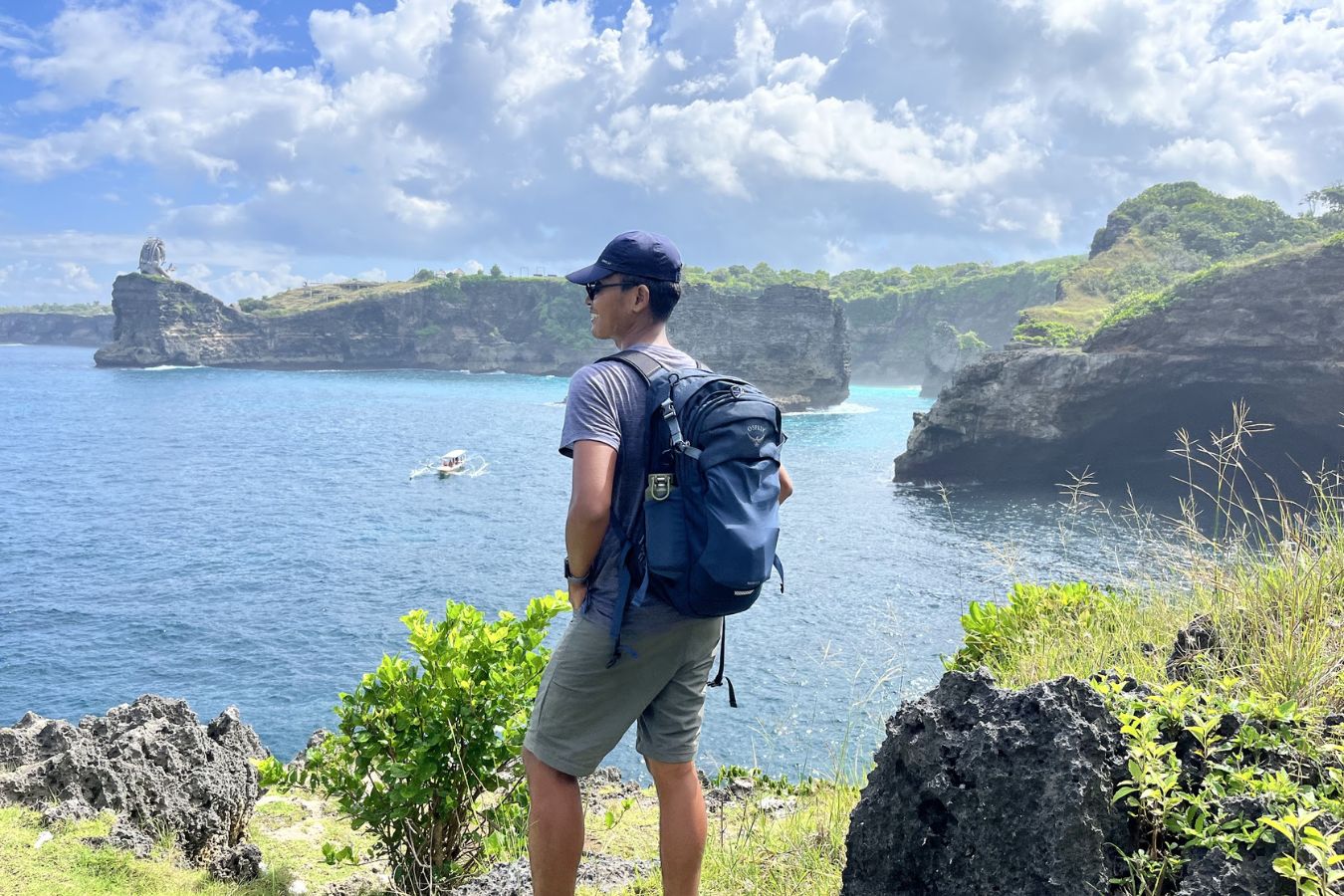 At one of Nusa Penida’s clifftop viewpoints. The bag never felt in the way.
The Nebula handled it without complaint. Water, electronics, snacks, sun protection, and the extra gear all fit comfortably, and the bag never felt cumbersome even on the rougher terrain.
That said, I’ll be honest: for a pure day trip, a dedicated daypack would probably serve you better. The Nebula earns its place when you’re also moving between accommodations or carrying work gear. When the only job is exploring for a day, something lighter and smaller wins.
The descent to Kelingking Beach is where the hip belt proved most useful. Steep, uneven, and long enough that having the weight distributed across your hips rather than entirely on your shoulders made a real difference.
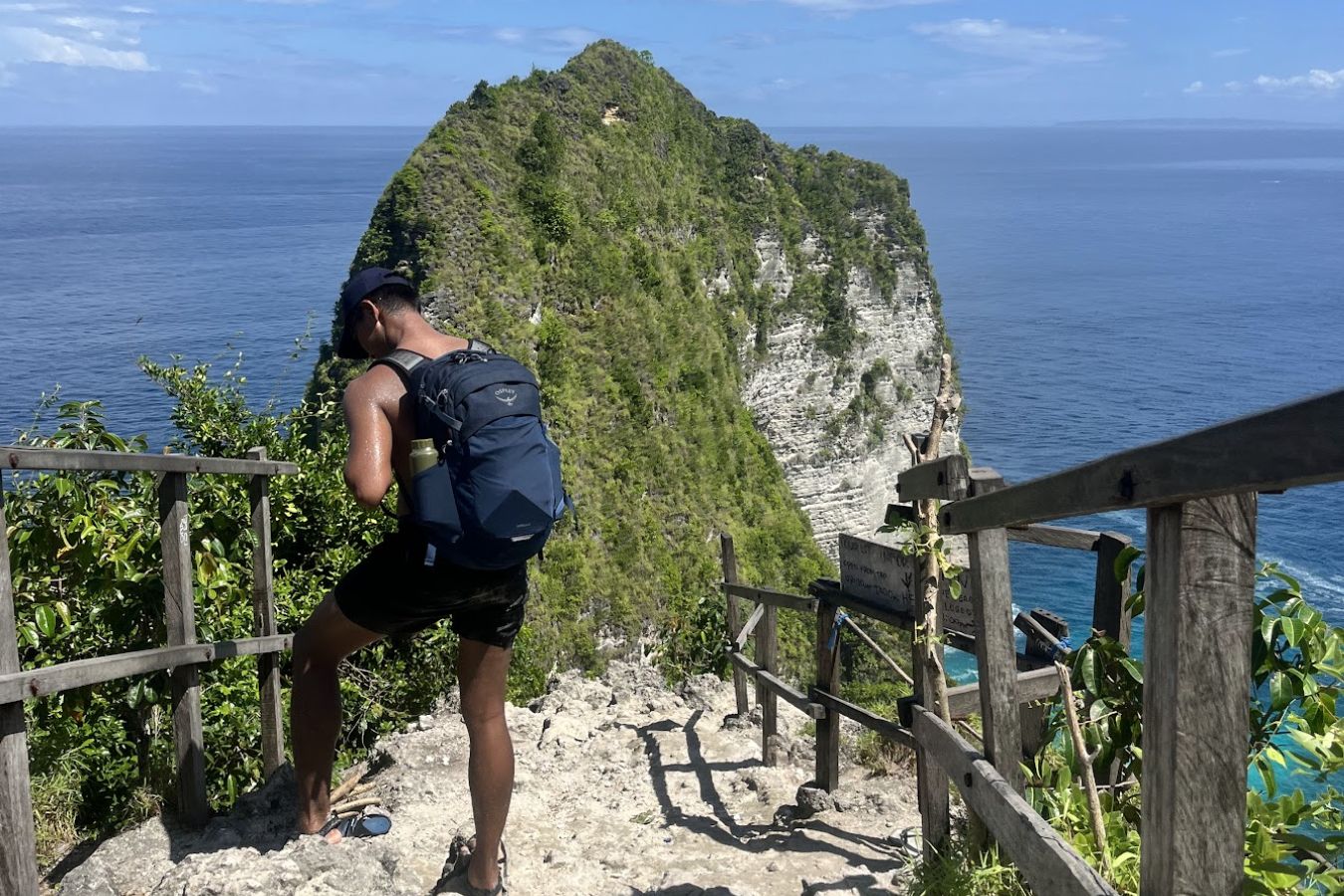 The descent to Kelingking Beach. This is where the hip belt stopped being a nice-to-have.
What Doesn’t Work
The Nebula weighs around 960 grams empty. If you’re obsessive about base weight, that will bother you. The structured frame that makes it comfortable also means it doesn’t collapse when partially packed — it just looks half-empty. If your goal is to optimize for airline carry-on dimensions, the Daylite 26+6 is still the smarter choice.
The Nebula is also not a backpacking bag. There’s no external attachment system for trekking poles or a sleeping mat. If that’s what you need, the Farpoint/Fairview 40 remains the right answer.
The Reddit community calls the Nebula a “do-everything backpack.” After two months across Java, Bali, and Nusa Penida, I think that’s accurate — with the caveat that “do-everything” means handle everyday life and travel gracefully, not replace specialized gear. For anyone who lives somewhere between commuter and traveller, it’s the most sensible bag I’ve used.
Who Should Buy It
The Nebula 32 is for you if your life doesn’t fit a single category: you work remotely, move around, carry a laptop, and want one bag that doesn’t look out of place in a café or an airport terminal. It’s not for you if your priority is shaving grams, maximizing volume, or flying carry-on on ultra-restrictive budget airlines.
After two months, it’s the bag I reach for without thinking. That’s the only review that matters.