Packing Tips
Onebag Packing List: A Practical Travel Checklist
Most people do not need a perfect packing list.
They need a system that helps them remember essentials, stay organized, and gradually learn what they actually use while travelling.
Over the years, we have compared our own packing habits with recurring patterns found across onebag communities, travel forums, Reddit discussions, and long-term travel blogs. While every traveller is different, many eventually arrive at surprisingly similar packing principles.
This checklist is our attempt to turn those recurring patterns into a practical system that works for both beginners and experienced onebag travellers. Whether you travel with a carry-on backpack for a weekend trip or a long-term onebag setup, the same principles generally apply.
Who This Checklist Helps
This checklist is designed for:
- people completely new to onebagging
- travellers refining an existing packing system
- anyone wanting a more organized travel setup
The goal is not to carry as little as possible.
Instead, the goal is to build a packing system that helps you travel with less unnecessary weight, clearer organization, and a better understanding of what you actually use during a trip.
For people completely new to onebagging, this checklist can simply function as a lightweight packing reminder:
- check items
- prepare essentials
- avoid forgetting things
More experienced travellers may use it in greater detail:
- track item weight
- compare worn vs carried weight
- optimize airline carry-on limits
- refine their setup over time
How to Use the Checklist
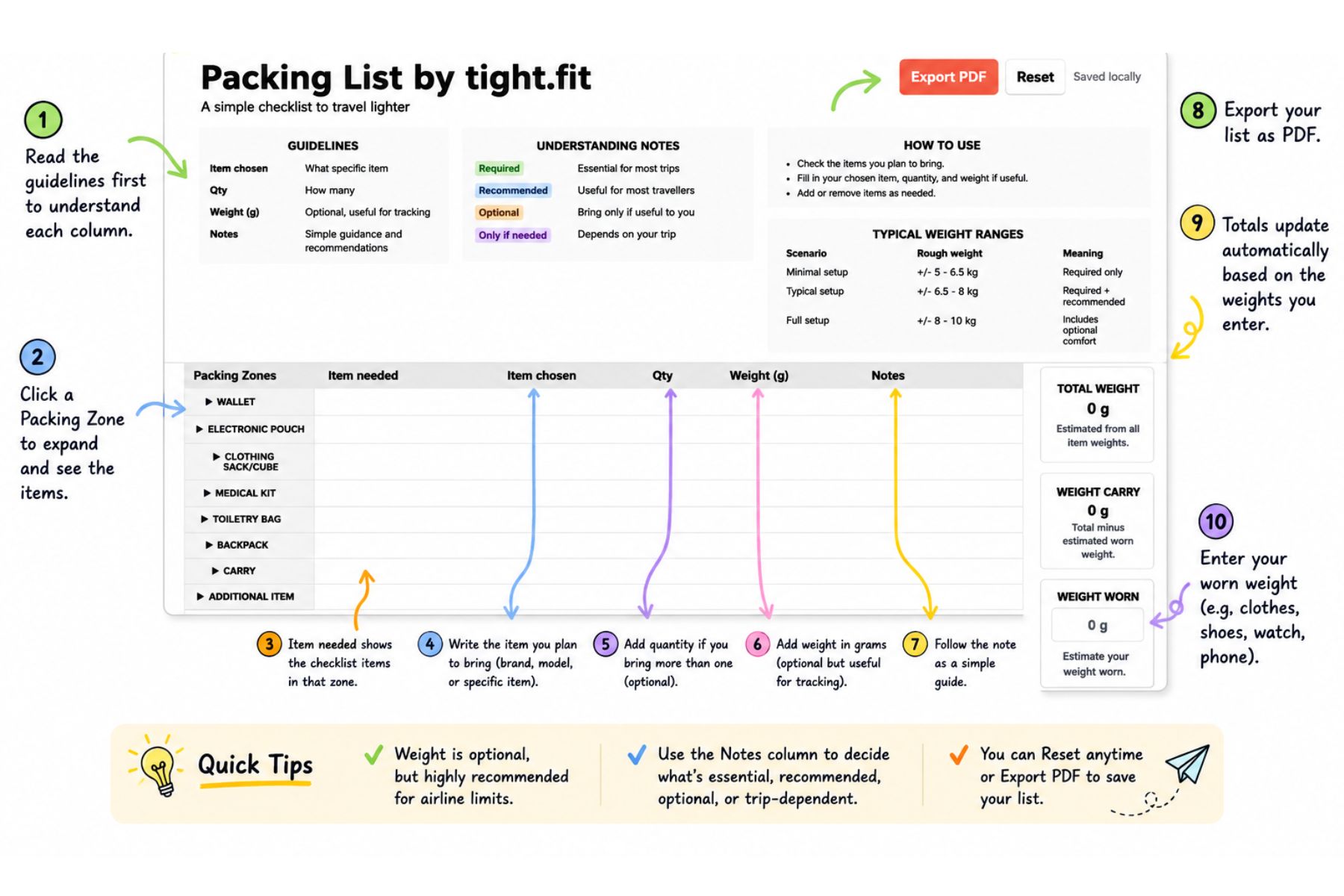
This checklist works at different levels of detail depending on how people prefer to travel. To keep the checklist flexible for different travel styles, each column serves a slightly different purpose.
Some travellers may only use it as a simple packing reminder, while others may track weights, organization systems, and airline carry-on limits in more detail.
| Column | Description |
|---|---|
| Item chosen | Specific item you plan to bring. Leave blank if not needed. |
| Checklist | Check when the item is packed and ready. |
| Quantity (Qty) | Number of items you bring. Optional. |
| Total weight | Weight of packed item(s). Optional but useful for airline limits. |
| Notes | Simple recommendations and packing guidance. |
Try the Interactive Onebag Packing List
Use our interactive Onebag Checklist to organize your gear, track weight, and create your own packing system based on Packing Zones. Open the Interactive Onebag Checklist
Or if you prefer to use paper and pen, you can download the checklist here.
Packing Zones
One of the biggest differences experienced onebag travellers discover is that packing well is not only about carrying less—it is also about knowing where everything belongs.
This checklist uses Packing Zones as its organization system. Instead of thinking only in categories such as clothing, electronics, or toiletries, items are grouped by where they live during travel.
A simple zone-based system makes it easier to:
- find items quickly
- repack during transit
- reduce clutter inside your backpack
- build consistent packing habits across different trips
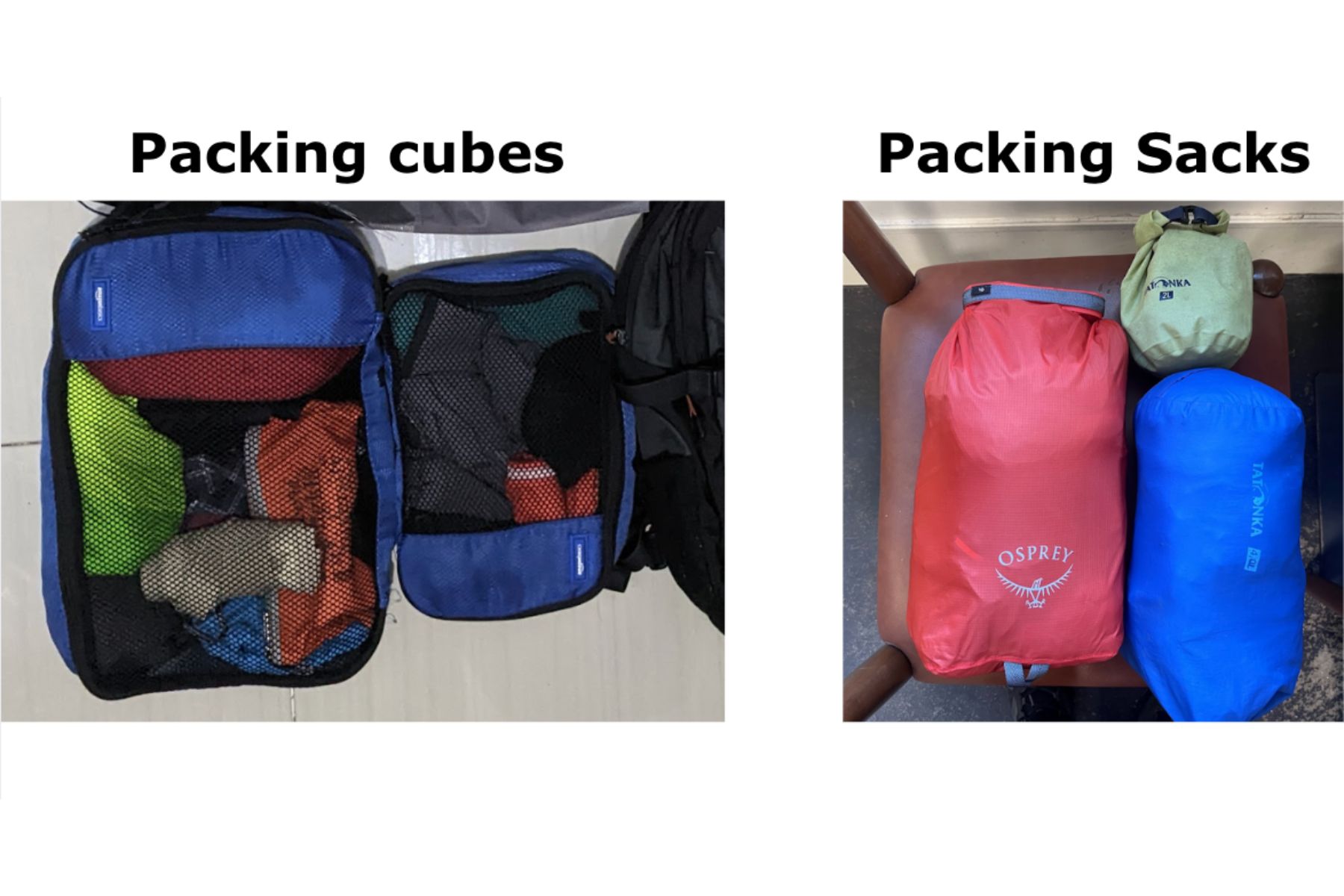
For many travellers, packing cubes, pouches, and small organizers naturally become these zones. They transform one large backpack compartment into several smaller and more predictable spaces.
The table below shows the Packing Zones used throughout this checklist and where each group of items typically belongs during travel.
| Packing Zone | What’s Included | Where It Goes During Travel |
|---|---|---|
| Wallet | Cash, credit/debit cards, travel insurance, driver’s license, and other important documents | Carried on your body |
| Electronic Pouch | Power adapter, charging cables, power bank, earphones, and small electronics | Stored inside your backpack |
| Clothing Sack / Cube | T-shirts, underwear, socks, pants, and other clothing items | Stored inside your backpack |
| Medical Kit | Personal medication, painkillers, band-aids, and basic first-aid items | Stored inside your backpack |
| Toiletry Bag | Toothbrush, toothpaste, deodorant, sunscreen, soap, and other toiletries | Stored inside your backpack |
| Backpack | Packing cubes, pouches, toiletry bag, medical kit, and other packed gear | Carried during travel |
| Carry / Worn | Items worn or carried directly, such as your phone, wallet, passport, main shoes, and backpack | On your body or in your hands |
Understanding the “Notes” System
The Notes column acts as a simple decision guide rather than a set of strict rules.
| Notes | Meaning |
|---|---|
| Required | Essential for most trips |
| Recommended | Useful for most travellers |
| Optional | Bring only if useful to you |
| Only if needed | Depends on your trip |
These notes are intentionally simple. They help you decide what to bring while still leaving room for different destinations, travel styles, and personal preferences.
Typical Onebag Weight Ranges
There is no universal “correct” backpack weight. Some travellers prioritize mobility and airline compliance, while others prefer additional comfort and flexibility.
The ranges below are rough guidelines based on how many recommended, optional, and trip-specific items you choose to bring.
| Scenario | Rough Weight | Meaning |
|---|---|---|
| Minimal setup | ± 5–6.5 kg | Mostly required items |
| Typical setup | ± 6.5–8 kg | Required + recommended items |
| Full setup | ± 8–10 kg | Includes more optional and trip-specific items |
How Most Onebaggers Actually Build Their Packing Lists
It is important to realize that Every trip is different. Climate, travel style, work requirements, hobbies, comfort levels, and personal habits all change what people carry.
What follows is not a definitive checklist.
Instead, it reflects recurring patterns observed across experienced travellers and onebag communities. While no packing list works for everyone, many travellers eventually arrive at similar conclusions:
- most “what if” scenarios never happen
- laundry replaces excessive clothing
- multipurpose items outperform specialized gear
- simpler systems reduce travel stress
Reflection After the Trip
Onebagging improves through repetition, which is why it’s important to perform reflection section after each trip. Ask yourself:
- What did I never use?
- What caused friction?
- What could I remove next time?
- What did I wish I packed?
Over time, these small observations often become more valuable than the packing list itself.
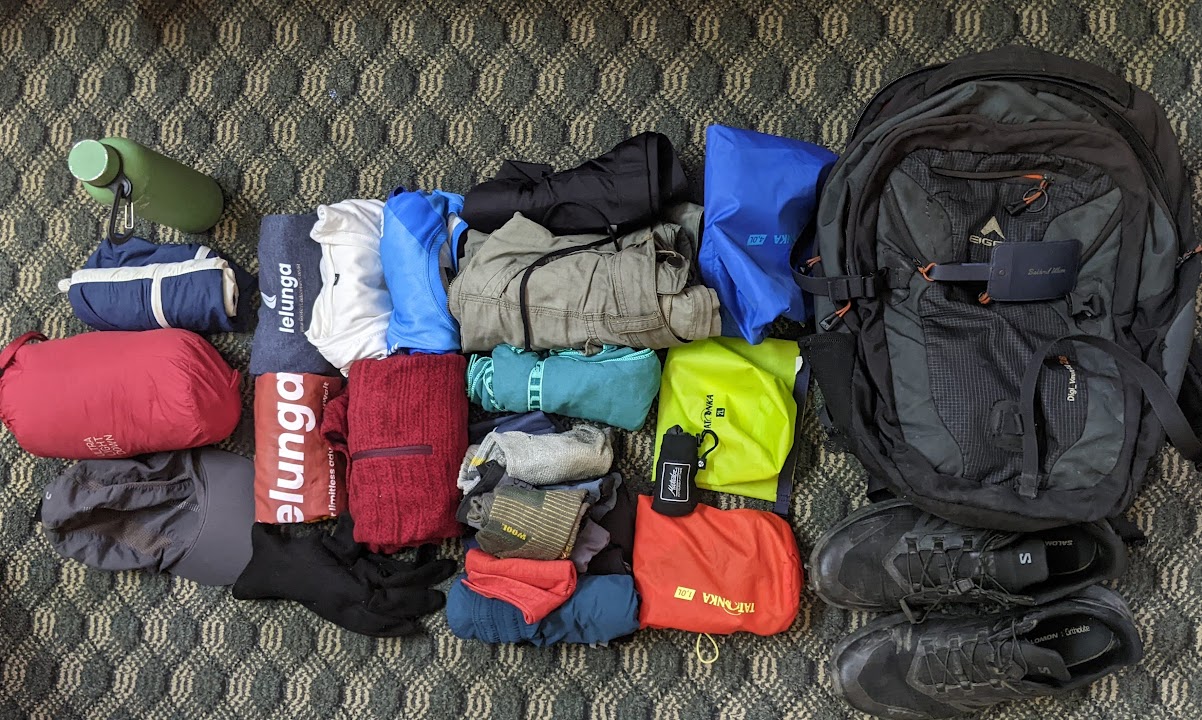
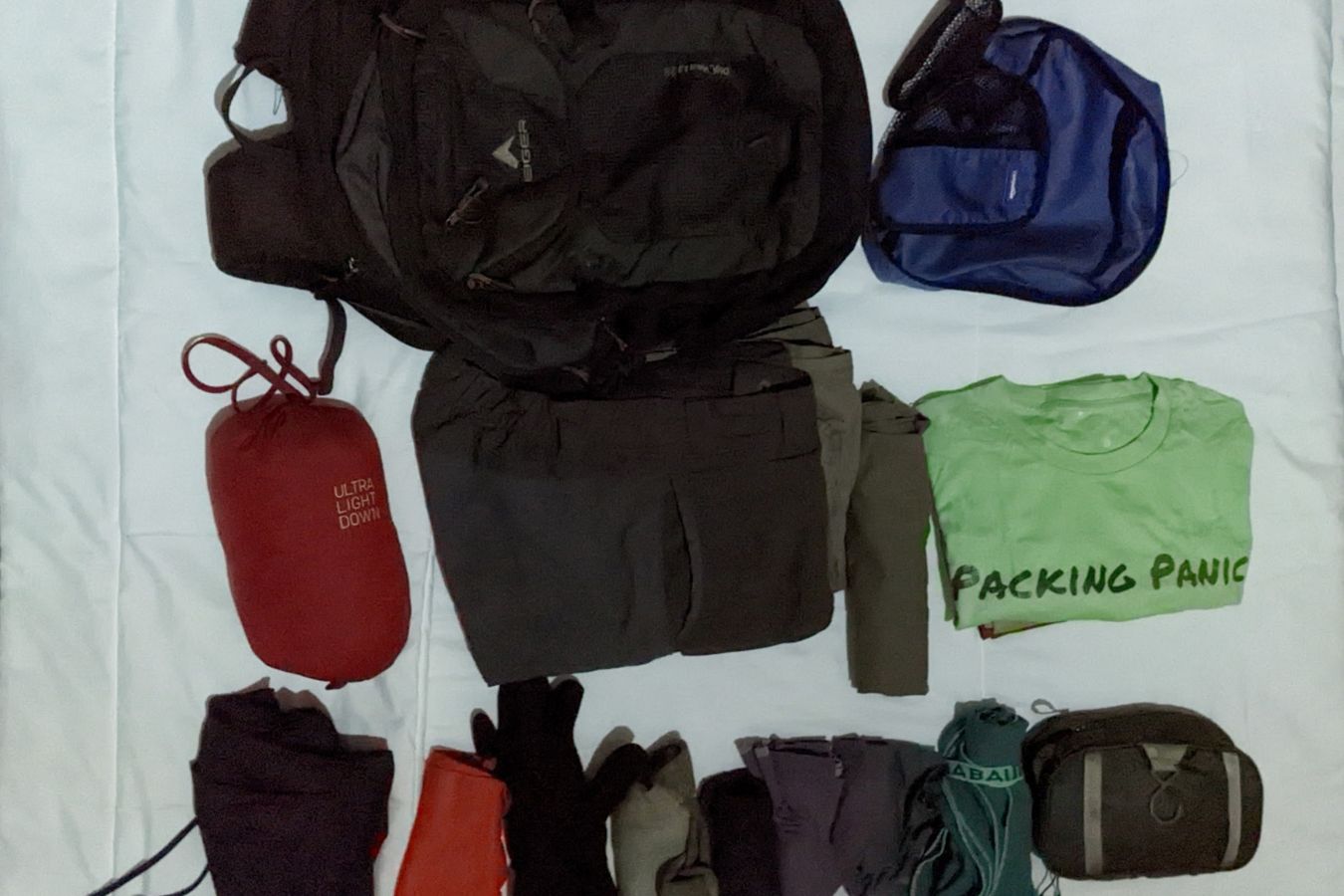
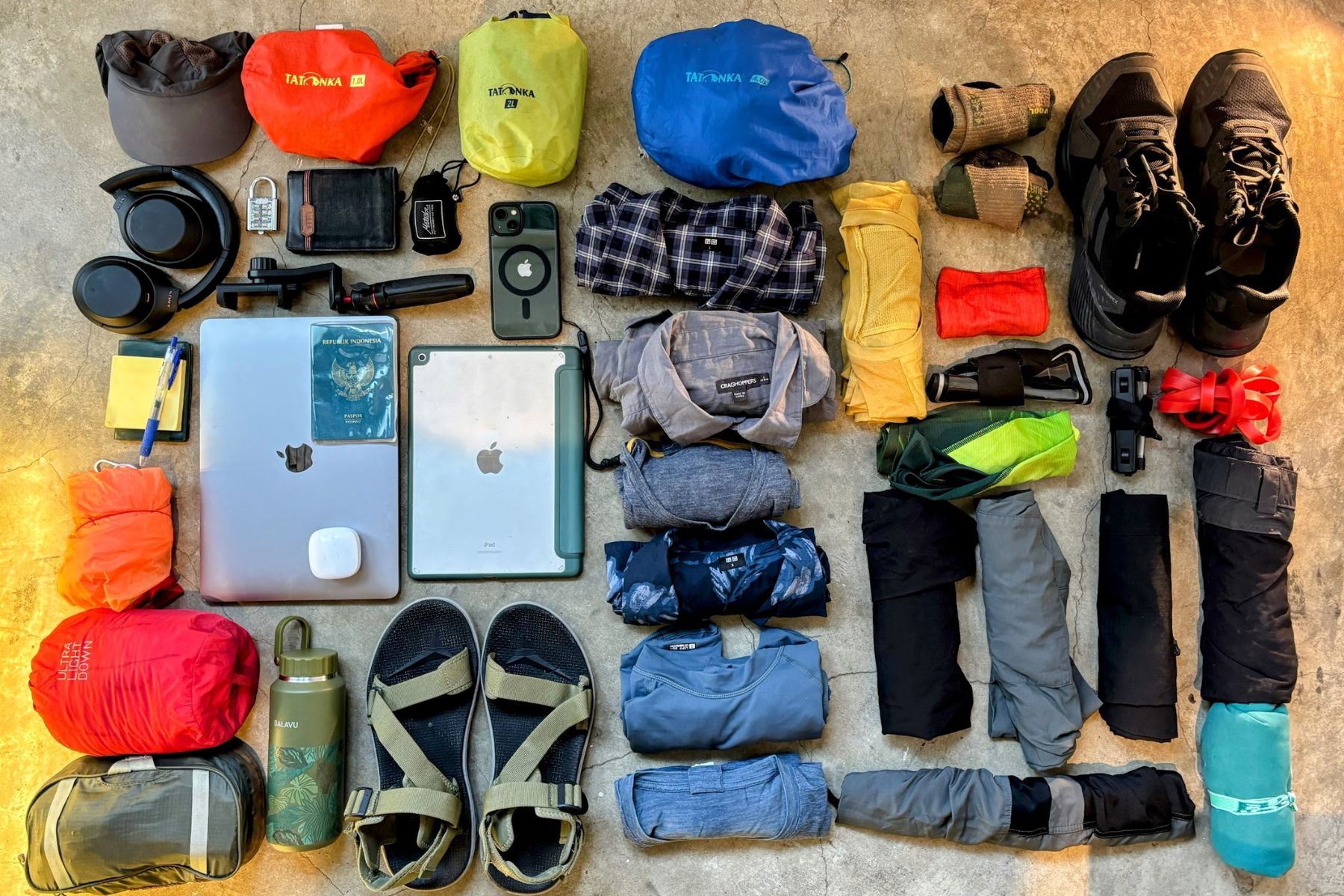
Many experienced onebaggers informally follow a process similar to a knolling debrief: laying out everything they carried after a trip and reviewing what actually proved useful, unnecessary, forgotten, or repeatedly used.
This process helps transform packing from guesswork into a repeatable learning system.
Final Thoughts
Over time, many travellers discover that lighter travel is not really about owning less. It is about carrying things with more intention.
The goal of this checklist is not perfection. It is to provide a practical system that people can reuse, adapt, and improve with every trip. The best packing list is rarely the one you start with. It is the one that evolves through experience.
Start Packing
Ready to put these ideas into practice?
Use the Interactive Onebag Checklist to create your own packing list, organize gear by Packing Zones, and track your setup over time. Or if you prefer to use paper and pen, you can download the checklist here.
Related